How Cannabis Makes THC and CBD (Cannabinoid Biosynthesis)
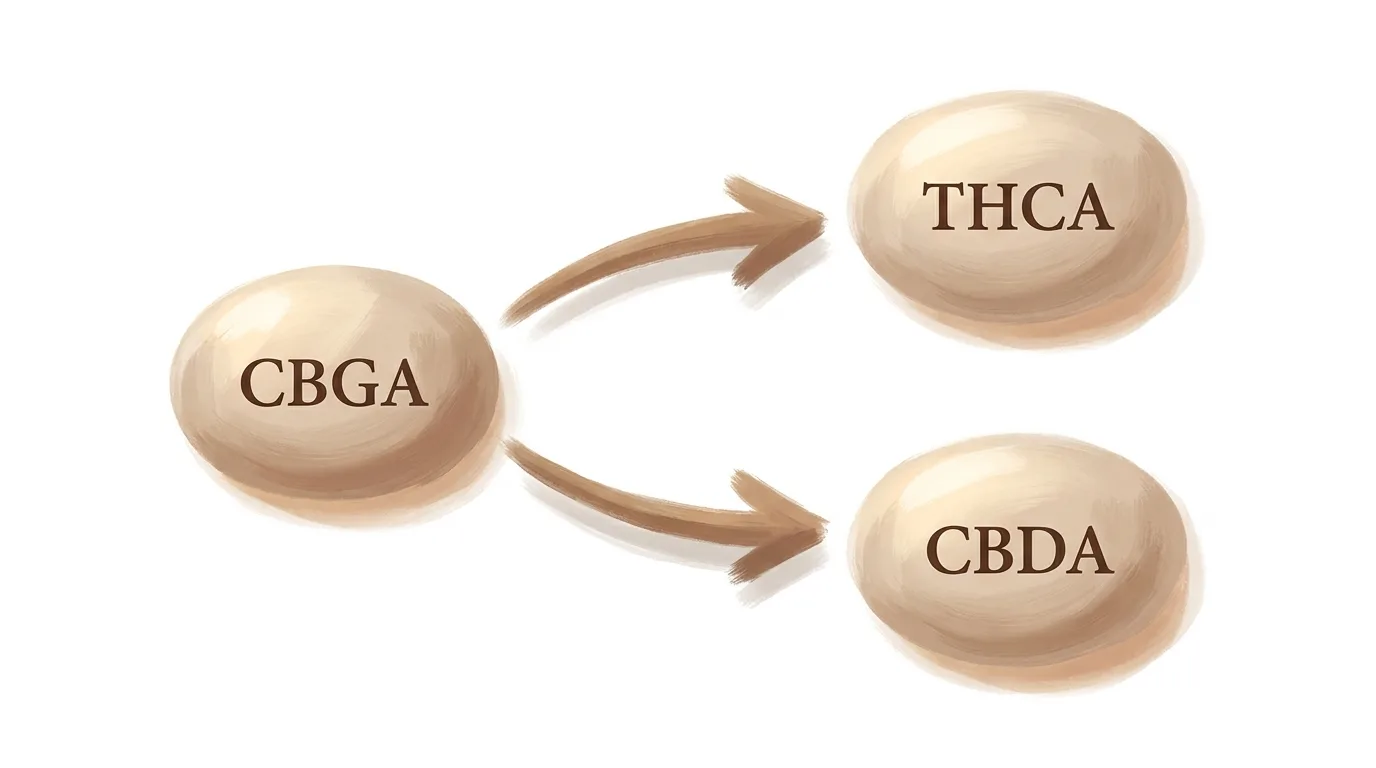
Cannabis makes THC and CBD in the trichomes, and both start from one parent molecule: CBGA (cannabigerolic acid). Enzymes set by genetics convert CBGA into either THCA or CBDA — a plant heavy in THCA synthase becomes a high-THC strain, one heavy in CBDA synthase a high-CBD strain. The plant only makes the acid forms (THCA, CBDA), which aren’t intoxicating until heat (decarboxylation) converts them to THC and CBD, which is why raw bud does little until it’s heated.
It’s worth knowing where the cannabinoids in your flower actually come from, because it explains a few things that otherwise seem mysterious — why a strain is “a THC strain” or “a CBD strain,” and why raw bud doesn’t do much until it’s heated. The pathway is simpler than the chemistry names suggest. Here’s the plain-English version, drawn from the open-access research.
The short version:
- Cannabinoids are made in the trichomes — the resin glands on the flower
- THC and CBD both start from one parent compound: CBGA
- Enzymes (synthases) convert CBGA into THCA or CBDA — genetics decides the balance
- The plant makes the acid forms (THCA, CBDA), which aren’t intoxicating
- Heat converts them to THC and CBD (decarboxylation)
Want the full breakdown? Keep scrolling.
Where do cannabinoids come from?
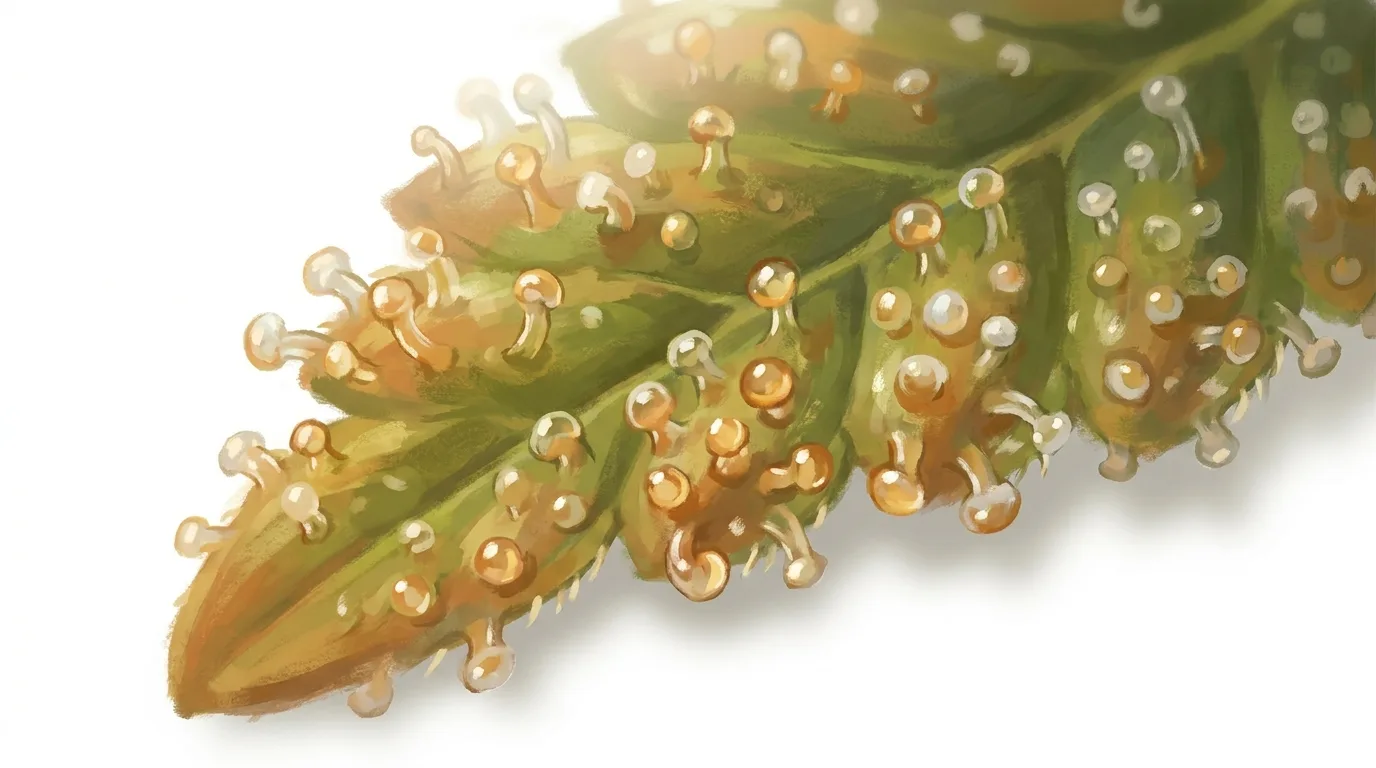
In the trichomes — the tiny mushroom-shaped resin glands frosting the buds and sugar leaves, the same structures that make the terpenes. The plant builds cannabinoids there through a chain of steps, and the key one for a grower to understand is the branch point. Everything funnels through a single parent molecule, CBGA (cannabigerolic acid) — sometimes called the “mother cannabinoid” because it’s the precursor the others come from. CBGA is the raw stock; what the plant does with it depends on the enzymes its genetics tell it to make.
How does the plant choose THC or CBD?
It doesn’t really “choose” — its genetics do, by deciding which synthase enzymes it produces. A THCA synthase converts CBGA into THCA (tetrahydrocannabinolic acid); a CBDA synthase converts CBGA into CBDA (cannabidiolic acid). A plant heavy in THCA synthase becomes a high-THC strain; one heavy in CBDA synthase becomes a high-CBD strain; some carry both and land in between. This is why you can’t grow a “CBD strain” into a high-THC plant or vice versa by changing your nutrients or light — the enzyme balance is written in the genetics, set when you chose the seed. The research (Tahir and colleagues, open-access) maps this pathway and the enzymes that drive it.
Why doesn’t raw bud do much until it’s heated?
Because the plant makes the acid forms — THCA and CBDA, with that “A” on the end — and those aren’t intoxicating as they are. When you heat cannabis (smoking, vaping, or baking it for edibles), a reaction called decarboxylation removes a part of the molecule and converts THCA to THC and CBDA to CBD — the active forms. That’s why eating raw flower does little, and why edibles need a decarb step before infusing. It also explains why a freshly cut, unheated plant isn’t psychoactive in the way the finished, heated product is. So the full story is: trichomes build CBGA, genetics convert it to THCA or CBDA, and heat finishes the job by turning those acids into the THC and CBD people actually feel.
Common questions
What is CBGA?
Cannabigerolic acid — the parent "mother" cannabinoid. The plant's enzymes convert CBGA into THCA or CBDA, which become THC and CBD when heated. It's the common starting point for both.
Does the plant make THC directly?
No. It makes THCA (the acid form), which isn't intoxicating until heat converts it to THC through decarboxylation. The same goes for CBDA becoming CBD.
Can I change whether my plant makes THC or CBD?
No — that's set by genetics, specifically which synthase enzymes the strain produces. Nutrients and light can't turn a high-CBD strain into a high-THC one.