Does Light Spectrum Change Your Cannabis? (LED Spectrum)
Short answer: light spectrum does affect cannabis — it influences plant shape and can shift cannabinoid levels, which is why research like Magagnini et al. (2018) studied it — but it’s fine-tuning, not the engine. Intensity at the canopy (PPFD) drives bud density far more than chasing a special spectrum.
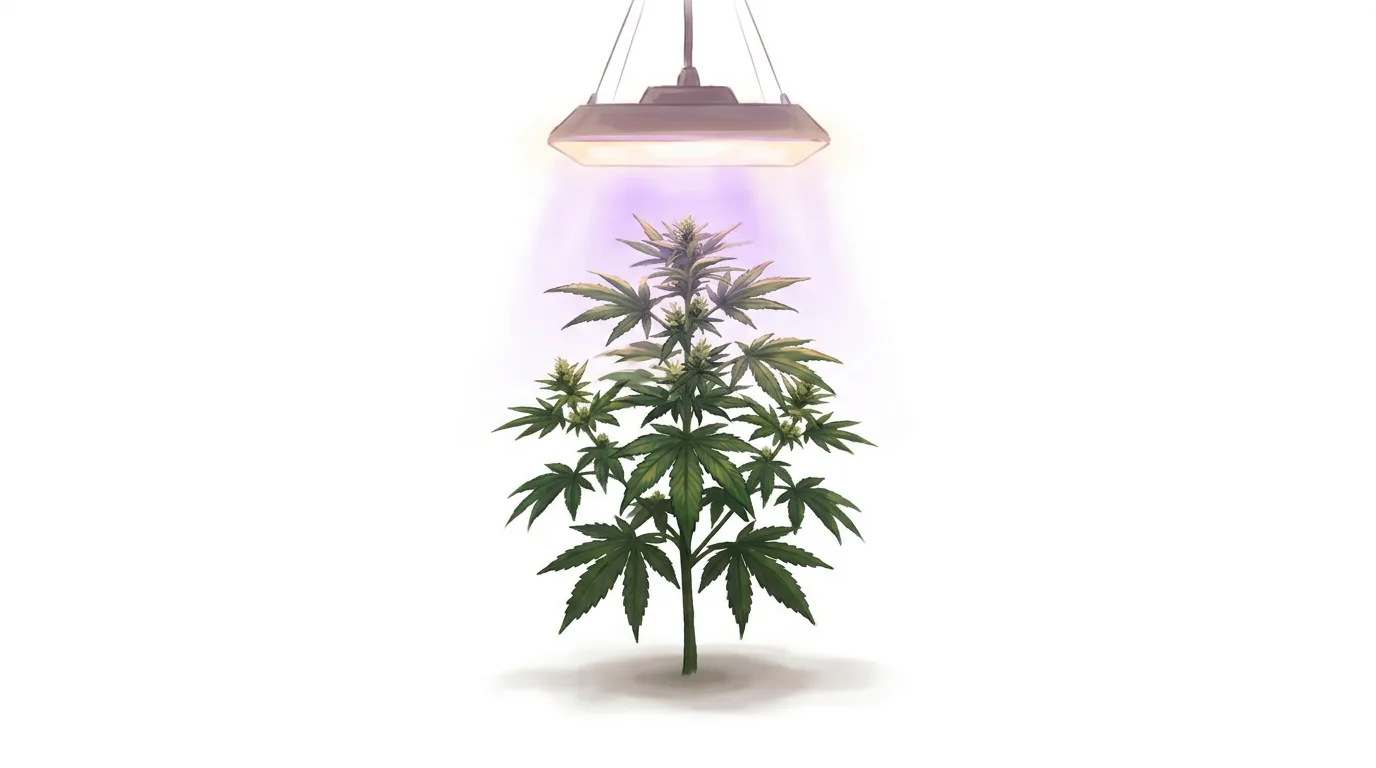
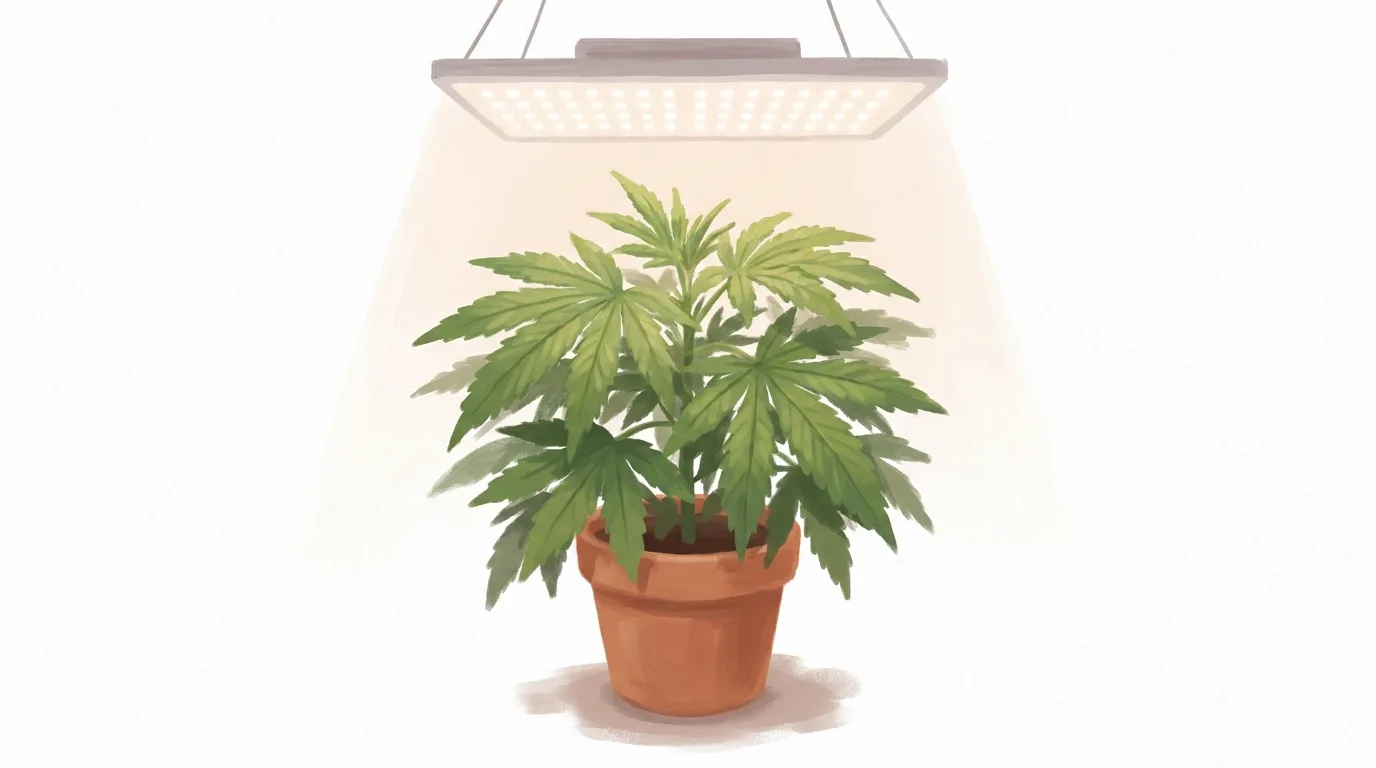
A modern full-spectrum white LED already covers veg and flower, so you don’t need a separate “bloom” light or a blurple panel. Get intensity and distance right first; spectrum is the secondary tuning after. Grow-light marketing leans hard on spectrum — blurple panels, “bloom-boosting” red switches, charts of wavelengths. Spectrum genuinely does affect the plant, but the practical reality is calmer and cheaper than the hype. Here’s what the research supports and what it means for your tent.
The short version:
- Light spectrum is the mix of colours (wavelengths) a light emits
- It influences plant shape (morphology) and can affect cannabinoid levels
- Research (Magagnini et al., 2018) studied LED spectrum effects on cannabis
- A good full-spectrum white LED covers veg and flower — no colour-switching needed
- Overall light intensity at the canopy matters more than chasing a perfect spectrum
Want the full breakdown? Keep scrolling.
What does light spectrum actually do?
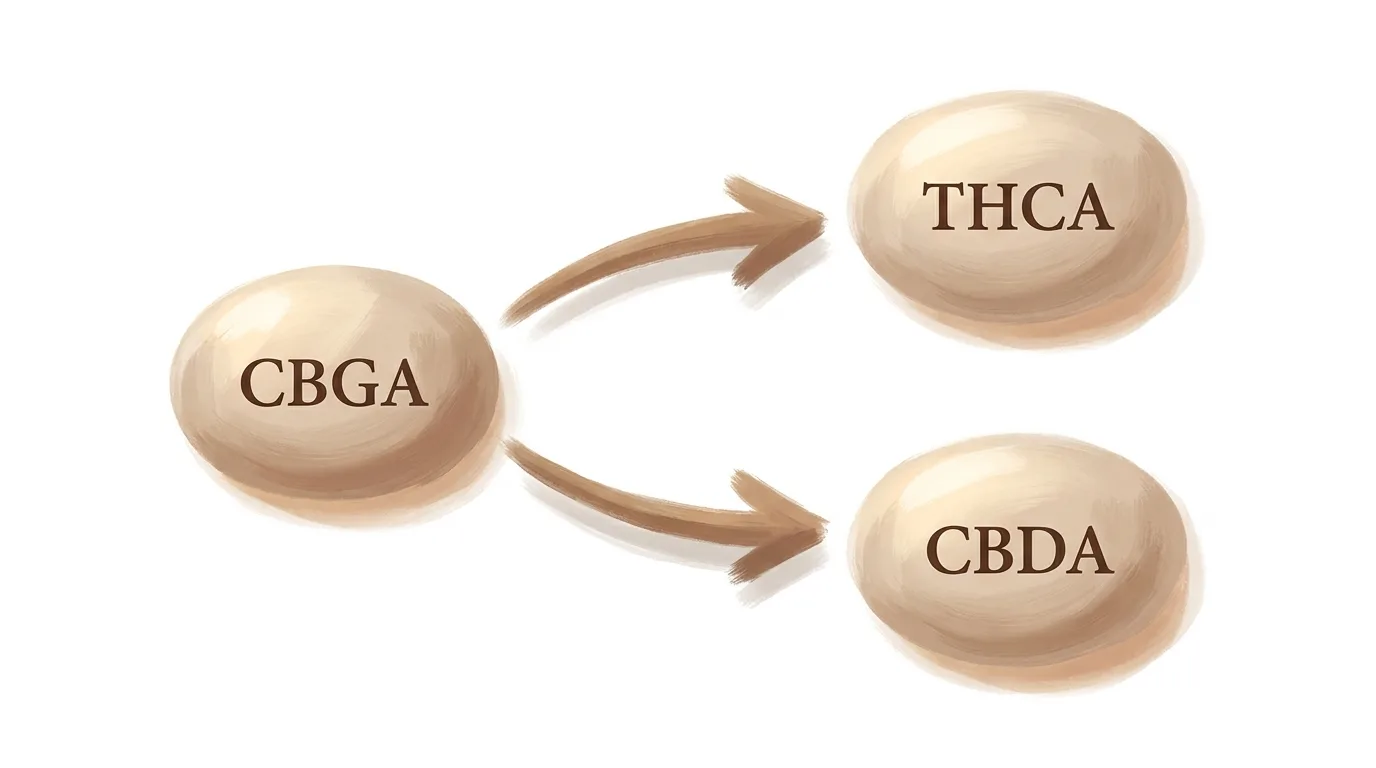
Plants respond to different wavelengths, so spectrum influences how a plant grows — its morphology. Broadly, more blue light tends to encourage compact, bushy growth (useful in veg), while more red is associated with flowering and stretch; this is why the old advice was metal halide (bluer) for veg and HPS (redder) for flower. Research into LED spectrum on cannabis (Magagnini and colleagues, 2018, open access) examined how spectrum affects morphology and cannabinoids, confirming that spectrum is a real variable the plant reads — not just marketing. So the underlying idea isn’t wrong: the colour of your light does affect the plant.
So should I chase a special spectrum?
Here’s the calmer truth the marketing skips: a modern full-spectrum white LED already contains the blue, green and red the plant needs across both veg and flower, so you don’t need to switch colours or buy a separate “bloom” light. The old metal-halide-for-veg, HPS-for-flower routine died when white LEDs started covering the whole range from a single fixture. Crucially, the spectrum differences between decent full-spectrum lights are a refinement, not a make-or-break — and they’re swamped by a far bigger factor: how much light actually reaches the canopy (intensity, measured as PPFD). A perfect spectrum at starvation intensity grows airy bud; a good white LED at the right intensity and distance grows dense bud. Get the intensity right first (DIG stock full-spectrum lights with honest PPFD maps); spectrum is the fine-tuning after.
What about “blurple” panels and bloom switches?
Treat them with caution. The cheap blue/red “blurple” panels were built around a narrow spectrum and were often underpowered as well — the spectrum gimmick distracting from weak actual output. A “veg/bloom switch” that dims half the diodes is changing intensity as much as spectrum. None of these beat a solid full-spectrum white run at the correct distance. If you want to experiment with spectrum later — a touch more red in late flower, say — do it as a curiosity with notes, not as a shortcut to potency. For nearly every home grower, one good full-spectrum white LED, sized to the tent and hung at the right height, is the whole answer.
Common questions
Does light spectrum affect cannabis growth?
Yes — spectrum influences plant shape and can affect cannabinoid levels, which is why research studies it. But the differences between good full-spectrum lights are a fine-tuning, not a make-or-break.
Do I need separate veg and flower lights?
No. A modern full-spectrum white LED contains the wavelengths for both stages. The old metal-halide-for-veg, HPS-for-flower approach is no longer necessary.
What matters more, spectrum or intensity?
Intensity. Enough light reaching the canopy (PPFD) drives bud density far more than chasing a perfect spectrum. Get intensity and distance right first; spectrum is secondary tuning.
References
- Magagnini, Grassi & Kotiranta (2018). The Effect of Light Spectrum on the Morphology and Cannabinoid Content of Cannabis sativa L. Medical Cannabis and Cannabinoids, 1(1):19–27.
- Eichhorn Bilodeau et al. (2019). An Update on Plant Photobiology and Implications for Cannabis Production. Frontiers in Plant Science, 10:296.