Feminized vs Regular vs Autoflower Seeds: Which to Buy
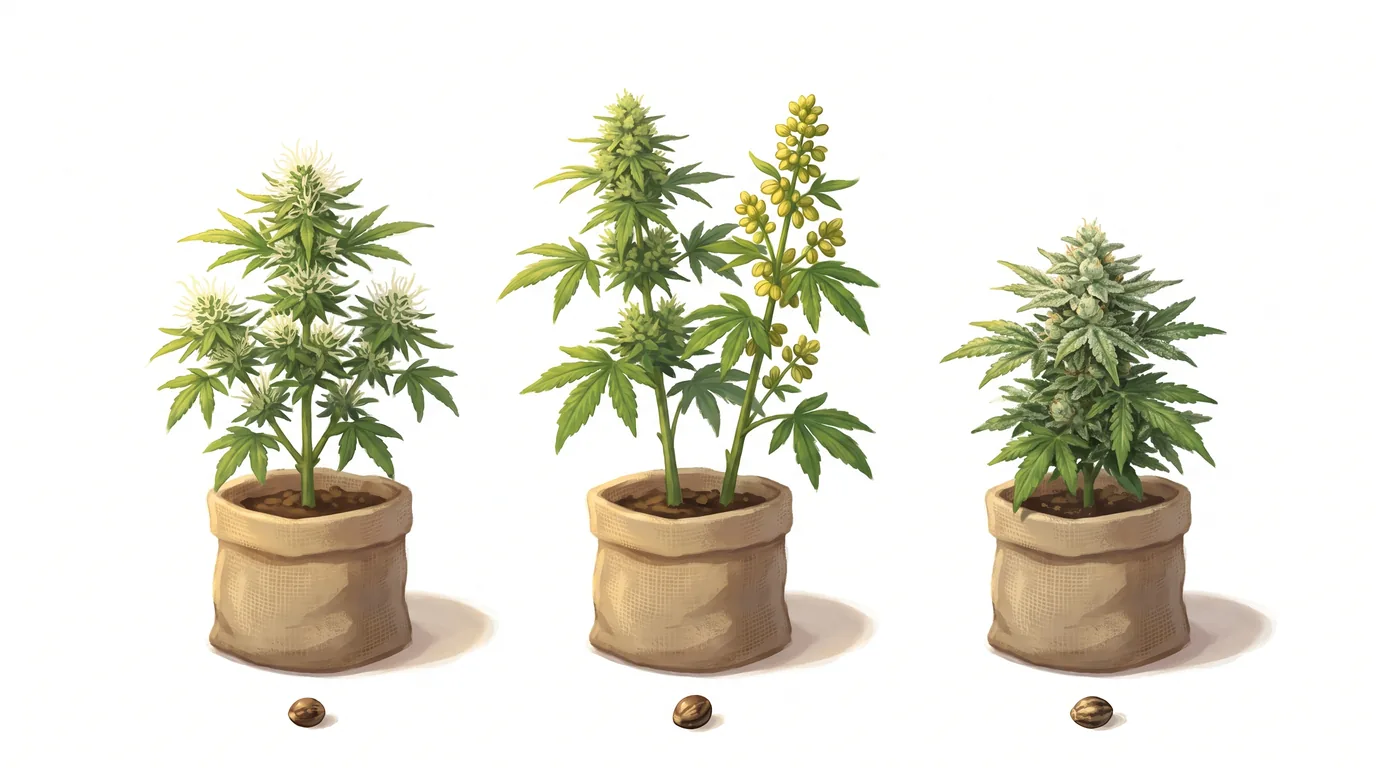
Short answer: feminized seeds grow almost all female plants and suit most growers who just want buds; regular seeds are about half male and are mainly for breeding; autoflower seeds flower on age rather than a light change, and are usually sold feminized too. The thing that trips people up is that these are two different questions — feminized vs regular is about the plant’s sex, while photoperiod vs autoflower is about what triggers flowering. For a first grow, feminized (either a photoperiod or an auto) is the easy call; reach for regular seeds only when you want to breed.
A fella once bought regular seeds because they were cheaper, grew ten plants in a four-plant tent, and discovered in week three of flower that six of them were lads throwing pollen at the other four. Cheaper seeds, dearer lesson. Here is what the three types actually are, so you buy the right ones.
The short version:
- Feminized — almost all female plants (the ones that bud); no males to find and cull
- Regular — roughly 50/50 male and female; for breeding and selecting mothers/fathers
- Autoflower — flowers on age (~week 3–4), no light change needed; usually feminized too
- Feminized-vs-regular = sex; photoperiod-vs-auto = flowering trigger — two separate choices
- Beginners: feminized (photoperiod or auto). Breeders: regular
- Source matters — a cheap, badly-made feminized batch is where hermies come from
Want the full breakdown? Keep scrolling.
What are the three seed types?
Feminized seeds are bred to produce female plants almost every time. They are made by reversing a female so it makes pollen, then using that pollen on another female — no male chromosome involved, so the offspring come out female. For anyone growing to smoke rather than to breed, that is exactly what you want: every plant makes buds, and you never have to hunt down a male before it pollinates the tent.
Regular seeds are the old-fashioned kind: roughly half grow male, half female, the way the plant does it in the wild. They are not worse — they are for a different job. If you want to breed, select mothers and fathers, or just keep a broad gene pool to hunt through, you need the males that only regular seeds give you.
Autoflower seeds are a different axis entirely. Where a photoperiod plant waits for you to shorten its light to flower, an auto flowers on age — around week three or four from seed — because it carries ruderalis genetics. Most autos are sold feminized as well, so “autoflower” usually means “feminized autoflower.” That is the bit that confuses people: feminized and autoflower are not alternatives to each other. A seed can be a feminized photoperiod, a feminized auto, or a regular of either kind.
| Feminized (photoperiod) | Regular | Autoflower (usually fem.) | |
|---|---|---|---|
| Plant sex | ~all female | ~50% male, 50% female | ~all female |
| Flowers when | you flip to 12/12 | you flip to 12/12 | on age (~wk 3–4) |
| Best for | most growers wanting buds | breeding, mothers/fathers | speed, stealth, small spaces |
| You control veg length | yes | yes | no (fixed clock) |
| Clone from it? | yes | yes | not usefully |
| Main downside | slight herm risk if stressed/poor source | must sex and cull males | no recovery window; smaller |
Who should grow feminized seeds?
Most people, most of the time. If you are growing for bud and not for breeding, feminized photoperiod seeds are the sensible default: every plant flowers for you, there is nothing to sex or cull, and because it is a photoperiod you keep full control of veg length — handy for recovering from the mistakes everyone makes early. The one honest caveat is herm risk: a female pushed hard enough, or made from a poor reversal, can throw the odd pollen sac. You cut that risk by buying from a breeder who selects stable stock and by keeping the grow steady — no light leaks, no wild swings.
Who should grow autoflower seeds?
Growers who value speed and simplicity over control. An auto gets you from seed to jar in roughly eight to ten weeks with no schedule to manage, which makes it brilliant for a first harvest, a quick turnaround, or a space where you cannot guarantee a proper dark period — a windowsill, or a cheap tent that leaks light. The trade-offs are real: a mistake in the first few weeks has no recovery window because she is flowering regardless, you cannot clone her usefully, and the yield ceiling is generally lower than a well-grown photoperiod. The classic beginner trap is doing a photoperiod technique — topping, a long veg — on an auto’s fixed timeline. That is not the auto’s fault; it is a mismatch of method and plant.
Who should grow regular seeds?
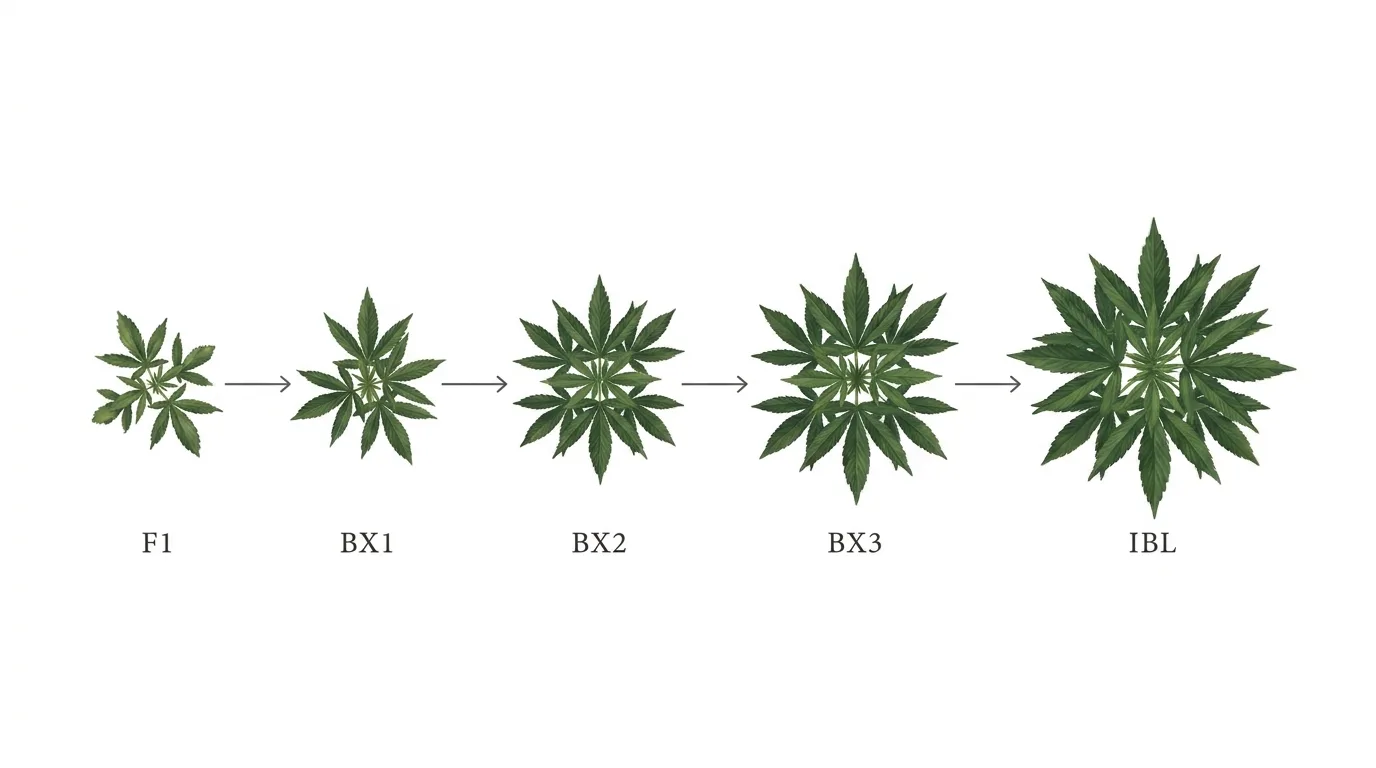
Breeders, and the curious. You need males to make pollen, so any crossing or stabilising work — building an F1, hunting an F2, backcrossing to lock a trait — starts with regular seeds and the full spread of plants they give you. Some growers also prefer them for a feeling of extra vigour and a wider gene pool to phenotype-hunt through. The cost is work: you grow more plants than you keep, you sex them and cull the males before they pollinate everything, and that needs space and attention. If you are not breeding, skip them for now.
So which should you buy?
Line it up against what you want. Growing to smoke, first time, want forgiveness: feminized photoperiod. Want it fast and simple, or your space is awkward: feminized autoflower. Want to breed or hunt genetics: regular. Whatever you choose, the single biggest quality lever is the breeder, not the type — a well-made feminized seed from stable stock beats a cheap one that hermies every time. Our Seed Finder lets you filter by all three types with honest grow notes, which is the easiest way to match a seed to your space before you commit.
Genetics & live prices from Herbies Head Shop. Grow Good Bud may earn a commission — it never changes your price. Grow legally & responsibly.
Common questions
What is the difference between feminized, regular and autoflower seeds?
Feminized seeds grow almost all female plants (the ones that make buds). Regular seeds are roughly half male, half female, and are mainly for breeding. Autoflower seeds flower on age instead of a light change — they are usually also feminized. Feminized-vs-regular is about sex; photoperiod-vs-autoflower is about what triggers flowering.
Should a beginner buy feminized or autoflower seeds?
Both are beginner-friendly. Feminized photoperiods give all-female plants with room to recover from mistakes. Feminized autoflowers are faster and simpler but run on a fixed clock. Pick feminized for your first grow either way — regular seeds mean sexing and culling males, which is extra work you do not need yet.
Why would anyone buy regular seeds?
For breeding and for genetic reasons. You need males to make pollen, and regular seeds give the full range of plants to select mothers and fathers from. Many growers also feel regular-seed plants have a touch more vigour. If you are not breeding, you do not need them.
Can feminized or autoflower seeds turn hermaphrodite?
They can, especially from a poorly made batch or under stress. A good breeder selects reversal stock that never hermies, which is why the source matters more than the price. Keep the environment steady and avoid light leaks to lower the risk.
Can you clone an autoflower?
Not usefully. A cutting is the same age as the mother, so it flowers almost immediately as a tiny plant. Clone photoperiods; grow autos from fresh seed each time.