How to Make a Cannabis Cross (Breeding Basics)
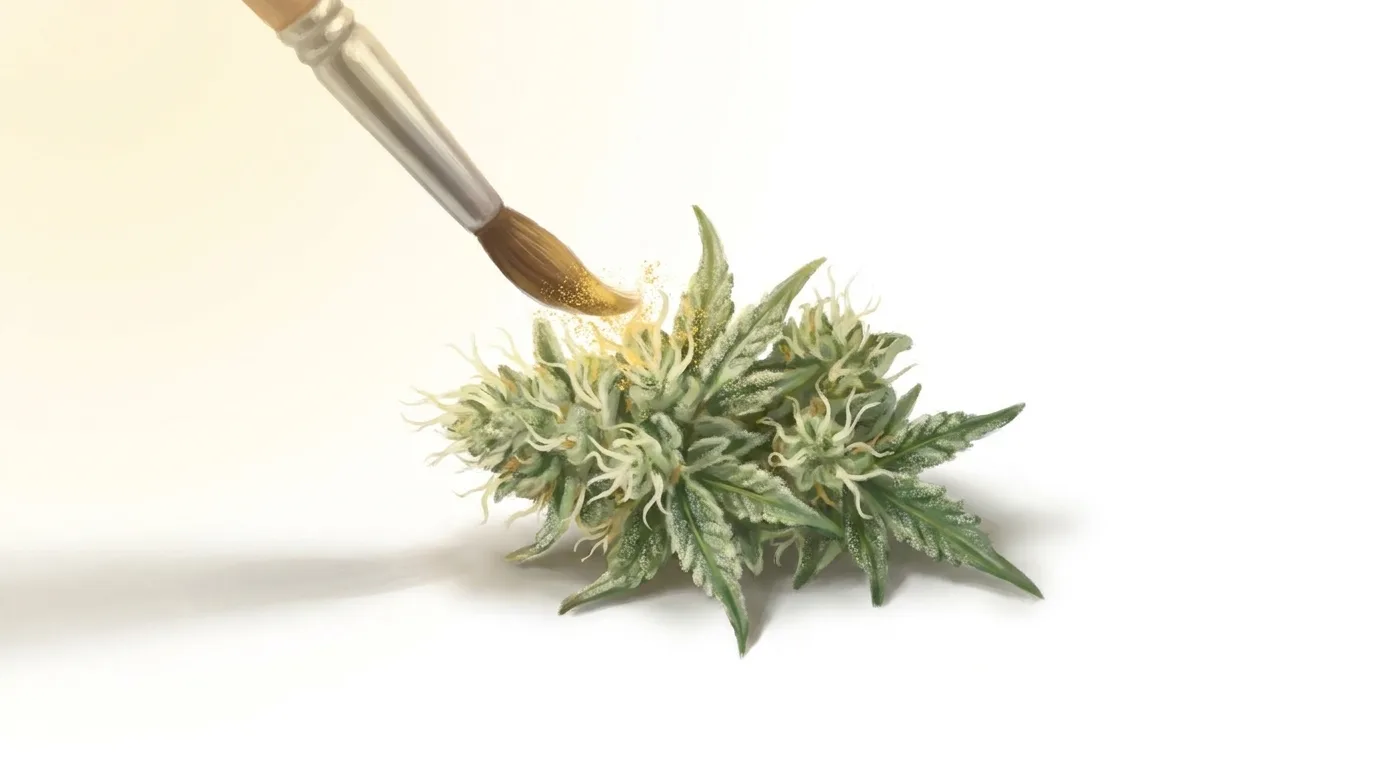
To make a cannabis cross, pick a good male (vigour, structure, a pungent stem rub), isolate it so pollen can’t drift, then collect its pollen in a bag, sieve it, and store it dry and cold. Dab the pollen onto receptive female pistils — white, plump and upright, usually around weeks two to three of flower — with a fine brush on chosen branches only, then mist the plant to kill stray pollen. Mature seeds (dark, mottled, hard-shelled) come 4–6 weeks after pollination. One cross gives a spread of offspring, not copies, so a stable strain takes generations.
Making a cross is the hands-on bit of breeding: getting pollen from a male onto a female’s pistils, on purpose, on the branches you choose. It’s not hard, but the difference between a controlled cross and the Broadcaster’s seeded disaster is in the details. Here’s how to do it cleanly.
The short version:
- Pick a good male — vigour, structure, a pungent stem rub — not just the first one
- Isolate the male so pollen can’t drift to your flowering females
- Collect pollen in a bag, sieve it, and store dry and cold
- Pollinate receptive (white, upright) pistils with a brush, on chosen branches only
- Mature seeds (dark, hard, mottled) come 4–6 weeks after pollination
Want the full breakdown? Keep scrolling.
How do I choose and isolate the male?
The male contributes half the genetics, so don’t just grab the first one with pollen (the Matchmaker’s mistake — choosing a father at the bus stop). Evaluate it: vigour (fast, strong growth), structure (tight internodes, self-supporting frame — structure is heritable), and a stem rub (rub the stem and smell — pungent and complex is promising, bland or grassy is a warning). You can’t see a male’s hidden traits — bud density, terpenes, resin — so serious breeders ultimately judge a male by growing out its offspring. Then isolate it: the moment it shows pre-flowers, move it to a separate room or tent, because pollen is microscopic and travels on air, clothes and hands. Change your shirt and wash up before going back to the females — one grain is enough to seed a crop.
How do I collect and use the pollen?
Collect: when the male’s sacs look swollen and about to open, slip a paper bag or parchment envelope over a branch, secure it at the base, and leave it a few days; the sacs open inside and pollen gathers at the bottom. Shake gently, remove carefully, and sieve through fine mesh to remove debris. Store it in a small airtight container with a silica desiccant packet in the freezer — viable for weeks to a couple of months — and don’t repeatedly freeze and thaw it (DIG stock parchment and brushes). Pollinate: timing matters — you want the female’s pistils white, turgid and upright, usually around weeks two to three of flower (browned pistils are past receptive). Dab pollen onto the pistils of chosen branches only with a clean fine paintbrush, bag that branch for 48 hours to contain stray pollen, then remove the bag and mist the plant with water to kill loose pollen before it reaches the unpollinated flowers.
Then what happens?
The pollinated branch diverts energy from flower to seed development (some growers nudge nitrogen up a little to support it), while the unpollinated branches keep flowering normally — so you harvest both seeds and smokable flower from one well-planned plant. Seed maturity comes 4–6 weeks after pollination: split a calyx and a ripe seed is dark brown or grey with tiger-stripe mottling and a hard shell that won’t crush between finger and thumb; green, white or pale seeds are immature and won’t germinate reliably. And here’s the honest catch — making the cross is the easy part. Those seeds won’t be copies of the parent you liked; a single cross gives a spread of offspring, which is why turning a cross into an actual stable strain takes generations of selection. But for crossing two plants you like and getting viable seeds, this is the method.
Common questions
How do you pollinate a cannabis plant?
Collect pollen from an isolated male, then dab it onto the receptive white pistils of chosen female branches with a fine brush. Bag the branch briefly, then mist the plant to kill stray pollen.
When are the pistils ready to pollinate?
When they're white, plump and standing upright — usually around weeks two to three of flower. Pistils that have already browned and curled are past their most receptive.
How long until the seeds are ready?
About 4–6 weeks after pollination. Ripe seeds are dark, mottled and hard-shelled; pale or green seeds are immature and won't germinate reliably.