F1, F2 and Why One Cross Isn't a Strain
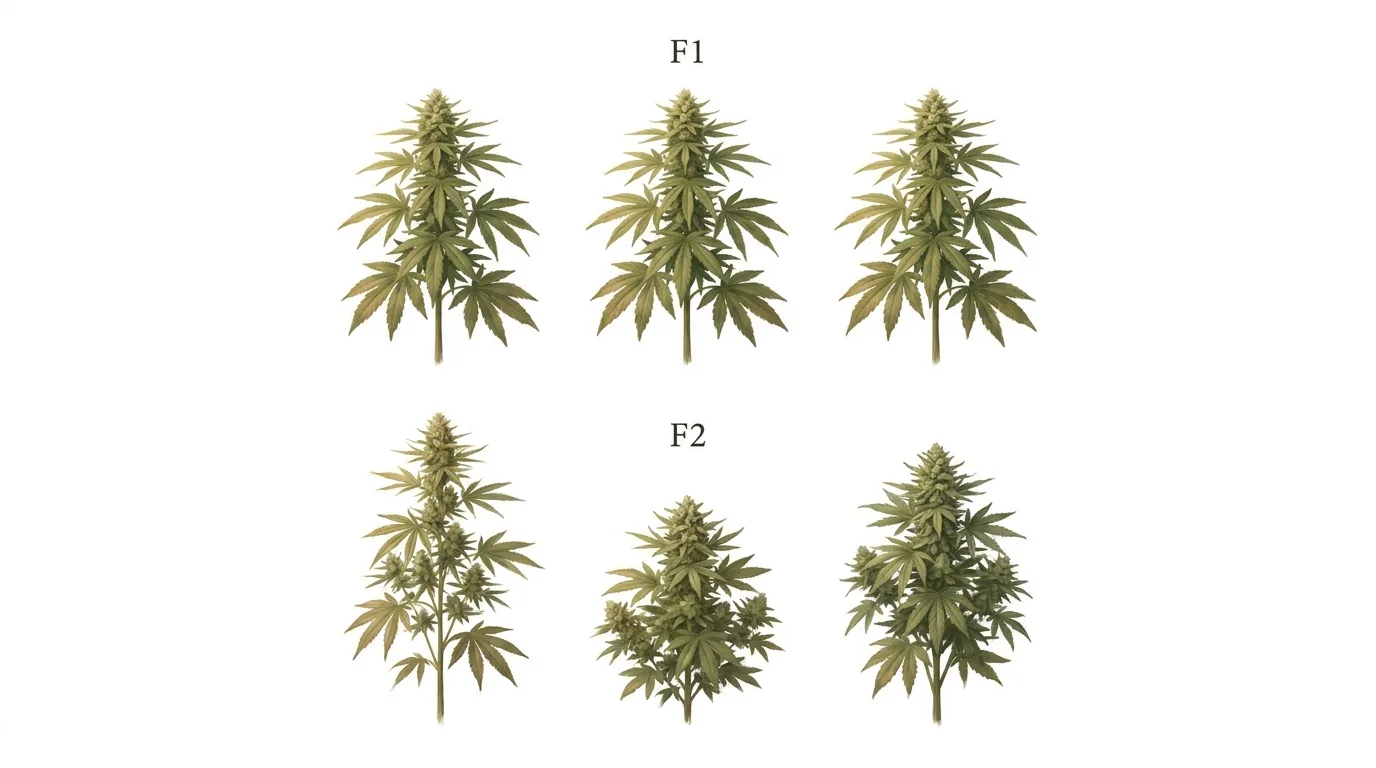
F1 means first filial generation — the first offspring of crossing two distinct parents, vigorous and fairly uniform — and “F1” on a packet means first generation, not “premium” or “stabilised.” Cross two F1s and you get F2s, where hidden recessive traits split the offspring into wide variation. One good plant from a small batch isn’t a strain; a real strain takes generations of growing out large populations, selecting and culling to stabilise the traits.
This is the bit that trips up every hobby breeder: the belief that crossing two good plants gives you a batch of identical good plants. Genetics doesn’t work like that. Understanding F1, F2 and what “stabilised” really means is the difference between making a strain and naming a lucky single plant. It also explains why the seeds you buy are as consistent as they are.
The short version:
- F1 — first generation from crossing two distinct parents: vigorous and fairly uniform
- F2 — cross two F1s and the traits split apart into wide variation
- “F1” on a packet means first generation, not “premium”
- One good plant from a small batch isn’t a strain — it’s one phenotype
- A real strain takes generations of growing out, selecting and culling
Want the full breakdown? Keep scrolling.
What are F1 and F2?
Cross two distinct parents — say a dense indica and a productive sativa — and the seeds are F1 hybrids (first filial generation). F1s tend to be vigorous (hybrid vigour) and relatively uniform, because each one gets a set of genes from each parent and the dominant traits express — like a class that all got the same homework, broadly similar with minor variation. Think commercial sweetcorn: nearly all of it is F1, grown from two inbred parent lines crossed for uniform, vigorous, same-time-harvest offspring. Some seed banks work this way — what they sell as a “strain” is a repeated F1 cross of the same two parents. Now cross two F1s together (or self one) and you get F2s — and this is where the wheels come off.
Why do F2s split into chaos?
Because recessive traits hiding behind dominant ones in the F1 suddenly emerge. A height gene masked in the F1 shows up in a quarter of the F2s; a terpene profile from a grandparent appears in some plants and not others. The variation is enormous — plants that look like Grandma, plants like Grandpa, plants like something neither grandparent showed, and the occasional one that’s exactly what you wanted. Traits don’t even land neatly: incomplete dominance can give you a blend neither parent showed. So “cross the indica with the sativa” doesn’t give you an indica with sativa effects — it gives a spread of combinations plus surprises. That’s why the Matchmaker’s four F1 seeds became four completely different plants (one tall, one anxious, one hermie carrying a hidden intersex trait, one lucky good one) when he expected four copies.
So what does it take to make an actual strain?
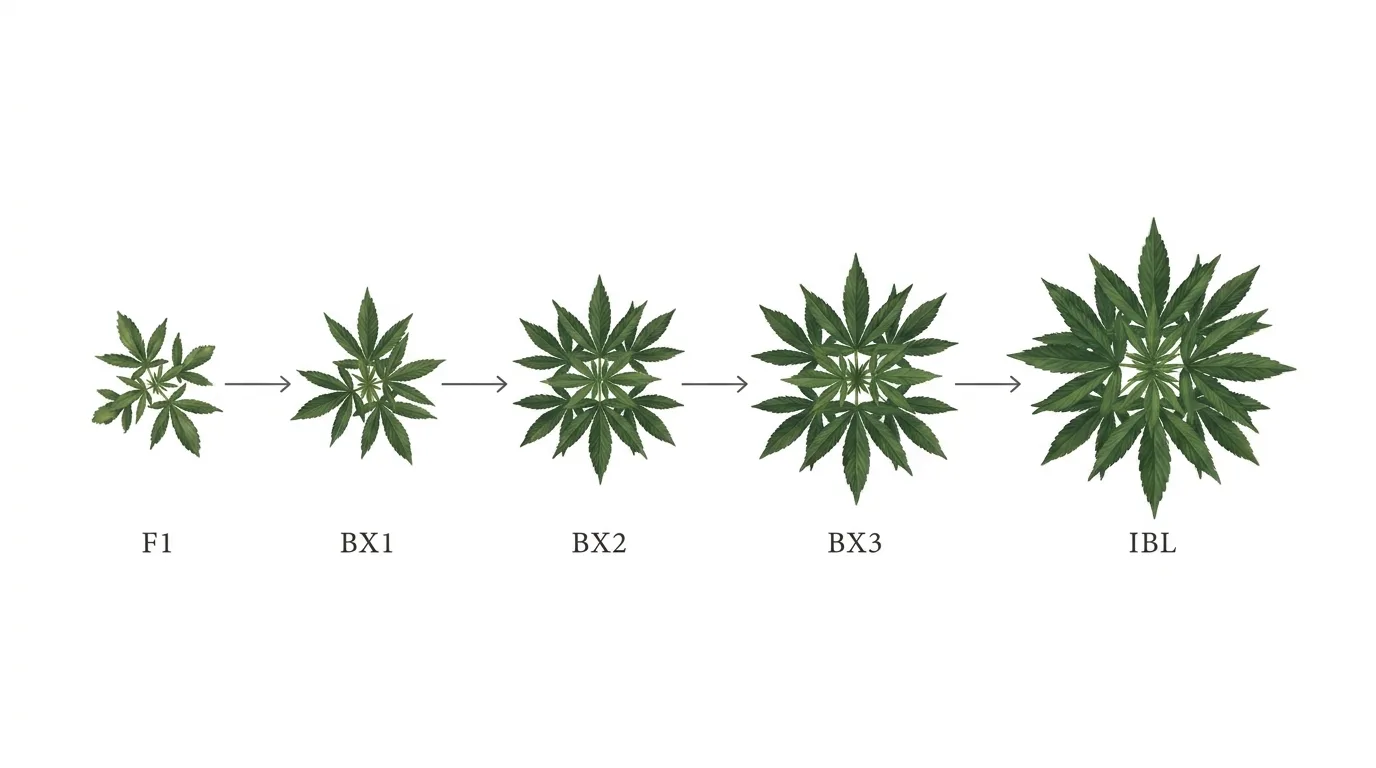
The work most hobby breeders skip. One good plant from six F2s isn’t a strain — it’s a single phenotype from a population too small to mean anything (the Shortcutter putting a logo on a lucky plant). Real breeding starts where most stop: you grow out not six F2s but fifty, a hundred, two hundred, evaluate every one on structure, flowering time, terpenes, resin and effect, cull the ones that miss, keep the few that hit, cross those, and grow the next generation — narrowing the variation and concentrating the traits, generation after generation. Then you stabilise (often via backcrossing) until the line breeds true. The strain you bought already had this done — years of selection you never saw, which is exactly why ten of those seeds grow ten similar plants. CSB sell stabilised lines for that reason. Making a cross is ten minutes; making a strain is years.
Common questions
What does F1 mean on cannabis seeds?
First filial generation — the first offspring of crossing two distinct parents. F1s are vigorous and fairly uniform, but it means "first generation," not "premium" or "stabilised."
Why are my F2 plants all different?
Because crossing two F1s lets hidden recessive traits emerge, so the offspring vary widely in height, structure, smell and more. F2 populations are famously inconsistent.
Can I make my own strain from one cross?
Not really. One cross gives a spread of phenotypes; a true strain needs generations of growing out large populations, selecting and culling to concentrate and stabilise the traits.