You Don't Have to Run 12/12 — Photoperiod Science
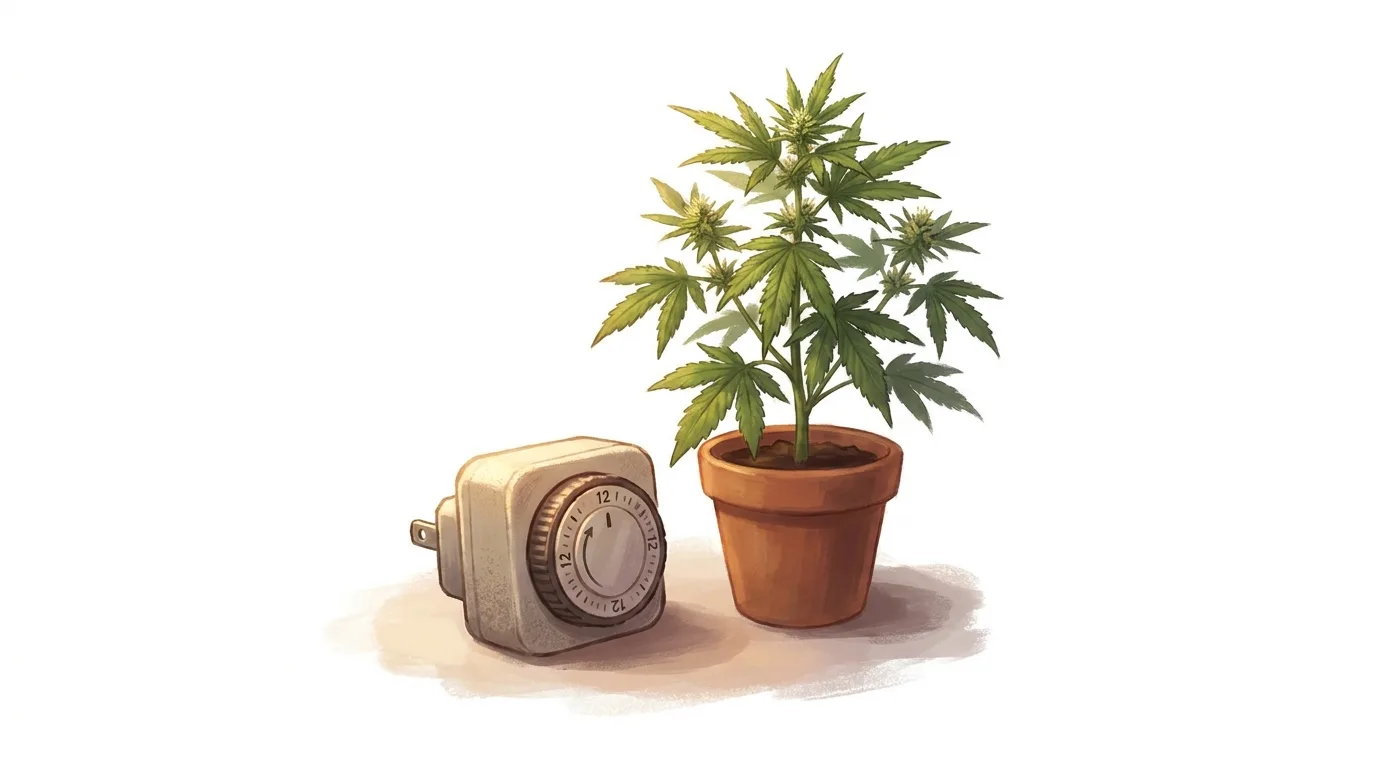
12/12 is a safe default, not a hard rule: flowering is triggered by the length of uninterrupted darkness, not the hours of light, so 12 hours of dark is a reliable threshold rather than a yield ceiling. In one study a 14-hour flowering photoperiod more than doubled cannabinoid yield in a CBD line and lifted a THC line by about 50%, with no change in a third. The one non-negotiable rule is that the dark period stays genuinely unbroken — light leaks do more harm than your exact schedule.
“Flip to 12/12 to flower” is the rule every beginner learns, and it works — but it slightly misrepresents what the plant is responding to. Understanding that flowering is triggered by the night, not the light, explains why some growers run other schedules and, more importantly, why light leaks are so destructive. Here’s the science, kept simple.
The short version:
- Flowering is triggered by the length of uninterrupted darkness, not the hours of light
- A photoperiod plant flowers once the night is long enough (around 12 hours)
- So “12/12” is a safe standard, not a magic number — the dark period is the signal
- Some growers run slightly different schedules; the dark period must stay uninterrupted
- This is also why light leaks at night wreck flowering
Want the full breakdown? Keep scrolling.
What actually triggers flowering?
Not the twelve hours of light — the long, unbroken night. A photoperiod plant senses the length of continuous darkness and, once that dark period is long enough (roughly 12 hours for most strains), it reads “autumn is coming” and switches to flowering. The light period is almost incidental; the plant is effectively timing the dark. That’s why 12/12 became the standard: twelve hours of darkness reliably clears the threshold for nearly all photoperiod strains, with twelve hours of light to power bud growth. It’s a safe, sensible default — but it’s a default, not a law of nature, and knowing why it works tells you what you can and can’t change.
Does that mean I can run other schedules?
To a degree, yes — which is the “you don’t have to run 12/12” point. Because the trigger is the night, some growers run schedules with a slightly longer night (say 11/13 or 10/14) in late flower, on the reasoning that a bit more darkness can nudge some strains to finish a touch faster, at the cost of fewer hours of light per day for the buds. Others stick rigidly to 12/12 for simplicity and maximum daily light. The honest position: 12/12 is the reliable, well-tested choice, and deviating from it is a refinement for experienced growers to experiment with and record, not something a first-timer needs. What you can’t do is shorten the dark period below the strain’s threshold and still expect clean flowering — drop too little darkness and the plant may not flip or may revert.
Why does this make light leaks so serious?
Because the plant is measuring uninterrupted darkness, even a brief interruption resets the signal. A sliver of light during the night — from a cracked tent zip, a standby LED on a power strip, a gap in the ducting, or opening the tent “just for a second” — tells the plant the night isn’t really that long after all, and the conflicting signal can cause it to revert toward veg, stall flowering, or stress into hermaphroditism and seed itself. That’s why the single rule that never changes, whatever schedule you run, is that the dark period must be genuinely dark and unbroken. Get inside the tent at night, shut it, let your eyes adjust, and tape up anything you can see (a green work light is safe to check by, since plants barely respond to green). Respect the night and the schedule looks after itself.
Common questions
Does cannabis flower based on light or darkness?
Darkness. A photoperiod plant flowers in response to the length of uninterrupted night, not the hours of light. Once the dark period is long enough (around 12 hours), it switches to flowering.
Do I have to run exactly 12/12 to flower?
12/12 is the reliable standard, but the real trigger is a long enough night. Some growers run slightly longer nights in late flower; the key is keeping the dark period long and uninterrupted.
Why do light leaks ruin flowering?
Because the plant measures uninterrupted darkness — any light during the night breaks the signal, which can cause reverting, stalled flowering, or stress that turns the plant hermaphrodite.