Should I Defoliate My Cannabis? When Leaf Removal Helps
Whether to defoliate is situational, not a guaranteed gain: it can help a healthy, bushy plant by getting light and air to shaded lower bud sites, but it can cost you on a stressed or already-open one, and effects on cannabinoids vary by location on the plant with no clean repeatable yield bump. Defoliate selectively — roughly day 21 and a light week-six cleanup, never week one or a stressed plant — and on a first grow, keep it light or skip it.
Few topics start more forum fights than defoliation — half swear by stripping leaves for bigger buds, half swear it ruins yields. Both are right, depending on when and how. The fan leaves are the plant’s engine, so every one you remove is energy lost; the question is whether what you gain in light and airflow is worth it. For a beginner, the honest answer is “less than you think, and later than you’d like.”
The short version:
- Fan leaves are solar panels — removing them costs photosynthesis
- Defoliate only with a clear reason: a leaf directly shading a bud site, or airflow around dense colas
- The windows are roughly day 21 and around week six — selective, not a massacre
- Never defoliate a stressed, underfed or stretching plant
- First grow? Keep it light, or skip it entirely
Want the full breakdown? Keep scrolling.
When does defoliation actually help?
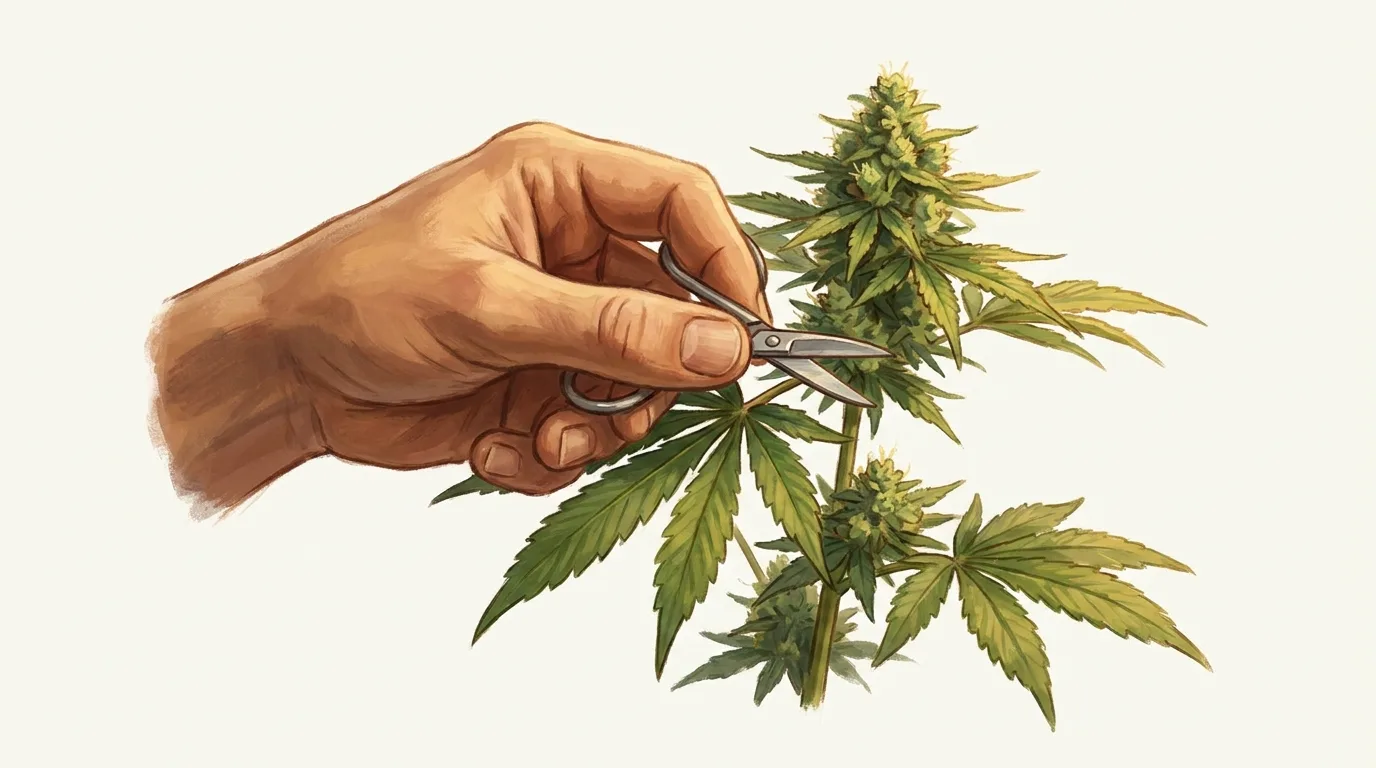
Three honest cases. Around day 21, when the stretch is over and bud sites are established, you can finally see what’s shading what — removing the fan leaves directly blocking major bud sites (and only those) opens light to the lower canopy and improves airflow. Ten to fifteen leaves, maybe twenty on a big plant; more than that and you’re overdoing it. Around week six, a second light cleanup if the plant is dense and airflow is a concern. Preventing bud rot — in a humid space with fat colas, pulling the leaves tucked inside or against the buds improves airflow and breaks up the microclimate botrytis loves. That’s reactive defoliation, solving a specific problem rather than following a schedule.
When should I leave the plant alone?
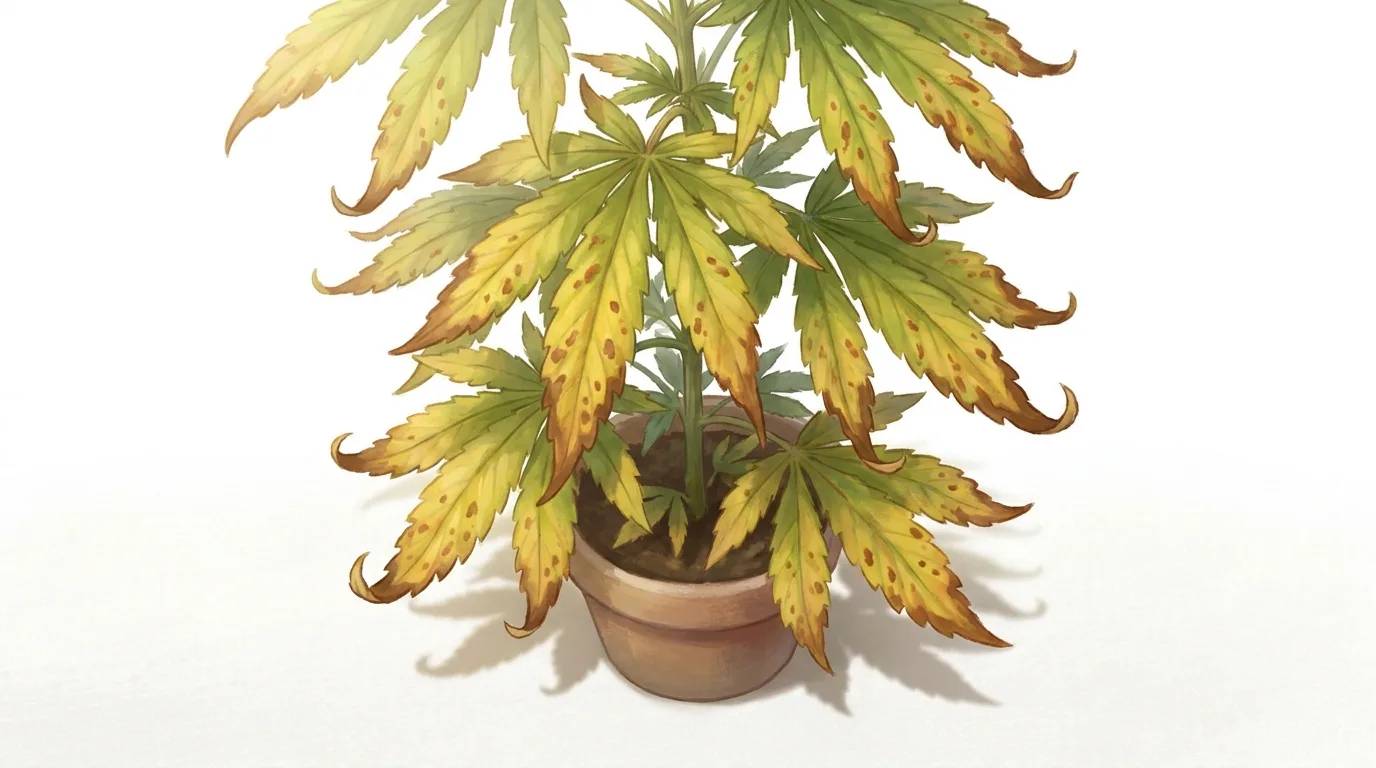
Week one of flower (she’s still stretching and building), any time she’s stressed (nutrient issues, pests, pH swings), or whenever you’d be removing leaves “just because” with no clear reason. The Barber strips every fan leaf mid-flower off a plant already running on fumes — yellowing tips, an unresolved lockout — because a YouTube video showed a healthy plant bounce back in three days. His plant stalls, no new growth for ten days, the buds just stop. Defoliation redirects energy on a vigorous plant with reserves to spare; on a struggling one it simply removes energy, like taking calories from someone who’s ill.
What about the heavy “modern” method?
There’s a dominant tent-grower approach that strips harder at two moments — day zero (lollipop the bottom third, thin the upper fan leaves) and around day 21 (clear leaves shading bud sites), then hands off until harvest. The logic mirrors cotton farming: buds fatten best in direct light and moving air, and a bushy canopy leaves most sites in shadow. Side-by-side tests have shown the defoliated plant producing denser buds — but it’s strain-dependent. Thick-canopied indicas where you can’t see the lower half benefit most; airy sativas that already let light through may not need it. If light already reaches the bottom of your plant, leave her be. If you want to try the heavy method, try it on one plant against an untouched one of the same strain and compare at harvest. That’s data. Everything else is faith — and on a first grow, a selective day-21 trim and a light week-six cleanup is the safer path.
Common questions
Does defoliation increase yield?
It can on a healthy, bushy plant by getting light and air to lower bud sites — but it can cost yield on a stressed or already-open plant. It's strain- and condition-dependent, not a guaranteed boost.
When should I defoliate in flower?
Selectively around day 21 once bud sites are set, and optionally a light cleanup around week six. Avoid week one and any time the plant is stressed.
How many leaves should I remove?
Only those directly shading bud sites or trapping humidity around dense colas — think ten to twenty on a big plant, not a full strip. A plant with no fan leaves has no engine.