Your First Cannabis Grow: A Complete Beginner Roadmap
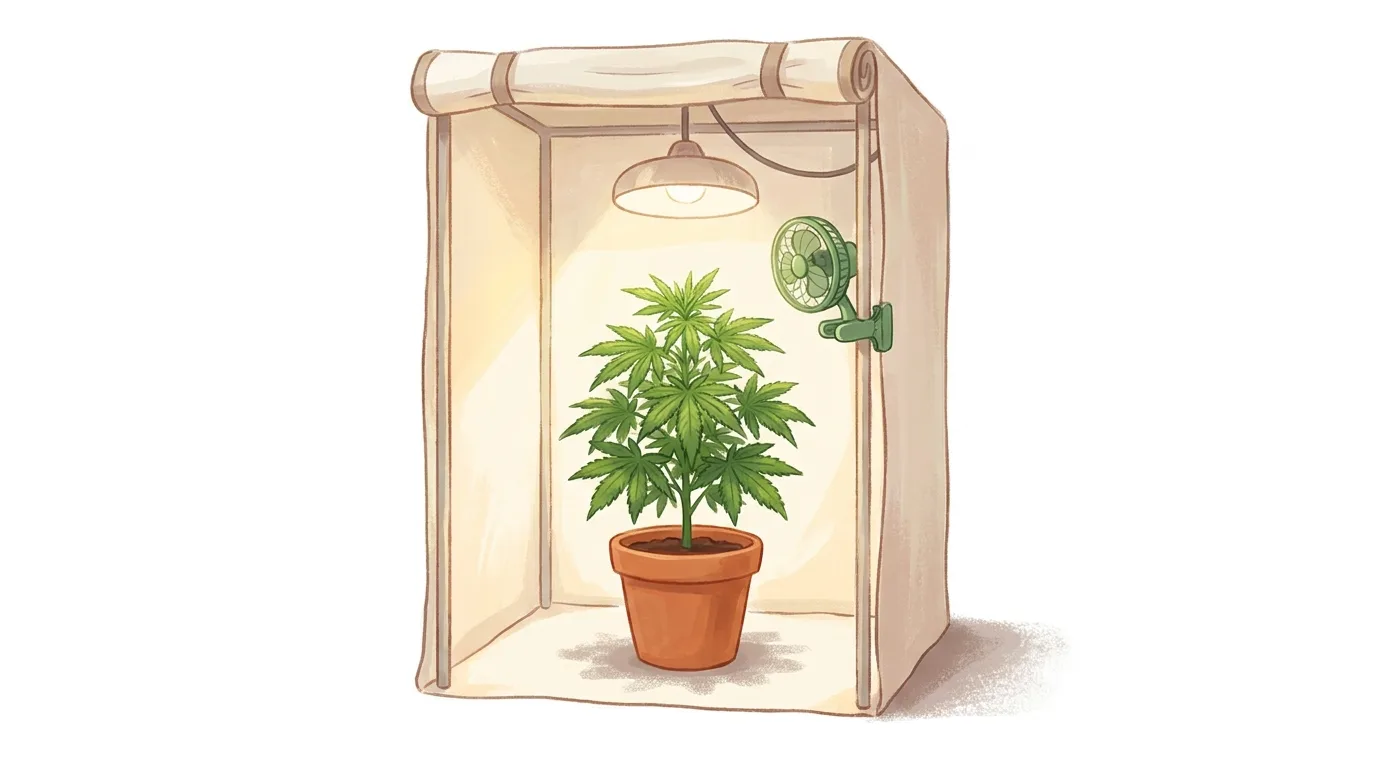
For a first cannabis grow you need a tent sized to your space (an 80x80cm is the usual first choice), an honest-wattage LED, an extraction fan with carbon filter, fabric pots, soil, a pH pen and a cheap thermo-hygrometer and loupe — and a forgiving, beginner-rated hybrid with an 8–9 week flower or an autoflower. Flip to flower when the canopy covers ~60–70% of the floor, harvest by trichomes (cloudy with a little amber), dry slow over 10–14 days, then cure in jars for weeks. The most common first-grow mistake is doing too much; change one thing at a time and wait 48–72 hours before reacting.
A first grow feels like a hundred decisions at once. It isn’t — it’s a handful of decisions made at the right moments, with a lot of patient watching in between. Here’s the whole thing as one roadmap: what to buy, what to grow, and the one key call at each stage.
The short version:
- Kit: a tent sized to your space, an honest-wattage LED, extraction + carbon filter, fabric pots, a pH pen
- Strain: a forgiving, beginner-rated photoperiod hybrid or an autoflower
- Seedling: restraint — soft light, little water, no food
- Veg: feed gently, train for an even canopy, flip when the canopy’s two-thirds full
- Flower & finish: hold the environment, harvest by trichomes, dry slow, cure properly
Want the full breakdown? Keep scrolling.
What do I buy, and what do I grow?
Keep the kit simple and matched. A tent sized to your space (an 80x80cm is the usual first choice), an LED with honest wall draw and a PPFD map that covers the footprint, an extraction fan with a carbon filter sized to the tent, fabric pots, a decent soil (light mix for seedlings, rich mix for the final pot), a pH pen, and a cheap thermo-hygrometer and loupe. DIG stock all of it, and matching the light and fan to the tent prevents most environment grief. For genetics, pick a forgiving, beginner-rated hybrid — medium feeding, 8–9 week flower — or an autoflower if you want speed and simplicity (CSB have a beginner section). Don’t chase the highest THC number or a 14-week sativa for your first run; pick something that tolerates a learning curve.
What’s the key decision at each stage?
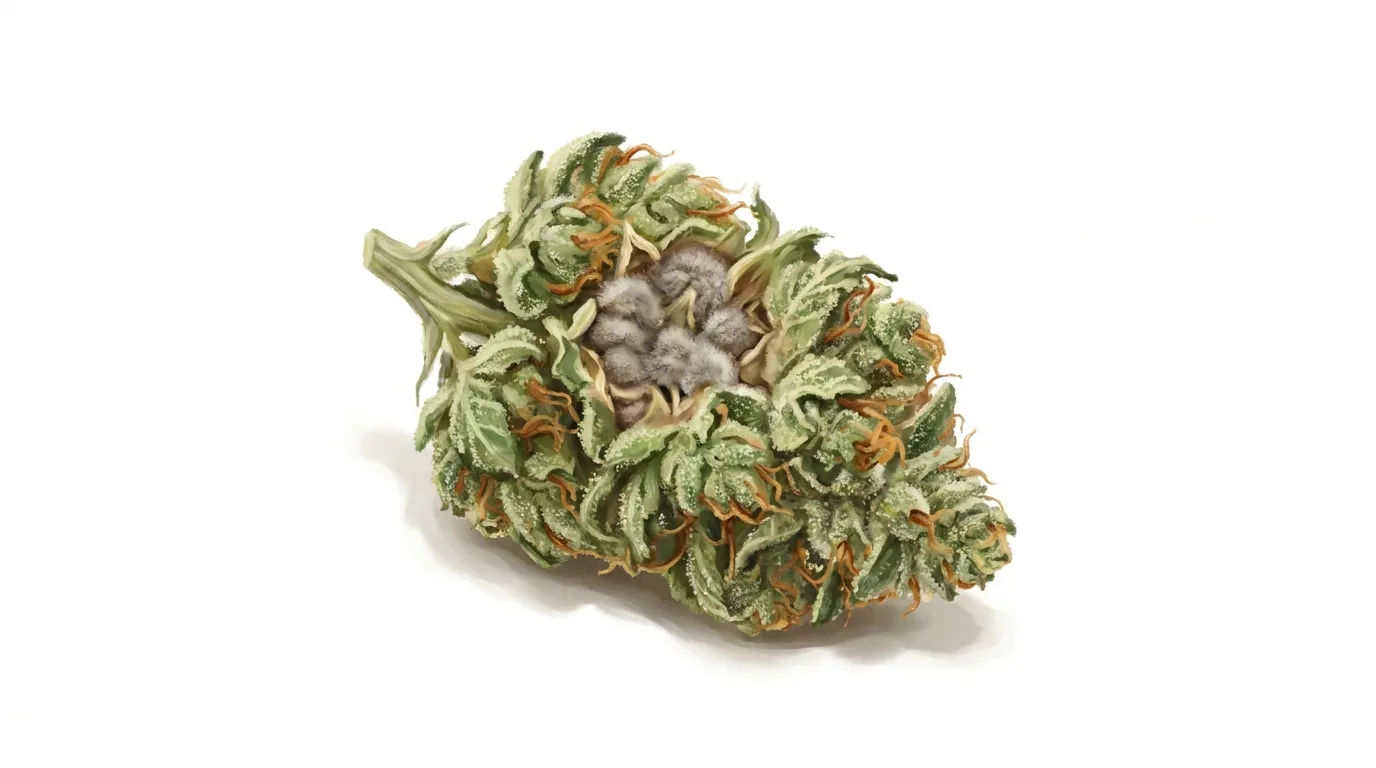
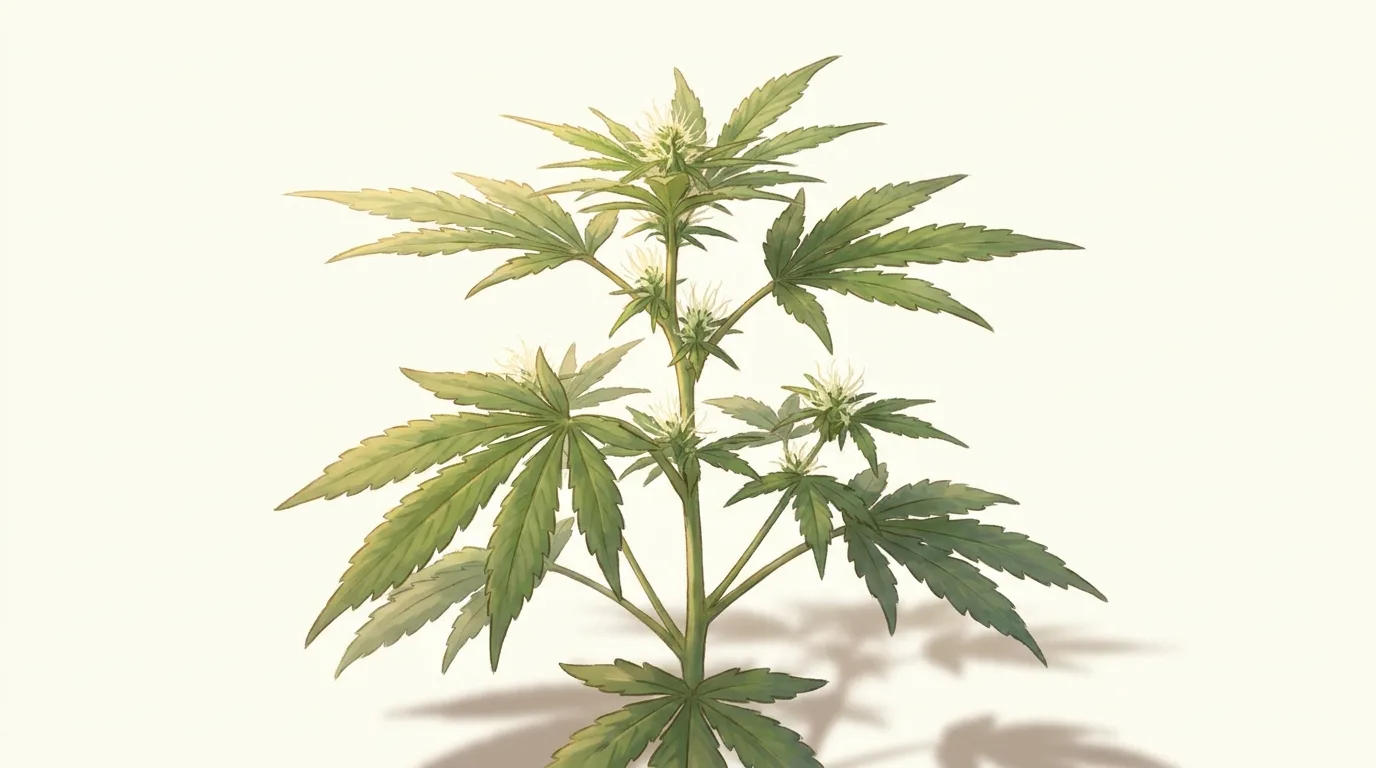
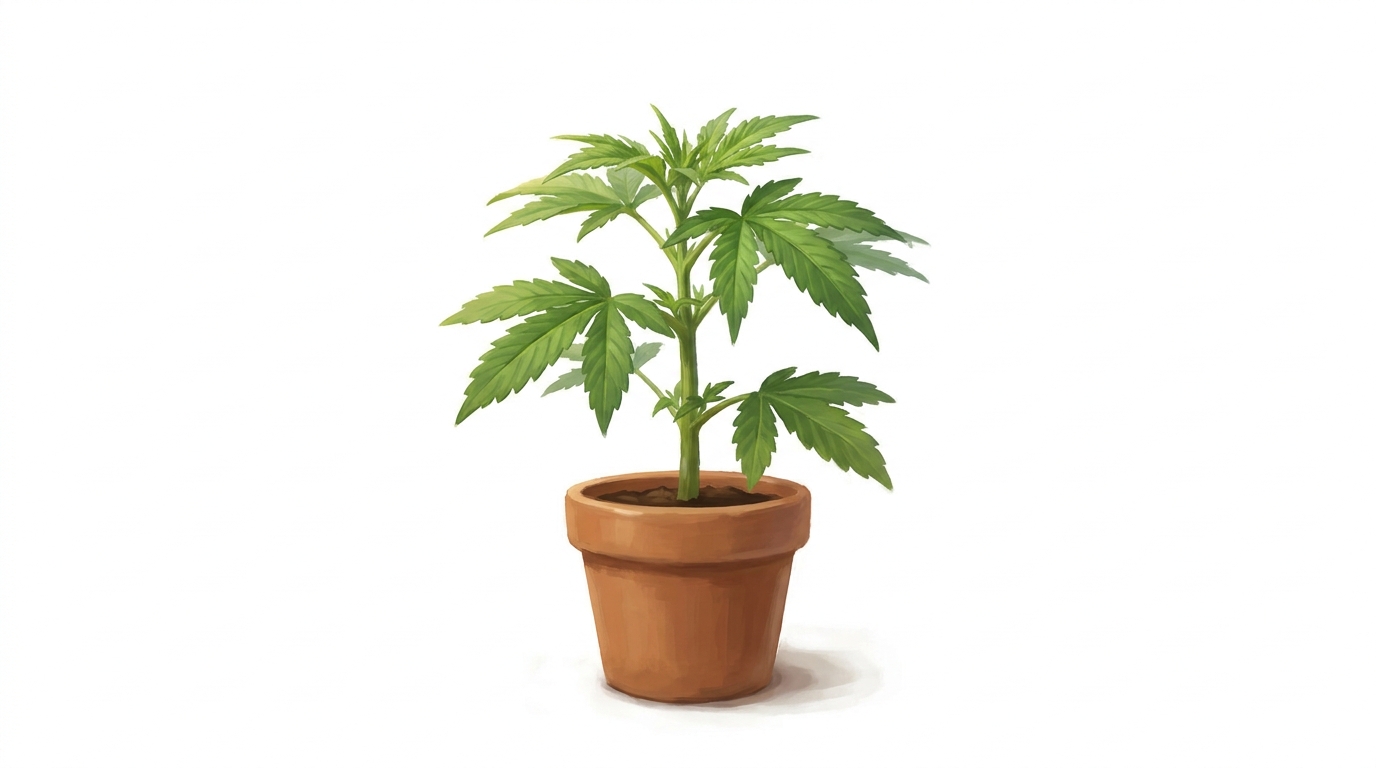
Seedling: the decision is restraint — soft far light, water with a spray bottle by weight, no nutrients, and hands off. Early veg: start feeding at quarter strength around day 21 and build slowly (the bottle dose is a ceiling), and begin gentle training at 5–6 nodes. Late veg: the big one — flip when the canopy covers ~60–70% of the floor and the plant’s at half its final height, because it’ll double in the stretch. Flower: shift to a bloom feed at half strength, bring humidity down toward 45–50%, and check pH before reacting to anything. Finish: harvest by the trichomes (cloudy with a little amber), not the calendar; dry slow over 10–14 days; cure in jars for weeks. One key call, calmly made, at each step.
What’s the mindset that makes it work?
Most of growing is watching, and most of the skill is knowing when not to act. Nearly every beginner disaster is the same impulse in different clothes — doing more when the plant is asking for less: the overwater, the overfeed, the over-trim, the over-plan. The case-study grower abandoned a laminated spreadsheet by week four and replaced it with a notebook of dates, observations and deliberate non-actions, and pulled 250g from four plants on a first run. So: change one thing at a time, wait 48–72 hours, write down what you see, and when a leaf curls and you don’t know why, give it a day before you act. The plant is usually grand. Give it light, water, air, food and time — and get out of the way.
Common questions
What do I need for my first cannabis grow?
A tent sized to your space, an honest-wattage LED, an extraction fan with carbon filter, fabric pots, soil, a pH pen and a cheap thermo-hygrometer and loupe. Match the light and fan to the tent.
What strain should a beginner grow?
A forgiving, beginner-rated photoperiod hybrid with a moderate 8–9 week flower, or an autoflower for speed and simplicity. Avoid finicky long-flowering sativas and chasing the highest THC.
What's the most common first-grow mistake?
Doing too much — overwatering, overfeeding, over-trimming and over-planning. The fix is restraint: change one thing at a time, watch the plant, and act only when it actually needs it.