Cannabis Bud Rot in Flower: Spotting It Early
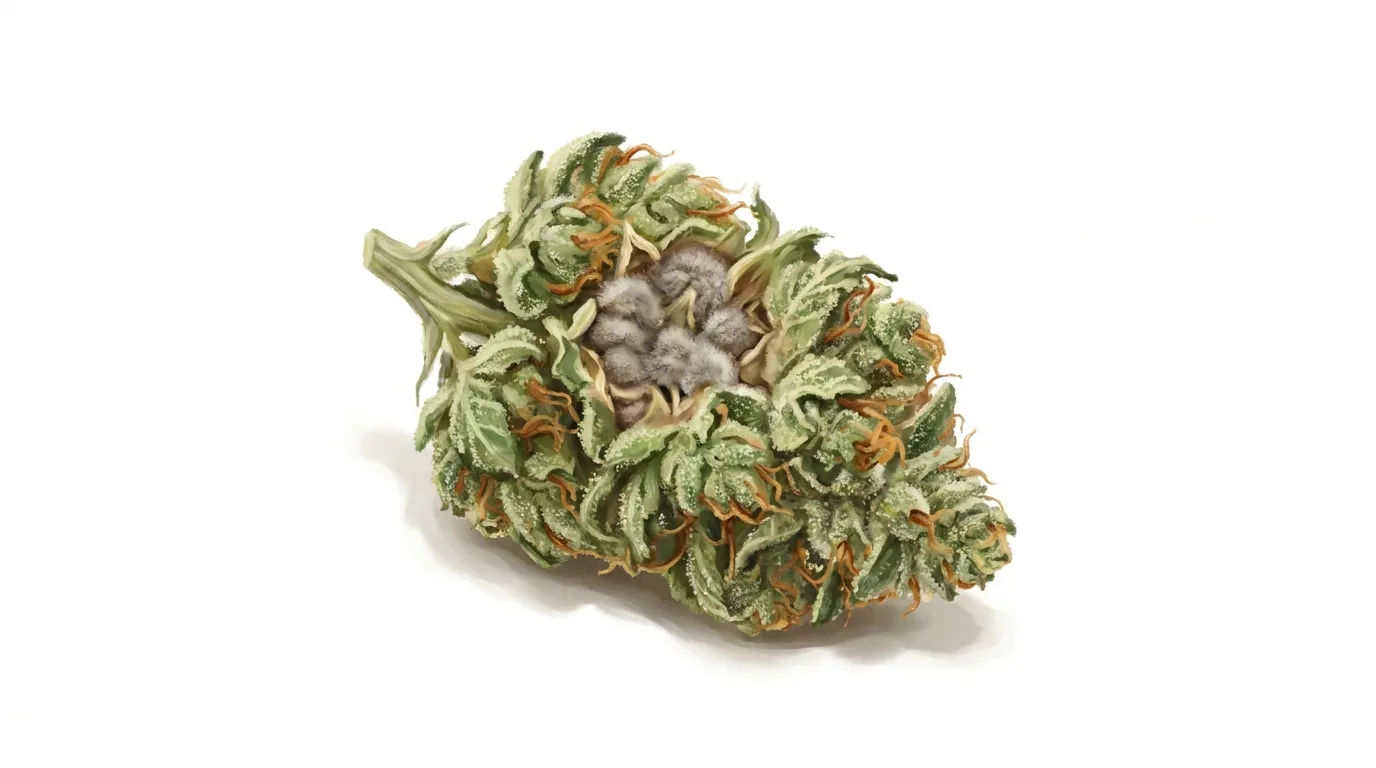
Short answer: bud rot (botrytis) starts inside the densest colas and works outward, so the first tell is usually a single sugar leaf gone yellow or brown that pulls out too easily — open the bud, and grey mush with fine webbing means rot.
There’s no cure for infected tissue: cut the bud out well into clearly healthy growth, bag it, sterilise tools and remove it from the tent. Prevent it on environment — humidity below 50% (40% in the final weeks), moving air, good extraction and a dehumidifier in damp climates. Botrytis — bud rot — deserves its own warning, because it hits hardest at the finish line on your biggest, densest colas, and it works from the inside out where you can’t see it. In a cool, damp climate like Ireland it’s a when, not an if. Catching it early is the whole game.
The short version:
- Bud rot starts inside dense buds and works outward — invisible until late
- First tell: a single sugar leaf gone yellow/brown for no clear reason, pulling out too easily
- Open the bud — grey, mushy, fine webbing inside means it’s rot
- Cut it out well into healthy tissue, bag it, sterilise tools, remove from the tent
- Prevent it: humidity below 50% late, moving air, good extraction, a dehumidifier
Want the full breakdown? Keep scrolling.
How do I spot bud rot early?
Look for the thing that doesn’t fit. The first sign is usually a single leaf emerging from a bud that’s gone yellow or brown for no apparent reason while everything around it looks healthy, and it pulls away too easily, without resistance. Sometimes there’s a faint musty or ammonia smell near the affected cola. If you see any of that, open the bud gently and look at the core: grey or brown discolouration, mush, or a fine web of mould means botrytis. It starts in the warmest, most humid, least-ventilated spot — the dense centre of a fat cola — so by the time it’s visible outside, the inside is already gone. On my third grow I lost four colas, the biggest ones, because the tent ran warm at 60% humidity and I didn’t catch the first discoloured leaf for days.
What do I do if I find it?
Act now — there’s no treatment for infected tissue, only removal. Cut the affected bud out and cut well below it, into clearly healthy tissue — not just the fuzzy part. Bag it immediately, take it out of the tent, and don’t let it touch other buds on the way. Sterilise your scissors between cuts and wash your hands and tools before handling another plant, because botrytis spores are airborne and sticky and will spread if you’re careless. Then increase airflow, drop the humidity as low as you can manage, and inspect every cola on every plant twice a day until harvest. If it’s spreading fast and you’re close to done, the smart move can be an early harvest — a slightly premature, clean harvest beats losing more to rot.
How do I prevent bud rot?
Prevention is the only real answer, and it’s all environment. Keep humidity below 50% in mid-to-late flower, heading to 40% in the final weeks. Keep air moving — a small oscillating fan across the canopy (not blasting the buds) to break up the still pockets where rot sets in, plus good extraction pulling warm moist air out the top with fresh air coming in low. Where colas are dense, selectively remove the fan leaves sitting right against or inside the buds to improve airflow — one of the few legitimate reasons to defoliate in flower. And in a cool, damp climate, a dehumidifier in the room the tent lives in isn’t optional kit, it’s insurance — the ambient humidity is fighting you from October onward. DIG stock dehumidifiers and clip fans, and they’re a lot cheaper than losing your best colas.
Common questions
What does bud rot look like?
Grey or brown mushy tissue with fine webbing inside a bud, often signalled first by a single yellowing sugar leaf that pulls out too easily. It rots from the inside out.
Can you save a plant with bud rot?
You can save the unaffected parts. Cut out infected buds well into healthy tissue, remove them from the tent, sterilise tools, and tighten the environment. Badly affected, close to done — harvest early.
How do I prevent bud rot?
Keep humidity below 50% (40% late), keep air moving with a fan and good extraction, thin leaves around dense colas, and run a dehumidifier in damp climates.