Cannabis Root Rot (Pythium): Causes and Recovery in Hydro
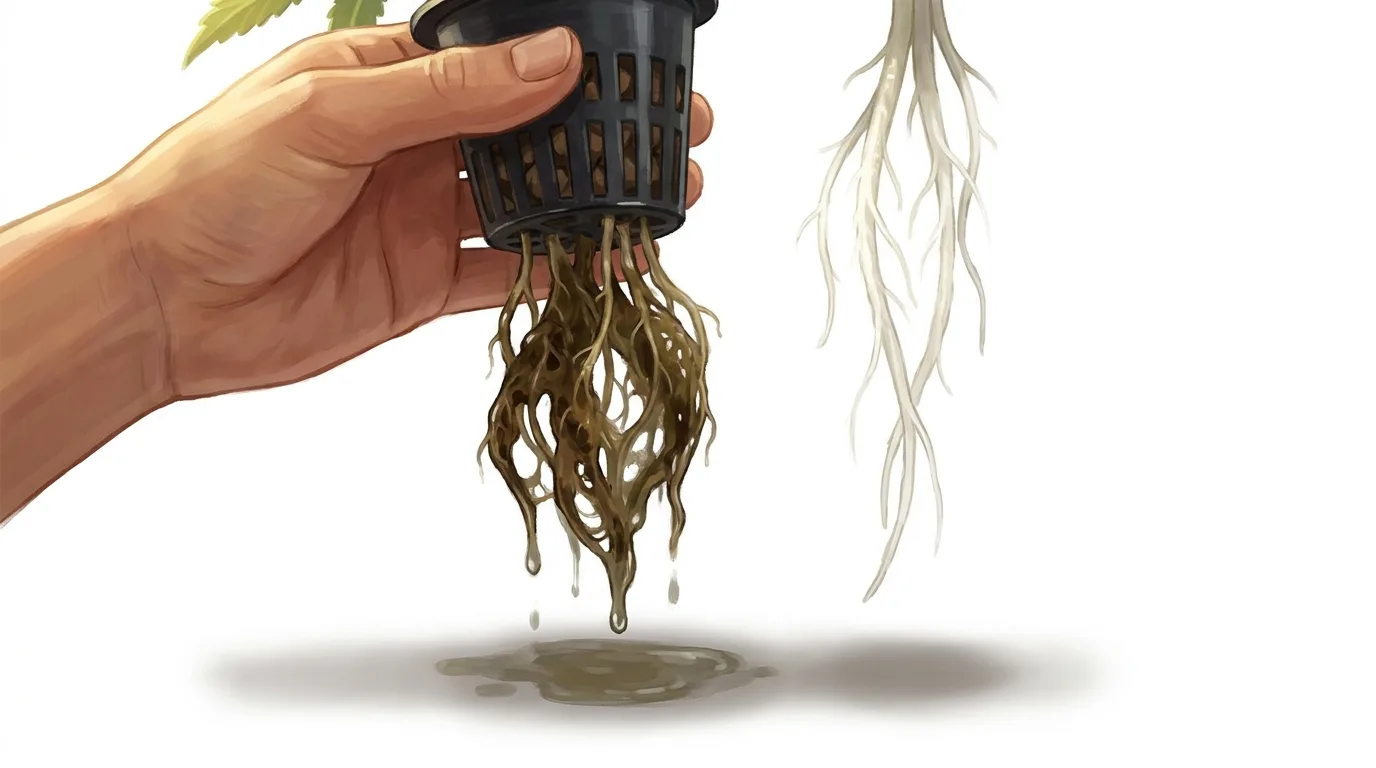
Short answer: root rot in hydro is pythium, and it comes down to the reservoir — warm (above ~22°C), low-oxygen, dirty water — turning white stringy roots brown, slimy and sour-smelling like a drain.
Recover by acting fast on three fronts: cool the water below 20°C, oxygenate hard with a stronger air stone and pump, and sterilise the system before reinoculating with beneficial bacteria and trimming dead roots. Prevent it the same way — reservoir under 20°C, strong aeration, clean kit. In soil, root rot usually means you overwatered. In hydro, the roots are meant to sit in water — so root rot comes down to whether that water has enough oxygen and is cool enough to keep the bad organisms out. Get the reservoir wrong and pythium takes the lot quickly, because there’s no soil buffer to slow it down.
The short version:
- Pythium thrives in warm (above ~22°C), low-oxygen, dirty reservoir water
- Roots turn from white and stringy to brown, slimy and sour-smelling
- Above the water, the plant droops and stalls and doesn’t bounce back
- Recover by cooling the reservoir, adding oxygen, and sterilising — fast
- Prevent it: reservoir under 20°C, strong aeration, clean kit, beneficial bacteria
Want the full breakdown? Keep scrolling.
What causes root rot in hydroponics?
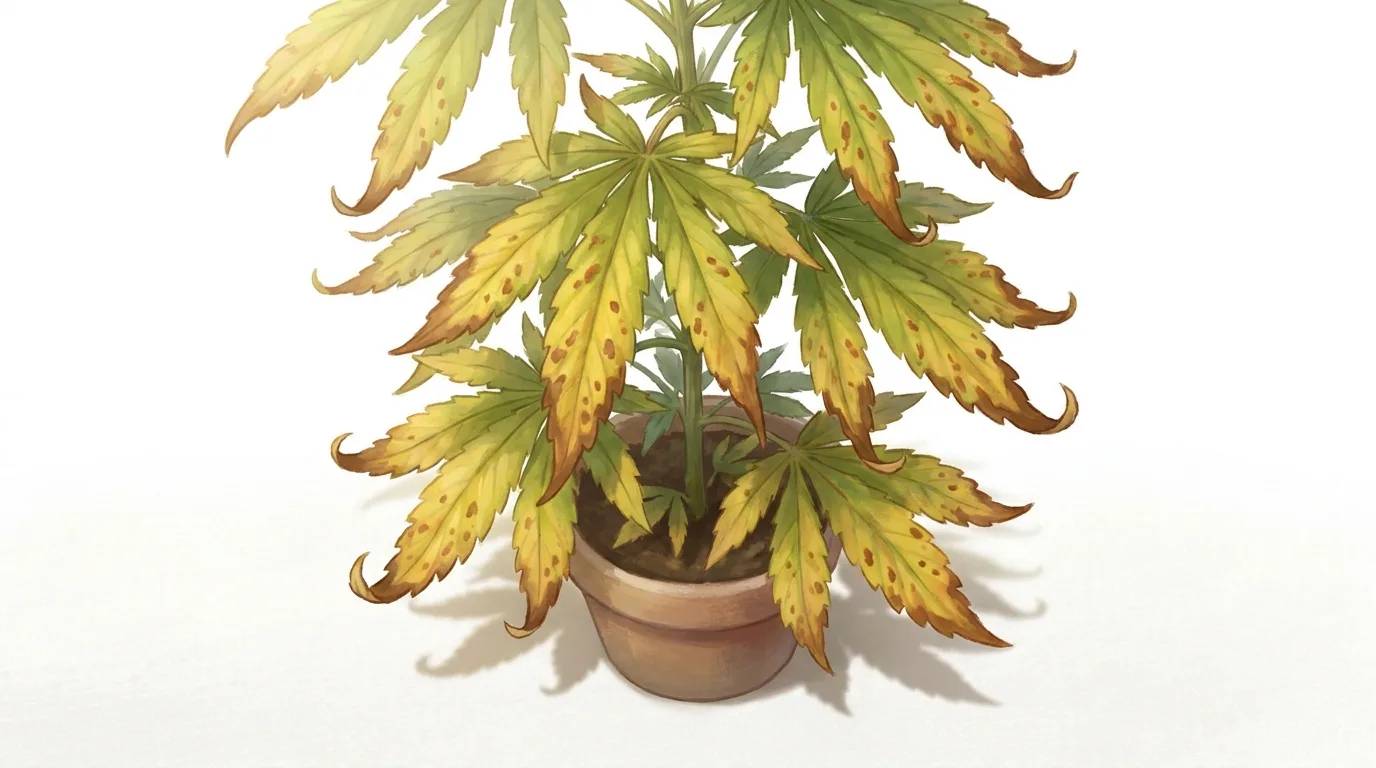
Pythium (and friends) are opportunists that bloom in warm, stagnant, oxygen-poor water. A reservoir creeping above 22°C holds less dissolved oxygen and speeds the pathogen up — a double hit. Add weak aeration or a dirty res and you’ve built the perfect conditions. Healthy hydro roots are bright white, stringy and abundant; once pythium sets in they go tan, then brown, slimy, and they smell sour — like a drain. You can often catch the smell before you even see the worst of it. Above the surface the plant wilts in full water and keeps getting worse rather than recovering, growth stalls, leaves yellow.
How do I recover a hydro plant with root rot?
Move quickly, on three fronts. Cool the water below 20°C — a chiller, frozen bottles, or moving the res out of the light/heat. Oxygenate hard — add or upgrade an air stone and pump so the water is visibly churning; dissolved oxygen is what suppresses pythium and keeps roots alive (DIG stock air pumps and stones). Sterilise and reset — empty, clean and sterilise the reservoir and mix fresh solution, then establish a competitive microbial population with a beneficial-bacteria product designed for hydro. If roots are badly gone, trim the dead brown sections away and give the plant a chance to push new white growth — it can come back if enough healthy root remains.
How do I stop it happening again?
Keep the reservoir cool, aerated and clean — that’s the whole prevention. Under 20°C, oxygen-rich, and not left to fester between changes. A living, beneficial-microbe root zone resists pathogens far better than a sterile-but-neglected one. The hydro chapter’s whole point about reservoir discipline isn’t just about feeding — it’s about keeping the root zone alive. Warm, still, dirty water is a pythium invitation; cold, churning, clean water shuts the door.
Common questions
What does root rot smell like?
Sour, rotten, like a blocked drain. Healthy roots smell of almost nothing, so a foul reservoir smell is an early warning even before the roots brown.
What reservoir temperature prevents root rot?
Below 20°C is the target. Above about 22°C the water holds less oxygen and pythium accelerates, so cooling the res is the single biggest prevention.
Can a hydro plant recover from root rot?
Yes, if you act fast — cool and oxygenate the water, sterilise the system, reinoculate with beneficial bacteria, and trim dead roots. Enough healthy root left and it regrows.