Root Rot: The Trouble You Smell Before You See
By DIG Dave ·
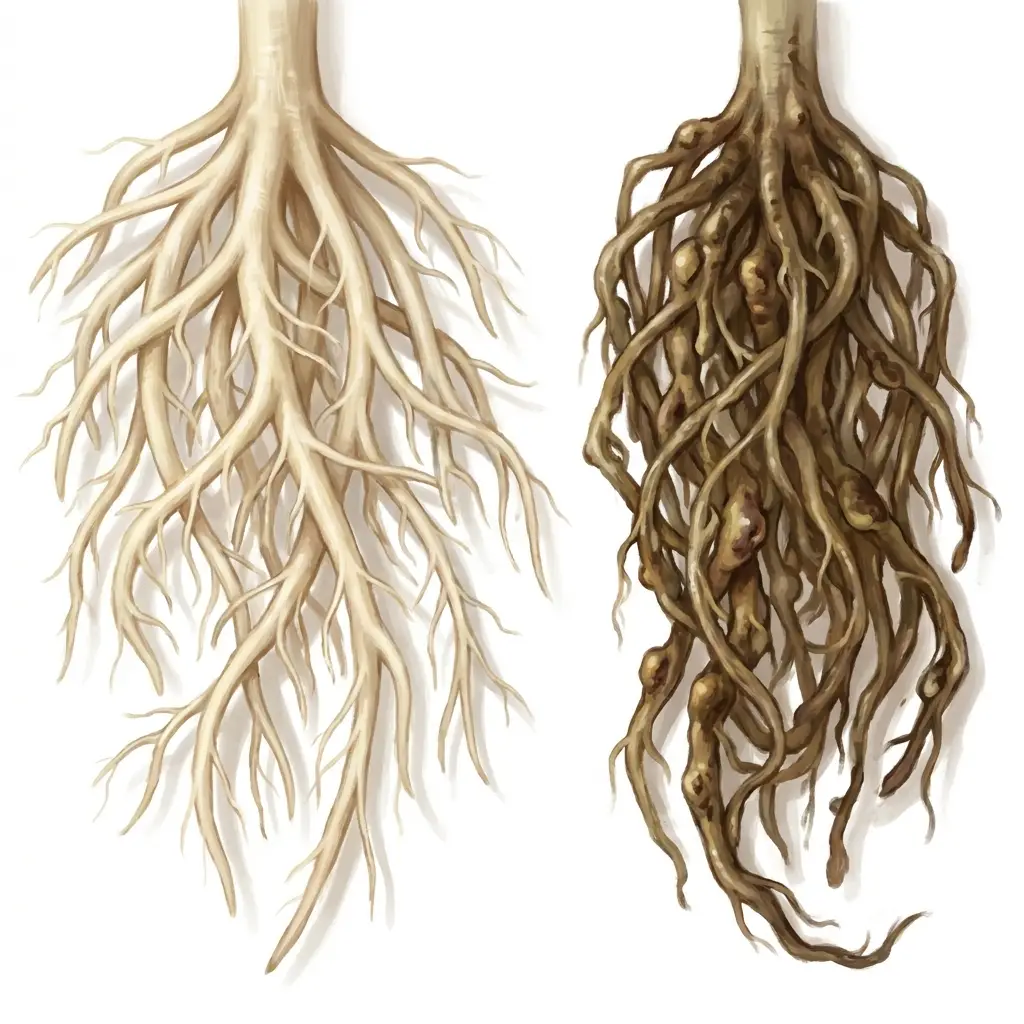 Root rot up top: wilting that a drink won’t fix.
Healthy roots are white, firm, and smell of almost nothing — clean, like fresh rain. Rotted roots are brown, slimy, and smell like a drain having a bad week. The first time you pull a net pot and get that smell, you don’t need a guide to tell you something’s wrong. You need a guide to tell you why it happened — because root rot is never really the disease. It’s the symptom. The disease is roots that couldn’t breathe.
The short version:
- Plant drooping and a drink doesn’t perk her up; roots gone brown and slimy with a swampy smell
- In hydro/DWC: caused by a warm reservoir, not enough air in the water, or both — keep the res under 20°C and the air pumping
- In soil/coco: caused by staying too wet too long — overwatering with a lab result
- Fix the oxygen problem or the rot just comes back, whatever else you do
Want the full breakdown? Keep scrolling.
What does root rot look like?
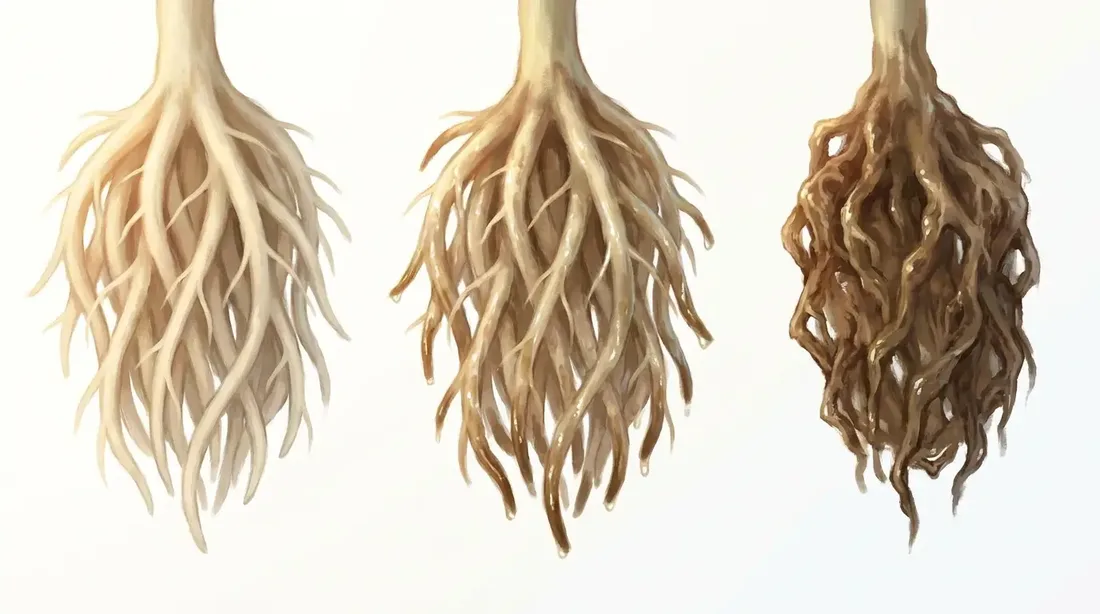
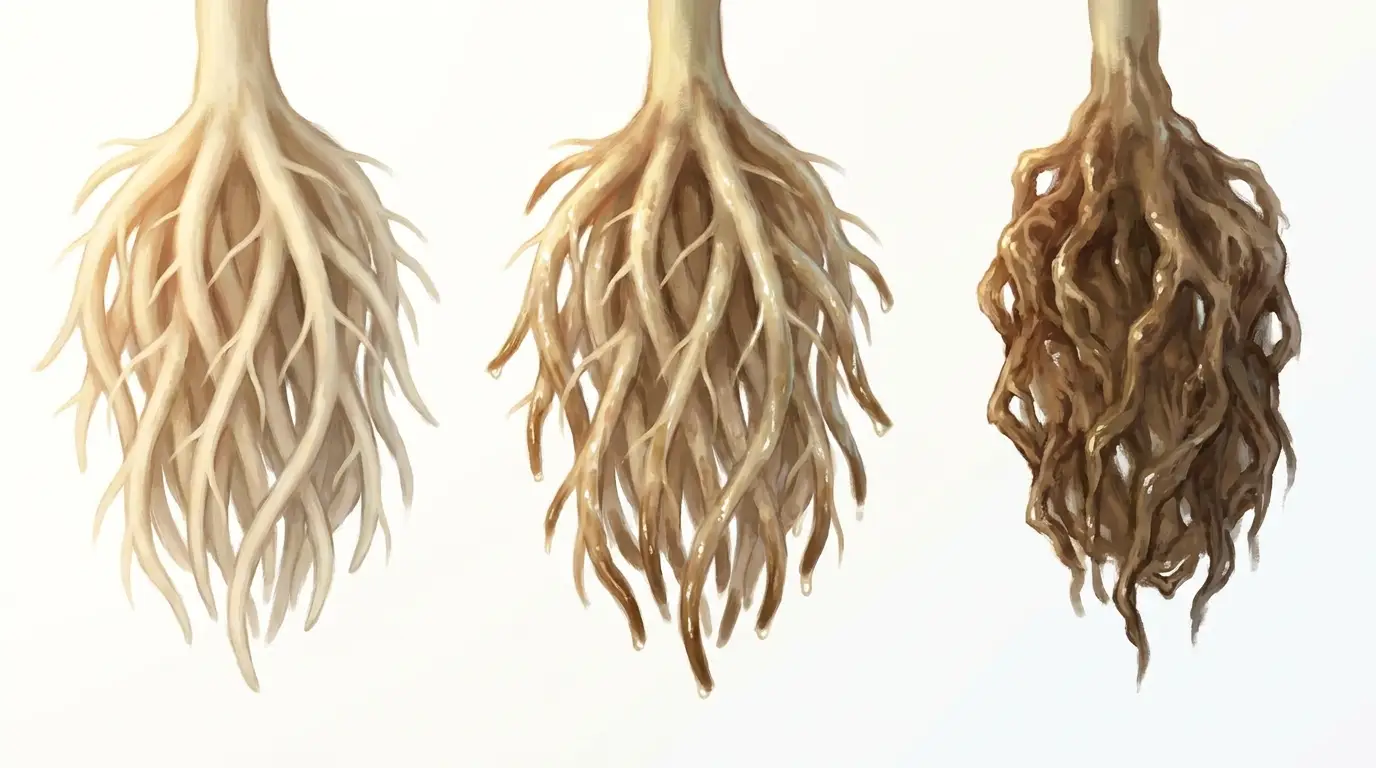 Downstairs is the diagnosis: white and firm, to tan, to brown and slimy.
Up top: drooping, often sudden, that watering doesn’t fix — the classic “wilting while wet.” Leaves may yellow as it drags on. Downstairs is where the diagnosis lives: roots that should be white and firm have gone tan, then brown, slimy to the touch, sometimes with dead sections sloughing off — and that smell. Swampy, sour, drain-like. Healthy root zones don’t smell of anything much. If yours announces itself, that’s the answer.
Roots want two things people forget they want: oxygen and cool. Rot turns up wherever those run out — which happens two different ways depending on what she’s growing in.
What causes root rot in hydro and DWC?
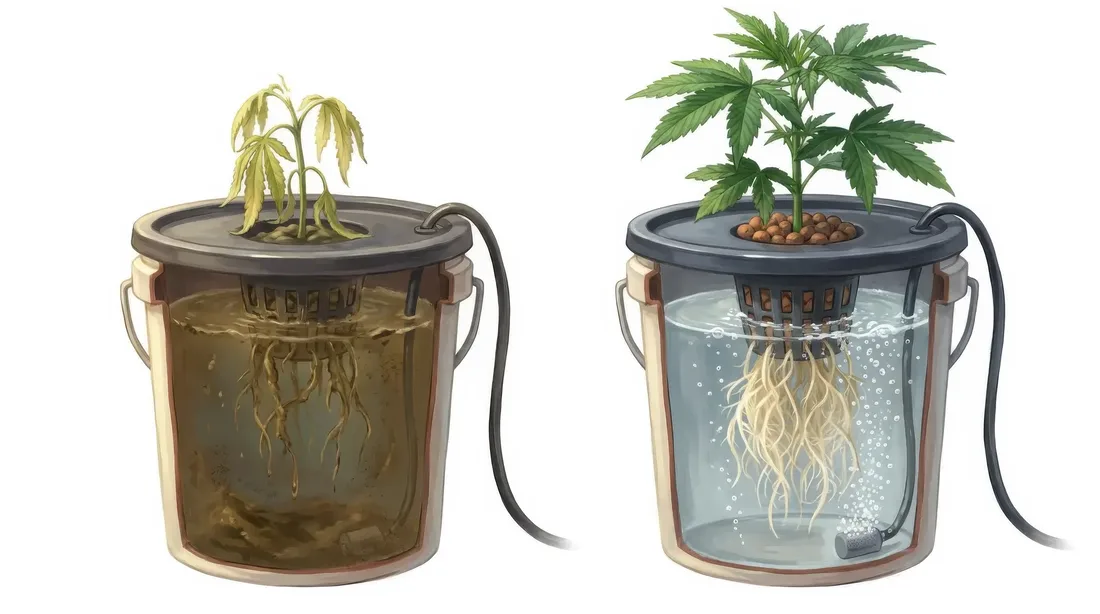
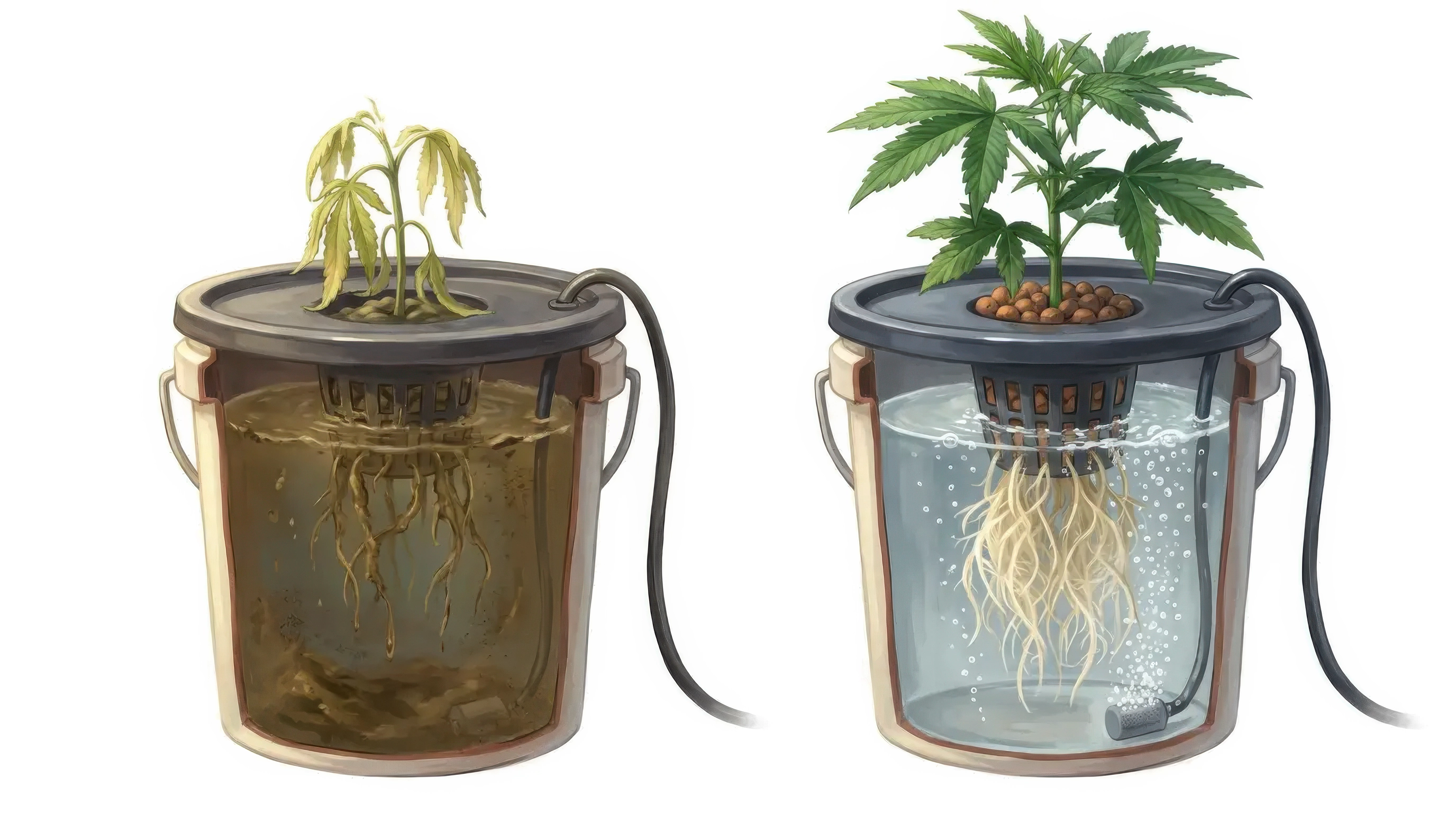 In hydro it’s a warm, airless reservoir: the cause you can’t see from the top.
In water culture the roots live submerged, which is grand — as long as the water carries enough oxygen. Two things kill that:
- A warm reservoir. Warm water holds less oxygen, and the warmth breeds the organisms that attack stressed roots. Over about 20°C the odds turn against you a little more every degree.
- Not enough air. An undersized air pump, a tired air stone, or a pump that quietly died on a Tuesday — and the roots are drowning in still water.
The fix follows the cause: get the reservoir under 20°C (a chiller if the room won’t allow it — DIG stock them), and put MORE air in than you think you need — a bigger pump, extra stones. Then deal with the damage: trim away the brown slimy sections, and if it’s advanced, swap the res for fresh cool nutrient solution. White new root growth in the days after is your win condition.
What causes root rot in soil?
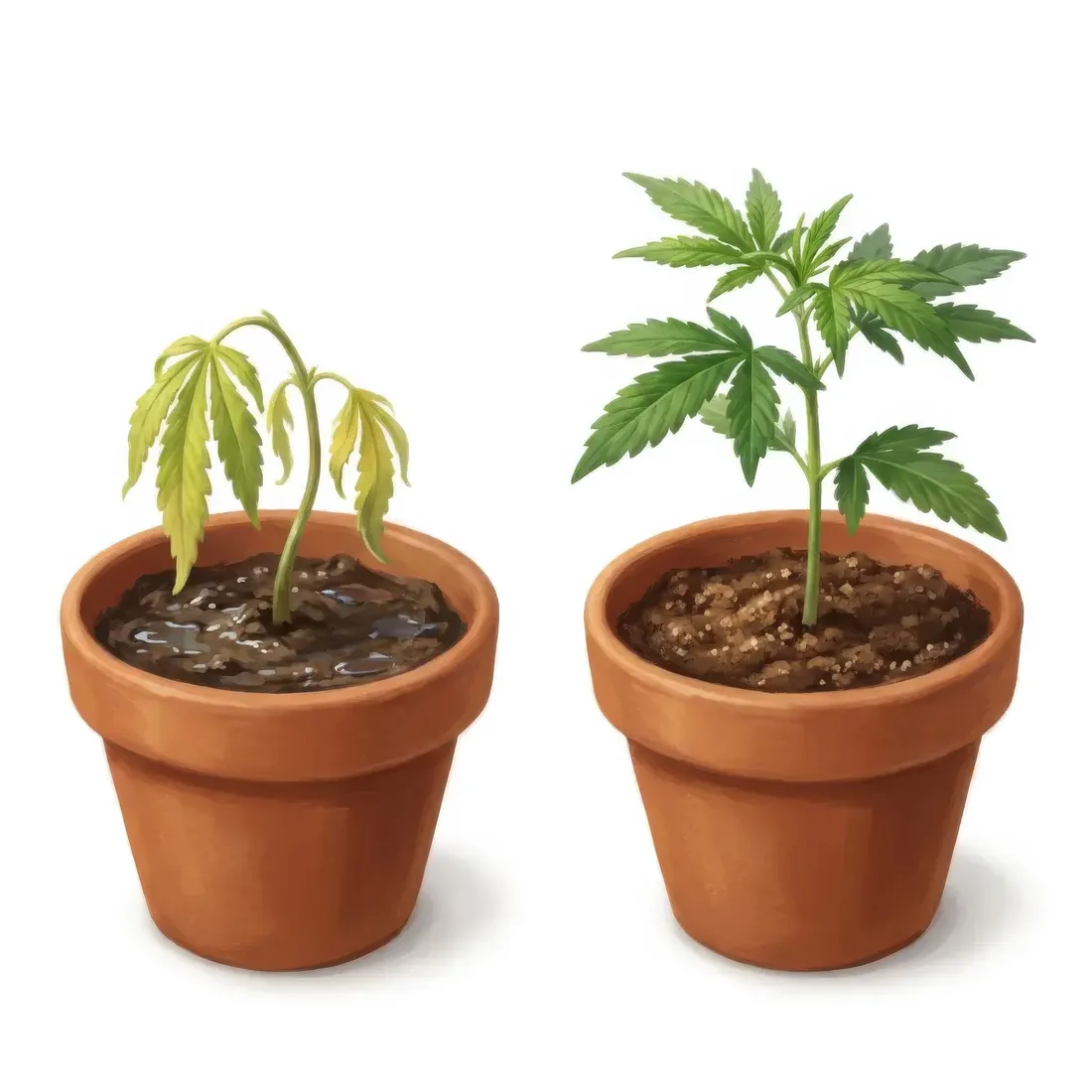
Sitting too wet, too long. Soil roots breathe air from the gaps between particles — waterlog those gaps day after day and the roots suffocate, weaken, and the rot organisms move into tissue that can’t defend itself. Root rot in soil is overwatering’s final form. The overwatering guide is the prequel; if the watering habit doesn’t change, this sequel gets a sequel.
The fix:
- Dry her right back. Stop watering and let the pot become properly light before the next drink. Lift it — learn the weight.
- Repot if it’s bad. Slide the root ball out, trim off the brown mush back to firmer tissue, and pot into fresh airy medium — fresh mix cut with extra perlite gives the roots the air pockets they were missing.
- Reseed the root zone. Beneficial root microbes — the friendly bacteria and fungi sold exactly for this — colonise the root surfaces and crowd the bad actors out while she rebuilds. DIG stock the usual suspects.
- Fix the habit. Water by weight, not by calendar. The rot came from the schedule, not bad luck.
Not sure this is your problem? Run her through the Diagnosis Buddy — five questions and you’ll know.
How to fix it
- Fix the oxygen problem Root rot is suffocated roots, so the real fix is oxygen — in hydro, get the reservoir under 20°C and put in more air than you think you need.
- In soil, dry her right back In soil or coco, stop watering and let the pot become properly light before the next drink; lift it and learn the weight.
- Trim the rotten roots Trim away the brown, slimy sections back to firmer tissue, and in soil repot into fresh airy mix cut with extra perlite.
- Reseed the root zone Add beneficial root microbes to colonise the root surfaces and crowd the bad actors out while she rebuilds.
- Fix the habit Water by weight, not by calendar — the rot came from the schedule, not bad luck.
Common questions
Can a plant recover from root rot?
Caught at brown-and-slimy with the plant still standing, yes — fix the oxygen, trim the dead, and she rebuilds. A root zone that's fully collapsed with the plant flat is usually past saving. Speed matters.
What temperature should my reservoir be?
Under 20°C. It's the single number that decides most DWC root problems — cool water holds the oxygen, warm water holds the trouble.
Do beneficial microbes actually work?
As prevention and recovery support in soil and coco, yes — they occupy the root surfaces so the rot organisms can't. They're not a rescue on their own; they work alongside the drying-out and the repot, not instead of them.
How do I prevent root rot coming back?
Hydro: res under 20°C, generous air, check the pump weekly. Soil: water by pot weight, every time. Both versions of the fix are the same sentence — let the roots breathe.
Fixed it?
Here’s how this stage goes when it’s going right — walk the grow →. Still not sure what you’re looking at? Ask the Diagnosis Buddy →

