Light Stress: Too Much of a Good Thing, Too Close
By DIG Dave ·
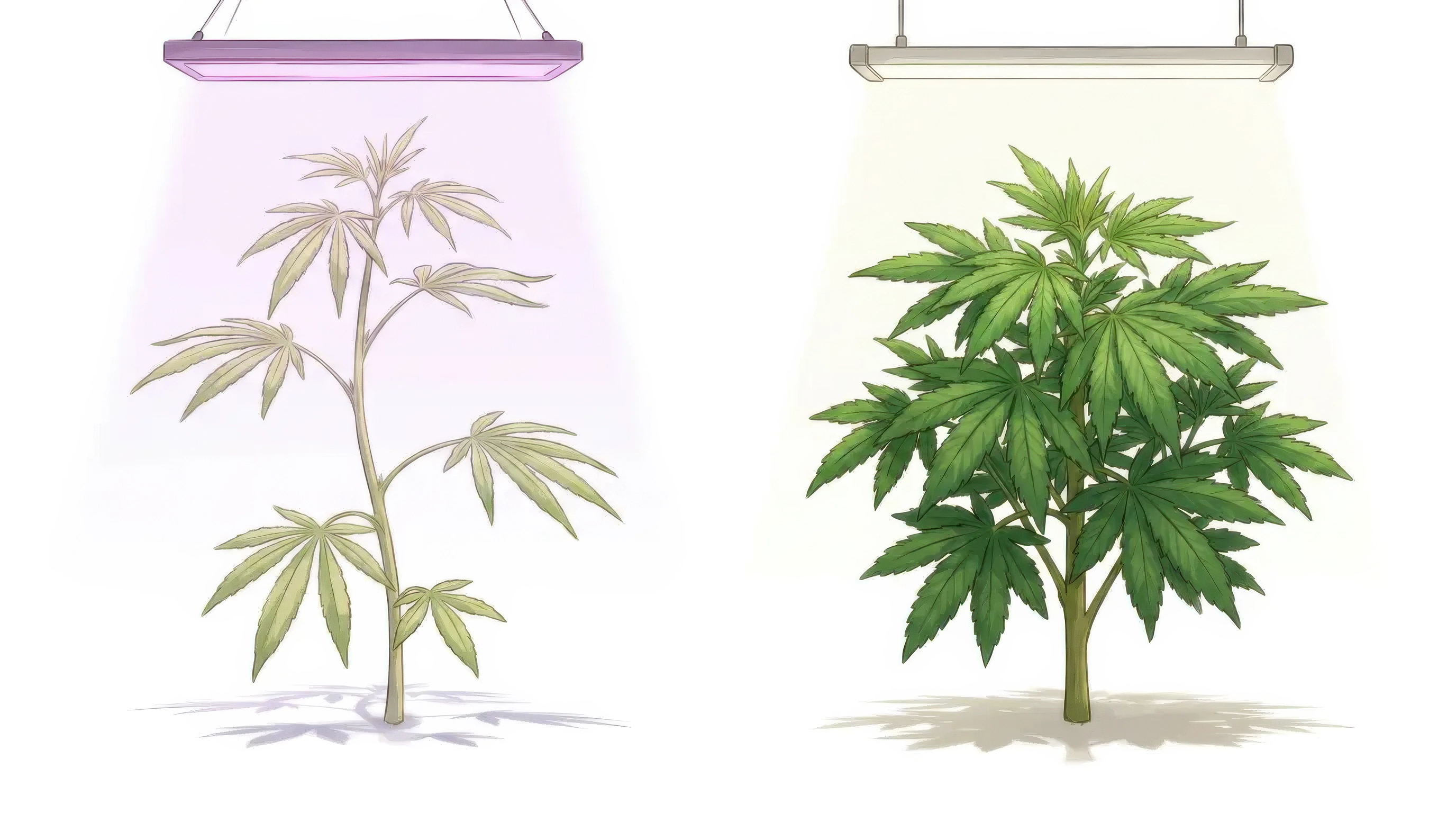 Light stress: the closest tops bleach and taco while the lower canopy stays grand.
There’s a grower I think of as The Sunburn. He read on a forum that UV boosts trichomes, so he hung a UV bar 20cm from the canopy and ran it twelve hours a day. Within 48 hours the top leaves were bleached white and curling. The top colas never recovered — wispy and harsh — while the shielded lower buds turned out grand. UV is seasoning, not the meal, and the same goes for any light hung too close: more isn’t always better. Leaves taco-ing up at the edges near the light are trying to shed heat — too hot or too close. She’s holding her hands up.
The short version:
- Top leaves bleaching pale, edges tacoing up, and the damage worst right under the light
- It’s light too close or too strong, not a deficiency — the leaves nearest the lamp are overloaded
- Raise the light or dim it, drop the temp, and get more air moving across the tops
- The bleached, curled leaves won’t recover, but new growth comes in grand once you back the light off
Want the full breakdown? Keep scrolling.
Why are my top cannabis leaves bleaching and curling?
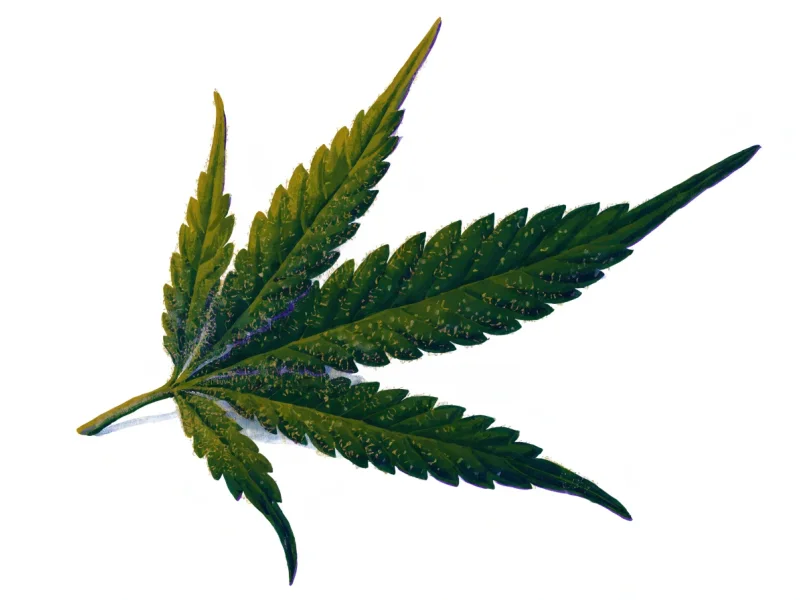
Because the leaves closest to the lamp are getting more light than they can process. A leaf can only turn so much light into growth — push past that and it overloads, like staring at the sun. The tops bleach pale or white, the edges curl and taco upward trying to shrink the surface facing the lamp, and the worst of it sits right under the light where the intensity peaks. Lower down, where the light’s weaker, the plant often looks perfectly healthy. That gradient — fried at the top, grand below — is the signature.
Two things usually drive it, and they often arrive together. One is raw intensity: a strong light hung too close, delivering more PPFD than the canopy can handle. The other is heat, because a light that close is also a heat source baking the tops. The leaves taco to shed both at once. Beginners reach for a nutrient bottle here because bleached, curling leaves can look like a deficiency to an untrained eye — The Pharmacist sees pale tops and adds CalMag or an iron supplement. It isn’t a deficiency. Environment and light come first in the diagnostic order, and bleaching at the top closest to the lamp is light burn, full stop. If the curl is across the whole canopy and tied to tent heat rather than the lamp distance, read heat stress instead — same taco, different driver.
How close is too close for a grow light?
It depends on your light, but the symptom tells you before the tape measure does. In flower a plant wants 600-900 PPFD; push much above 900 without supplemental CO2 — a year-two job, not a beginner concern — and she can’t keep up and starts to stress. If the leaves right under the light are bleaching and curling away from the source while the rest of the canopy’s healthy, the PPFD at those leaves is too high. You were just a touch too close.
For a rough starting point, most LEDs sit 30-45cm off the canopy in flower, but that’s a starting point, not a rule — your specific light, tent and canopy all matter. The honest move is to measure: the free Photone app on your phone reads PPFD at the actual canopy, and you can check the centre against the corners. If the centre’s 800 and only the very top leaves are bleaching, raise the light 10-15cm and check again in a day. And remember the heat side of it — a light that close is warming the tops, so read your temperature at canopy height too, not the floor, which can sit 5°C cooler and lie to you.
How do I fix light stress?
Back the light off and cool the tops. A few levers:
- Raise the light, or dim it. The direct fix. Lift it 10-15cm and check the new growth in a day, or if your LED’s dimmable, drop the power — seedlings and stressed canopies don’t want full whack. Dimming also saves electricity, so it’s a rare control where less effort gives a better result.
- Drop the temperature. Since the lamp’s part heat source, cooling the tent eases half the problem. A thermostat holding the tent steady stops the tops baking. DIG stock the thermostats that pair with your heat and extraction.
- Move air across the tops. An oscillating fan breaks up the hot, still layer that forms right at the canopy under a close light and buys you a couple of degrees. Leaves should rustle, not flap. DIG stock the clip-on ones.
- Skip the UV experiments early. If you’ve added a UV bar, treat it like hot sauce — a couple of hours late in flower at a proper distance, not twelve hours point-blank. Twelve hours at close range cooks the canopy, and it burns your skin and eyes the same way, so it goes off before you go in.
Change one thing, wait a couple of days, read the response. The bleached, curled leaves that are already there won’t recover — that damage is set, and the worst of them can be tidied off. You’re watching the new growth come in flat, even and green at a sensible distance. That’s the all-clear. Careful not to overcorrect, though — raise the light too far and you swing into the opposite problem, not enough light, where she stretches to reach it again.
Not sure this is your problem? Run her through the Diagnosis Buddy — five questions and you’ll know.
How to fix it
- Raise the light, or dim it Lift the light 10-15cm and check the new growth in a day, or drop the power if your LED is dimmable.
- Drop the temperature Since the lamp is part heat source, hold the tent steady with a thermostat so the tops stop baking.
- Move air across the tops Run an oscillating fan to break up the hot, still layer at the canopy — leaves should rustle, not flap.
- Skip the UV experiments early Treat any UV bar like hot sauce — a couple of hours late in flower at a proper distance, not twelve hours point-blank.
Common questions
Will light-bleached leaves turn green again?
No — once a leaf has bleached pale or white from light burn, that tissue is done and won't recover its colour. Judge the fix on the new growth coming in green and flat at a sensible distance. The worst-affected leaves can be trimmed off, but leave any that are still mostly green to keep working.
How do I tell light stress from heat stress?
Light stress shows bleaching and curling on the leaves closest to the lamp, with the lower canopy often healthy — it's a distance and intensity problem. Heat stress shows tacoing more broadly and tracks your tent temperature rather than the exact lamp distance. Check PPFD and canopy temperature; raising the light a little often eases both at once.
Can light stress ruin my buds?
It can if it runs through flower on the top colas — bleached, burnt tops come out wispy and harsh, like The Sunburn's, while shielded lower buds stay grand. Caught early and backed off, there's no lasting harm to the new growth. Late flower is the window to be most careful, since the top buds are the most valuable.
Is more light always better for cannabis?
No — past about 900 PPFD without supplemental CO2, she can't process the extra and starts to stress instead of grow. More light helps right up to her ceiling, then it burns. Match the intensity to the stage, measure at the canopy, and back off the moment the tops start bleaching.
Fixed it?
Here’s how this stage goes when it’s going right — walk the grow →. Still not sure what you’re looking at? Ask the Diagnosis Buddy →