Heat Stress: She's on a Beach With No Shade
By DIG Dave ·
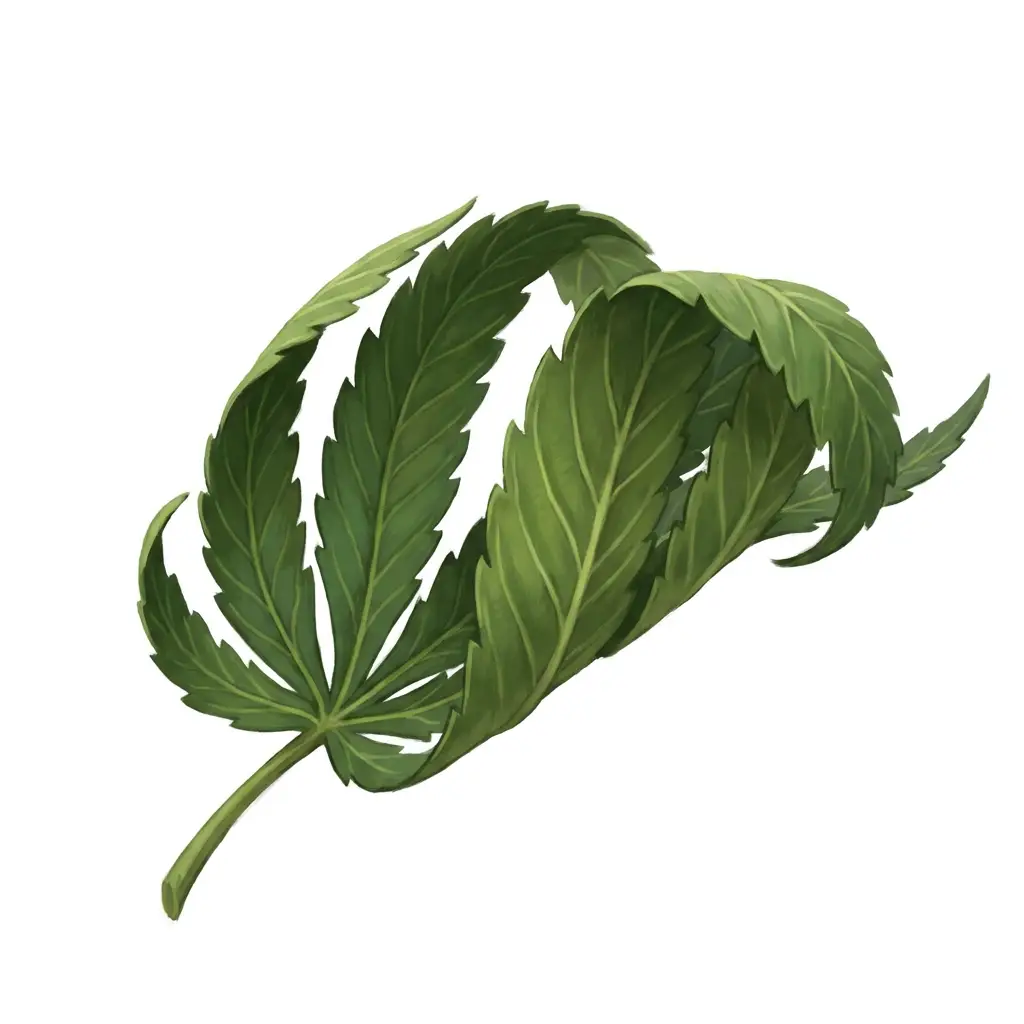 Heat tacoing: leaf edges curling up like a canoe, trying to shed heat.
You know the feeling on a beach with no shade, no water, sun directly overhead — you stop moving, you wilt, you hunt for anything to hide under. Your plant does the same thing, except she can’t move. She curls her leaf edges up to shrink her surface to the light and she droops to save water. Heat makes her wilt to save water — same as you on a beach with no shade. The fix isn’t a bottle. It’s getting the temperature down.
The short version:
- Leaf edges curl upward like a taco, the canopy droops, and it’s worst under the light
- It’s heat or light stress, not a deficiency — too hot at canopy height
- Bring the temp down: more extraction, more air movement, raise or dim the light
- The curled leaves won’t flatten back, but new growth comes in grand once she’s cool
Want the full breakdown? Keep scrolling.
Why are my cannabis leaves curling up like a taco?
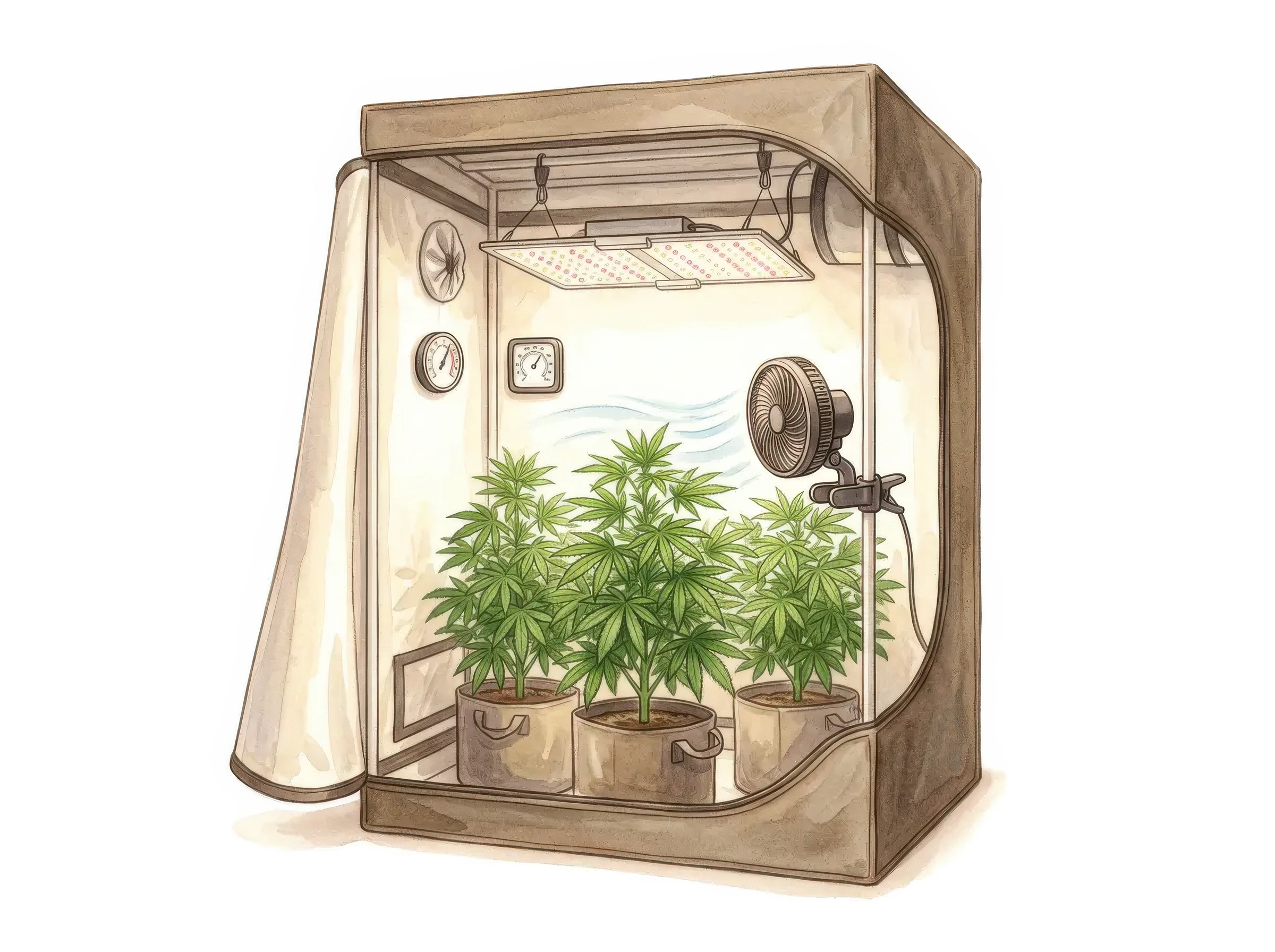 Move air and move the light away. Most heat stress is a distance problem.
This is the classic heat tell. When the canopy gets too hot, the plant rolls its leaf edges upward — “canoe” or “taco” leaves — to reduce the surface facing the light and slow water loss. Alongside it you’ll often see drooping, and the whole thing concentrated right under the light where it’s hottest. The stomata, those tiny pores she breathes through, start closing to hold onto water, photosynthesis slows, and she can even stretch as she tries to climb away from the heat.
The reason most beginners miss it is they reach for a nutrient bottle. Taco leaves look like they could be a deficiency if you’ve never seen them before. They’re not. They’re almost always heat or light too close. The order of diagnosis is environment first, water second, pH third, nutrients last — and heat stress lives right at the top of that list. If the edges are curling up and it’s hot under there, you’ve found your answer without opening a single bottle.
How hot is too hot for cannabis?
Without CO2 supplementation — which is a year-two job, not a beginner concern — your daytime ceiling is about 26°C, with the comfortable range 20-26°C. Over 30°C and the stomata start shutting, growth stalls, buds come out loose and fluffy instead of dense, and mildew starts liking your tent. Here’s the catch most people fall for: you have to measure at canopy height, where she actually lives, not at the floor. The floor can read 5°C cooler than the canopy under a bright light. A floor thermometer is useless data. Hang one at the top of the plant.
Two patterns to watch for. The first is the obvious one — a small tent, a strong light, not enough extraction, and the heat just builds. The second is the swing: The Yo-Yo runs the tent at 30°C under the light, then crashes to 10°C when the light goes off. That 20-degree daily slam stresses her even if neither number alone looks catastrophic. She wants boring stability — the same warm day, the same cool-but-not-cold night, every day. Drooping that’s worst right after a watering is a different problem altogether; that’s overwatering, not heat.
How do I fix heat stress?
Cool the canopy. That’s the entire fix, and there are a few levers:
- Move more air out. A properly sized inline extraction fan pulls the hot air out before it stacks up at the canopy. If the tent runs over 26°C without CO2, this is usually where the problem lives. DIG stock the sizes that match a tent.
- Move air around inside. An oscillating fan breaks up the hot layer that forms right at the top of the canopy and buys you a couple of degrees on its own. Leaves should rustle, not flap. DIG stock the clip-on ones.
- Manage the light. Raise it, or dim it through the hottest hours of lights-on. If the light is closer than the maker recommends, that’s heat and light burn together — back it off.
- Shave the swing. If your nights are crashing cold, keep a low background heat on so she’s not going from sauna to plunge pool daily.
Change one thing, then wait two to three days and read the response. Don’t crank extraction, raise the light, and add a fan all at once or you’ll never know which one worked — and over-cranking extraction can drop your humidity through the floor and crisp the leaf edges, swapping one problem for another. The curled leaves that are already there won’t flatten back out. You’re watching the new growth come in flat and even. That’s the all-clear.
Not sure this is your problem? Run her through the Diagnosis Buddy — five questions and you’ll know.
How to fix it
- Move more air out Run a properly sized inline extraction fan to pull the hot air out before it stacks up at the canopy.
- Move air around inside Add an oscillating fan to break up the hot layer at the top of the canopy — leaves should rustle, not flap.
- Manage the light Raise the light or dim it through the hottest hours; if it's closer than the maker recommends, back it off.
- Shave the swing If your nights crash cold, keep a low background heat on so she's not going from sauna to plunge pool daily.
Common questions
Will heat-stressed leaves recover?
The leaves that have already curled won't uncurl — that shape is set. Judge the recovery on the new growth coming in flat. Once the canopy is back in range, fresh leaves should look normal within a week or so.
How do I tell heat stress from overwatering?
Heat stress shows leaf edges curling upward like a taco and is worst directly under the light. Overwatering is a whole-plant droop in a pot that's still wet, often heaviest just after a drink. Check your canopy temperature and lift the pot — the two answers rarely point the same way.
What temperature should my grow tent be?
Aim for 20-26°C during lights-on, measured at canopy height, not the floor, with a few degrees cooler at night. Over 30°C and you're into heat stress territory. Anything supplemented with CO2 can run a touch warmer, but that's not a beginner setup.
Can heat stress ruin my buds?
It can if it runs through flower unchecked — high heat gives you loose, airy buds instead of dense ones, and it raises mildew risk. Caught early and cooled down, there's no lasting harm. Late flower is the window to be most careful, since the buds are at their most valuable.
Fixed it?
Here’s how this stage goes when it’s going right — walk the grow →. Still not sure what you’re looking at? Ask the Diagnosis Buddy →