Aphids: There's Never Just the One
By DIG Dave ·
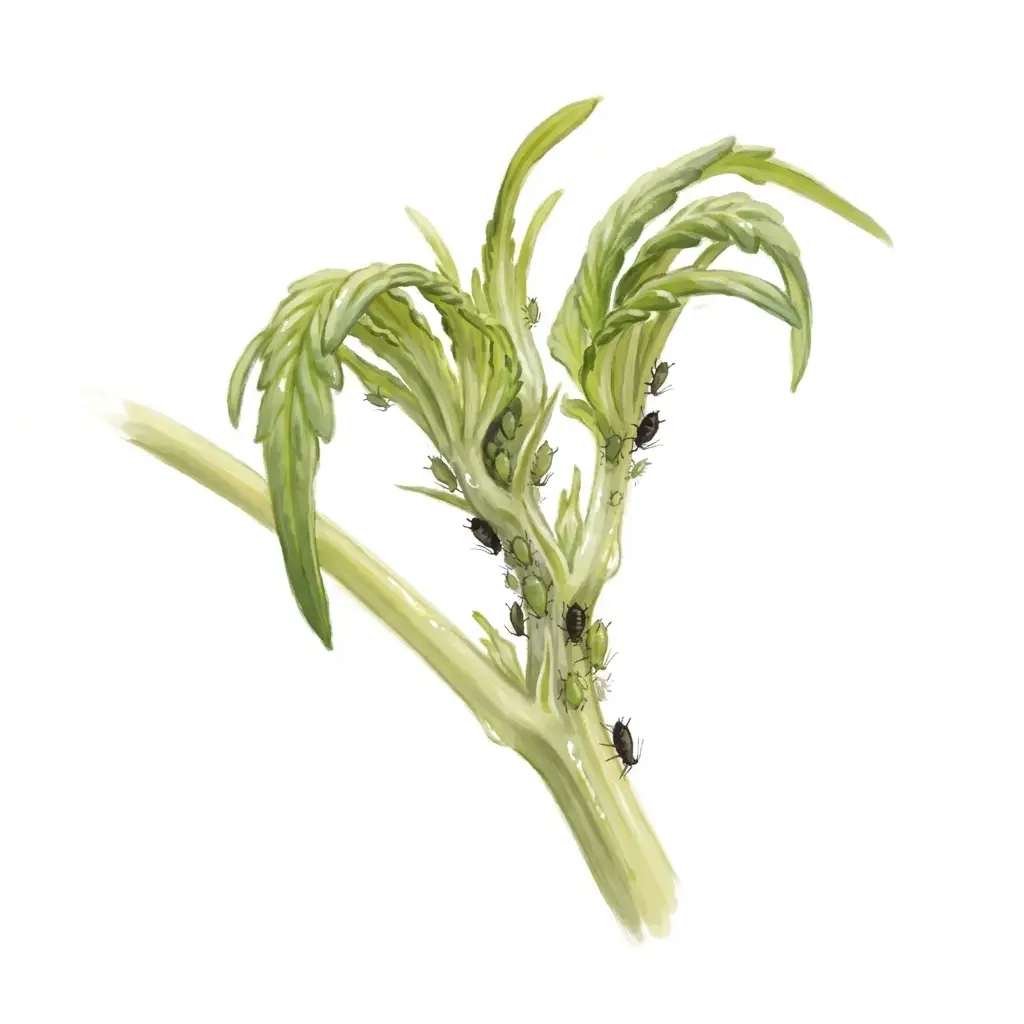 Aphids: soft, pear-bodied, clustered on stems and the undersides of new growth.
The Merciful found a small cluster of green insects on a stem and brushed them off with his fingers. Didn’t spray, didn’t squish — just swept them away, because they were tiny and killing them felt like overkill. Next evening the cluster was back, twice the size. The ones he brushed off didn’t die; they fell into the soil, climbed back up, and brought reinforcements. That’s the whole lesson with aphids: there’s never just the one. If you can see a cluster, there are hundreds you can’t. Soft clusters on the stems and new growth means aphids, and they’re sap-suckers, so they weaken her while they breed. Everything below is how to actually end it.
The short version:
- Small soft-bodied insects, usually green, clustered on stems and the undersides of young leaves
- Aphids — they reproduce without mating, so the population goes exponential, not gradual
- Blast them off with water, treat the undersides, and bring in ladybirds to do the long game
- Sticky residue on lower leaves and ants in the tent are your early warnings
Want the full breakdown? Keep scrolling.
What do aphids look like on cannabis?
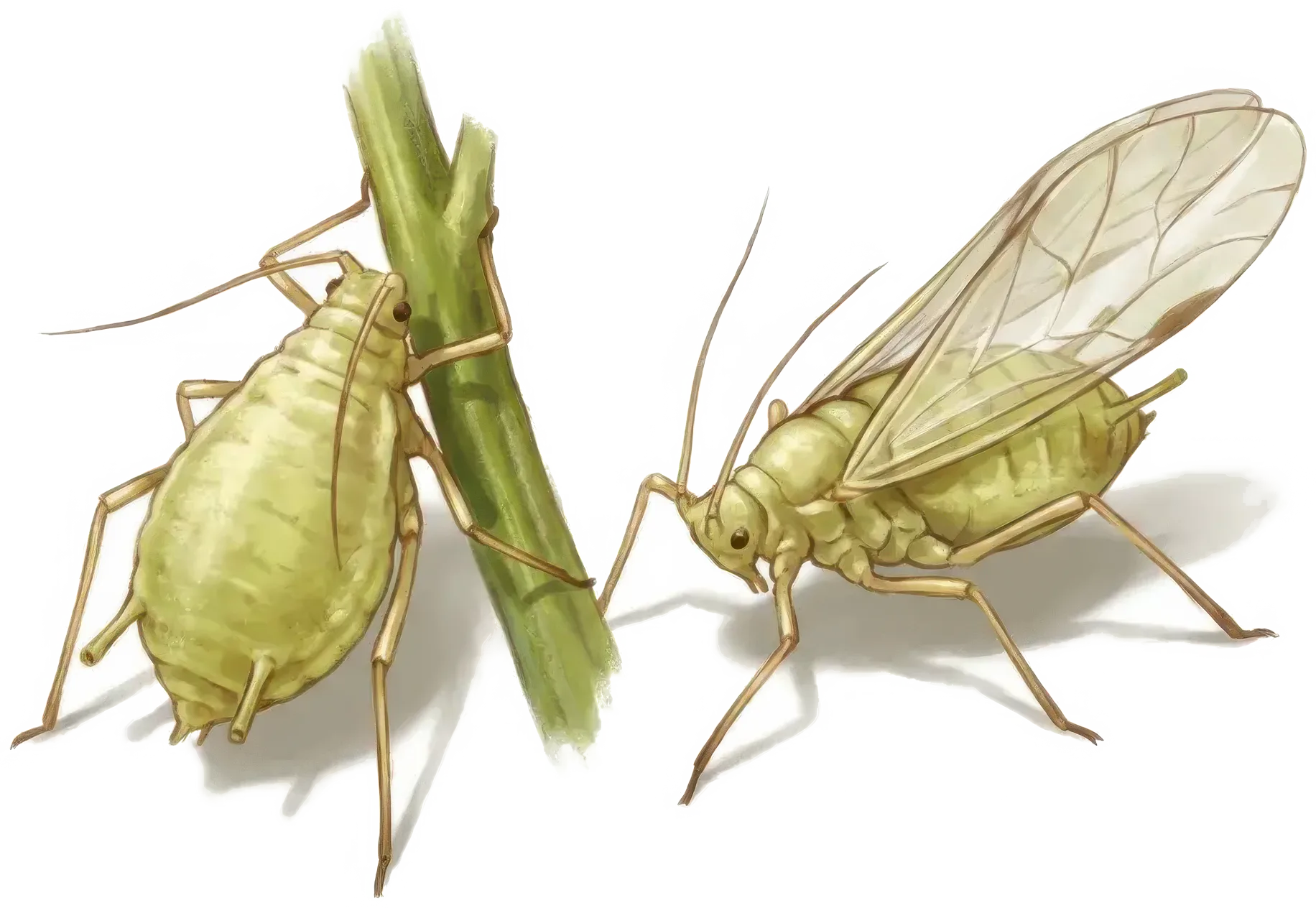 The culprit up close: winged and wingless forms, those twin tailpipes (cornicles) the giveaway.
Small, soft-bodied, usually green, sometimes pale yellow, clustered where the plant is softest — new growth, soft stems, the undersides of young leaves. They feed by piercing the tissue and sucking out sap, which weakens her and can carry viruses from plant to plant. The tell that isn’t the bug itself is the mess they leave: honeydew, a sticky sugary residue that coats the leaves below the colony. If a leaf feels tacky and there’s a cluster above it, that’s the diagnosis.
The other early warning is ants. Ants farm aphids — they protect them and harvest the honeydew like a herd of tiny cows. If you see ants marching up the stem, look for the aphids they’re tending. And watch the new growth: aphids twist and crumple it, so curled, distorted young leaves with nothing in the environment to explain it means flip the leaf and check the underside.
Where do aphids come from and why do they spread so fast?
Two answers, the same two for every pest that wrecks a tent. First, they hitch in — aphids are one of the most common hitchhikers on clones and cuttings. The mate who gives you a free cut may also be giving you a free aphid colony you can’t see yet. That’s why every new plant earns a week in isolation, inspected daily, before it goes near the main tent. Free genetics aren’t free if they bring passengers.
Second, the maths turns on you. Aphids reproduce asexually — a single female produces live young without mating, and those young start reproducing inside a week. The population curve isn’t a gentle slope, it’s a cliff going the wrong way. That’s why The Merciful’s small cluster doubled overnight. You’re not dealing with the aphids you can see; you’re dealing with the next three generations already on the way.
How do I get rid of aphids?
You’re breaking a fast breeding cycle, not picking off a few bugs, and that changes the approach.
- Knock them off with water. A strong jet of plain water blasts the colony off the plant — handy in veg, impractical once she’s in flower. It buys you a head start.
- Treat the undersides. Insecticidal soap kills soft-bodied insects on contact by breaking down their cell membranes — it’s the sensible spray here, safe and quick to break down. DIG stock it. Hit the undersides of the young leaves and the soft stems where they actually cluster, not just the tops.
- Treat again to catch the next wave. One pass clears the living aphids; the ones already born and the eggs keep the cycle going, so repeat every few days until the new growth comes in clean. A single spray is a gesture, not a treatment.
- Bring in ladybirds for the long game. Ladybirds and their larvae eat aphids faster than the aphids can breed. Order them, release them in the tent, let them work without residue or spray timing. DIG stock them.
- No spraying late in flower. You’re going to smoke this. Nothing on the plant in the last two to three weeks before harvest. If it’s that bad that late, the honest answer is an early chop, not a late spray.
Then keep them out: quarantine everything new, deal with any ants, and check the new growth and leaf undersides every time you’re in the tent. The aphids that ruin a grow are the ones nobody looked for.
Not sure this is your problem? Run her through the Diagnosis Buddy — five questions and you’ll know.
How to fix it
- Confirm it's aphids Check the stems and undersides of new growth for soft green clusters; sticky honeydew on the leaves below and ants on the stem confirm it.
- Knock them off with water In veg, blast the colony off with a strong jet of plain water to buy yourself a head start.
- Treat the undersides Spray insecticidal soap on the undersides of young leaves and the soft stems where aphids actually cluster, not just the tops.
- Treat again to catch the next wave Repeat every few days until the new growth comes in clean, so the newly hatched young don't restart the cycle.
- Bring in ladybirds Release ladybirds in the tent to hunt the aphids continuously, with no residue and no spray timing.
Common questions
I only see a few aphids — do I really need to treat?
Yes. There's never just a few. Aphids reproduce without mating and a small visible cluster is the postcard from a population that's already moved in. Treat the whole plant, don't just brush them off, or they climb straight back up.
What's the sticky stuff on my leaves?
Honeydew — the sugary residue aphids excrete as they feed. It coats the leaves below the colony and can attract sooty mould, a black fungal growth that blocks light off the leaf surface. Sticky leaves under a growing tip are an aphid tell before you even spot the bugs.
Do ladybirds actually clear aphids?
Yes, and they're one of the most effective biological controls for them. You release them in the tent and they hunt aphids continuously, no residue, no timing applications. They work best alongside a soap spray and good quarantine habits rather than as a last-minute rescue on a heavy infestation.
Are aphids related to ants in my tent?
Yes — ants farm aphids for the honeydew, protecting them in exchange. If you've got a trail of ants up the stem, follow it and you'll usually find the aphid colony they're tending. The ants are the warning sign; the aphids are the problem to fix. Compare with thrips and spider mites if the damage looks more like speckling than clustering.
References
- MacWilliams et al. (2023). Assessing the adaptive role of cannabidiol (CBD) in Cannabis sativa defense against cannabis aphids. Frontiers in Plant Science, 14:1223894.
- Cranshaw et al. (2019). Developing Insect Pest Management Systems for Hemp in the United States: A Work in Progress. Journal of Integrated Pest Management, 10(1):26.
Fixed it?
Here’s how this stage goes when it’s going right — walk the grow →. Still not sure what you’re looking at? Ask the Diagnosis Buddy →