Light Burn: The Tops Are Sunburnt
By DIG Dave ·
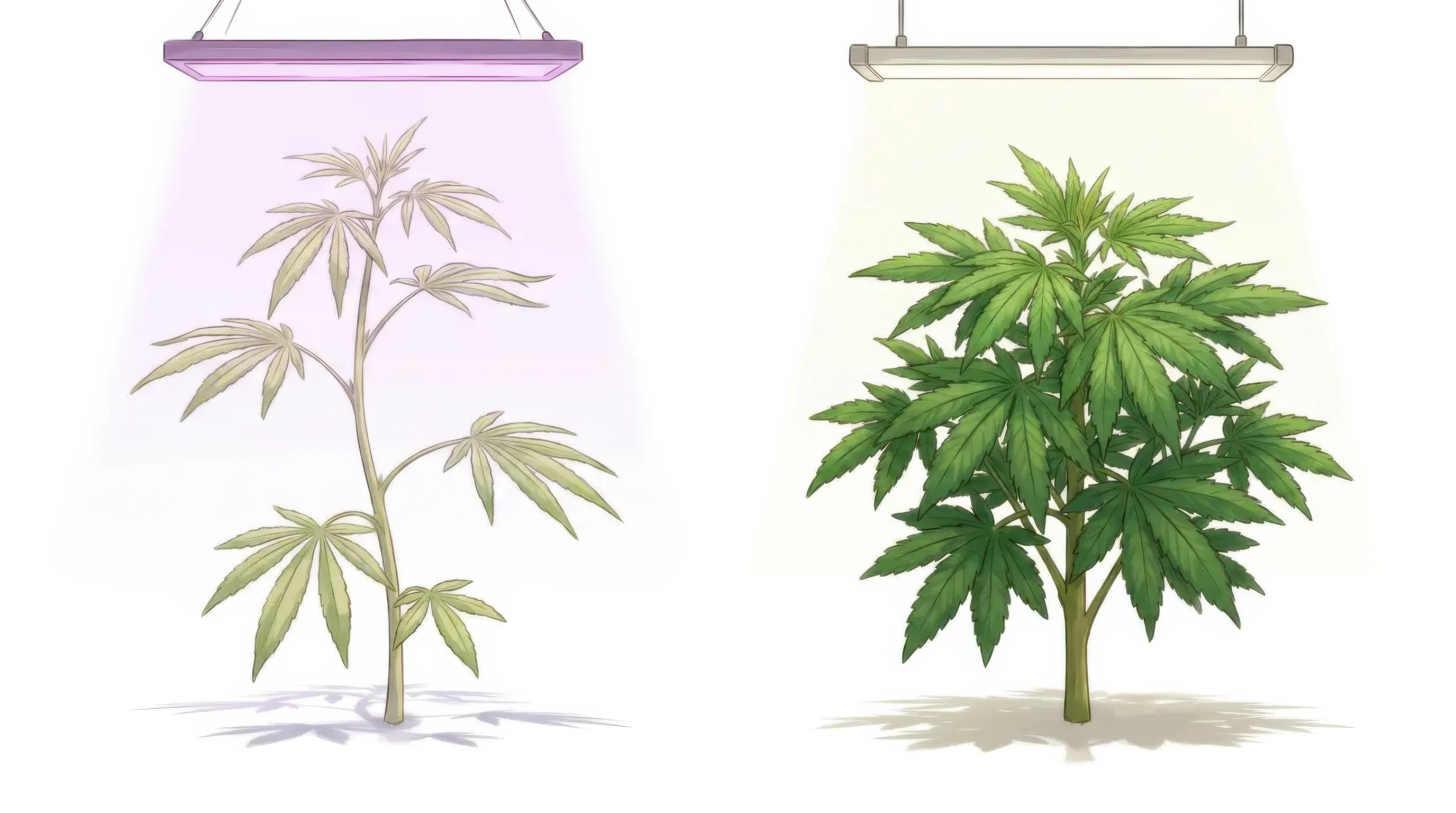 Light burn: the top closest to the lamp bleaches and the tips crisp.
The Sunburn read on a forum that UV light increases trichome production. Made sense on paper — plants at high altitude make more resin to protect against UV. So he bought a UV-B bar, hung it twenty centimetres off the canopy, and ran it twelve hours a day. Within forty-eight hours the top leaves were bleached white and curling. The top colas never recovered — wispy and harsh, while the shielded lower buds turned out grand. That’s light burn in a sentence: bleached white or crispy on the parts closest to the light. Too much light, too much heat, too close. The tops are sunburnt, and crucially it’s only the tops — which is how you tell it apart from everything that comes up from the roots.
The short version:
- Bleached white or crispy patches on the leaves and buds closest to the light, while lower growth stays green
- Too much light, too much heat, or the light hung too close — the tops are sunburnt
- Raise the light or turn it down to the maker’s recommended distance, and blow more air across the canopy
- The damage at the top tells the story: burn comes from above, hunger comes from below
Want the full breakdown? Keep scrolling.
Why are the tops of my plant bleached and crispy?
Light intensity falls off fast with distance — double the gap between light and canopy and the intensity drops to a quarter, not a half. That’s the inverse square law, and it works against you when the light’s hung too close: the tops get hammered with intensity she can’t process while the lower canopy is grand. Push past what she can use — for most LED flowering setups that’s above roughly 900 PPFD — and the tissue closest to the light bleaches. The green gets cooked out of it, leaving pale, whitened tops, often with crispy edges and leaves tacoing upward to escape.
Heat does the same from the other direction. A light that runs hot, or a tent that can’t shed the heat building at the canopy, scorches the tops even if the raw intensity is in range. Often it’s both at once. The tell that makes light burn easy to diagnose is location: it’s always the parts nearest the light. Bleaching and crisping at the top with healthy green below means burn from above. A whole leaf yellowing from the base, or fading from the bottom up, is a different conversation — that’s hunger or pH, working from the roots, not the lamp.
Is it light burn or a nutrient problem?
This trips growers up because bleached, crispy tops look like trouble and the instinct is to feed her. Feeding her is usually wrong. How to read it:
- Light burn hits the top, nearest the lamp. Bleached, whitened, crispy on the tops and the bits closest to the light, with the shielded lower growth staying green.
- Deficiencies start lower or work systematically. Hunger tends to begin at the base or fade up the plant, following a pattern through whole leaves rather than scorching the exposed tops.
- Nutrient burn starts at the very leaf tips and works in. Brown, crispy, curling tips from feeding too hard — different from the bleached-white look of too much light, and not tied to where the light is.
The quick test: look at where the damage sits relative to the lamp. If the worst is directly under the light and improves as you go down, it’s light or heat burn, and the fix is the light, not the feed. If you’ve also got pollen sacs or nanners in the buds, that’s a separate light problem — see light leak — caused by light in the dark hours, not too much during the day.
How do I fix light burn?
The fix is distance, intensity and airflow — and none of it involves the nutrient bottles.
- Raise the light or turn it down. Move the fixture back to the manufacturer’s recommended distance, or dim it if it’s dimmable. The maker’s distance and PPFD figures exist for exactly this. Closer isn’t stronger growth, it’s sunburn.
- Get more air across the canopy. Heat pools at the tops under the light. An oscillating fan pulls that heat off and breaks up the hot layer that forms right where the burn is — a couple of degrees, and it stops the heat side of the problem.
- Fix the tent heat if it runs hot. If the canopy sits too warm even at the right distance, that’s an extraction problem — the heat’s not leaving fast enough. Sort the airflow and the burn eases with it.
- Ease off any extras. Added a UV bar or a supplemental light? Treat it like hot sauce, not the meal — a short run at a proper distance, not twelve hours point-blank.
- Read the new growth, not the old. The bleached tops are done — that tissue won’t green back up. Judge the fix on the fresh growth coming in healthy and green.
The lesson The Sunburn learned the hard way: more light closer up isn’t more yield, it’s a cooked canopy. Hang her at the right distance, keep the air moving, and let her tell you she’s comfortable.
Not sure this is your problem? Run her through the Diagnosis Buddy — five questions and you’ll know.
How to fix it
- Raise the light or turn it down Move the fixture back to the maker's recommended distance, or dim it — closer isn't stronger growth, it's sunburn.
- Get more air across the canopy Run an oscillating fan to pull heat off the tops and break up the hot layer that forms right where the burn is.
- Fix the tent heat if it runs hot If the canopy stays too warm even at the right distance, sort the extraction so the heat leaves faster.
- Read the new growth, not the old The bleached tops won't green back up, so judge the fix on the fresh growth coming in healthy and green.
Common questions
Will bleached leaves recover from light burn?
No. Once a leaf or bud has bleached white and crisped, that tissue is done and won't green back up. Fix the cause — raise or dim the light, cool the tops — and watch the new growth coming in healthy and green. That fresh growth is your all-clear, not the burnt tops.
How far should my LED be from the canopy?
Go by the manufacturer's recommended distance and PPFD figures for your specific light, since they vary by model. As a rule of thumb, flowering wants roughly 600-900 PPFD — push much above that and you risk light stress. If the tops are bleaching, you're too close or too bright; raise it or dim it.
Is it light burn or heat burn?
They look similar and often happen together — bleached, crispy tops nearest the light. If the light's at the right distance but the canopy runs hot, it's heat; if it's hung too close or too bright, it's intensity. The fix overlaps anyway: back the light off and get more air moving across the canopy to pull the heat away.
How do I tell light burn from a nutrient deficiency?
Location. Light burn hits the tops nearest the lamp and leaves the lower, shielded growth green. A deficiency usually starts lower or fades systematically up whole leaves, and nutrient burn starts as brown crispy tips from feeding too hard. If the worst damage is directly under the light and improves as you go down, it's the light, not the feed.
Fixed it?
Here’s how this stage goes when it’s going right — walk the grow →. Still not sure what you’re looking at? Ask the Diagnosis Buddy →