Nutrient Burn: The Bottles Were Too Tempting
By DIG Dave ·
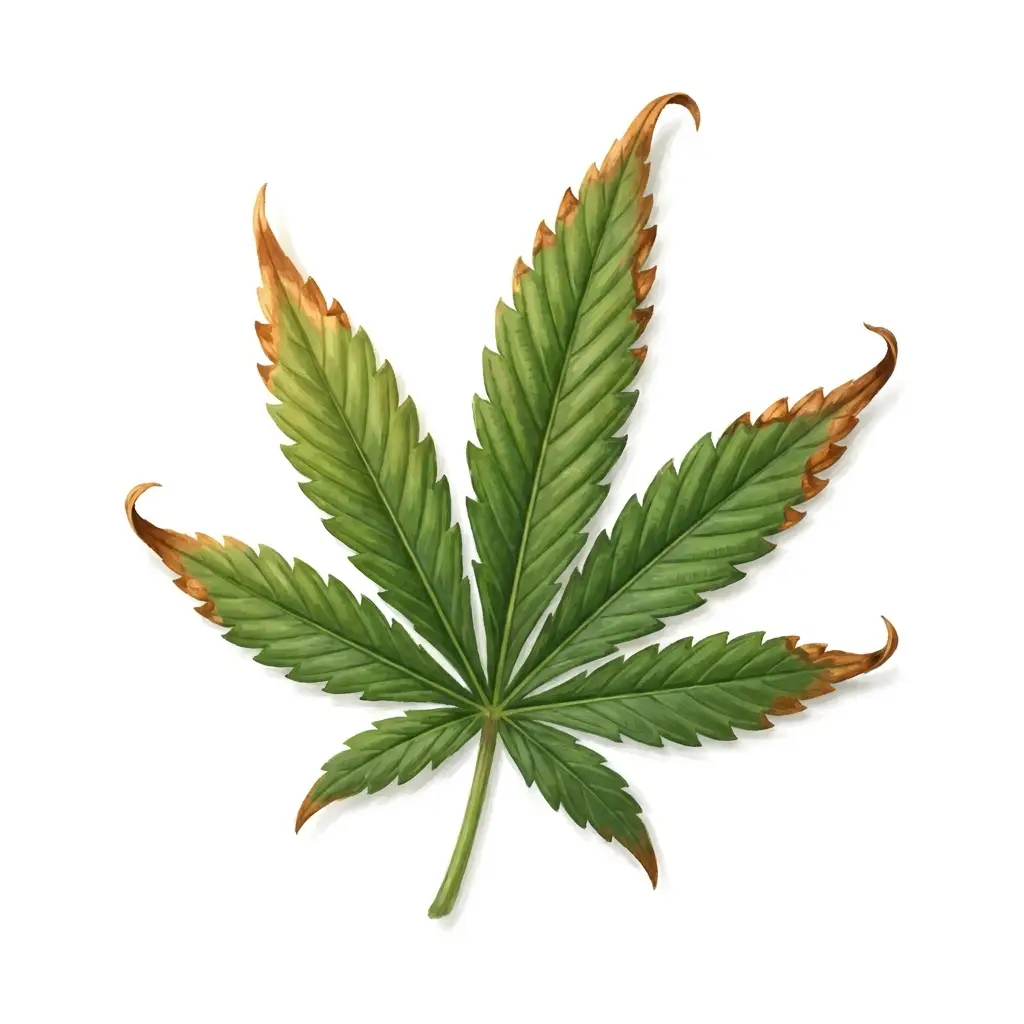 Nutrient burn: scorched tips on a green leaf. The plant’s ‘too much’ signal.
The Chef bought seven bottles on the same day and used all seven the same afternoon. Base nutrient, CalMag, root stimulator, bloom booster, PK booster, a carb supplement, a microbial inoculant — every one at the dose printed on the label, because if it’s on the shelf it must be needed. Forty-eight hours later every leaf tip had gone brown and crispy, curling inward like paper held to a flame. Burnt, clawed tips with pH and feed dialled is the opposite of hunger — you’re feeding too hard. Easy mistake. The bottles are tempting.
The short version:
- Leaf tips go brown, crispy and curl inward — burn working in from the very tip
- It’s the opposite of starving: too much food, not too little, with pH already grand
- Back the feed strength right off, and flush with plain pH’d water if it’s bad
- The burnt tips won’t heal, but new growth comes in clean — less is more
Want the full breakdown? Keep scrolling.
Why are my leaf tips brown and crispy?
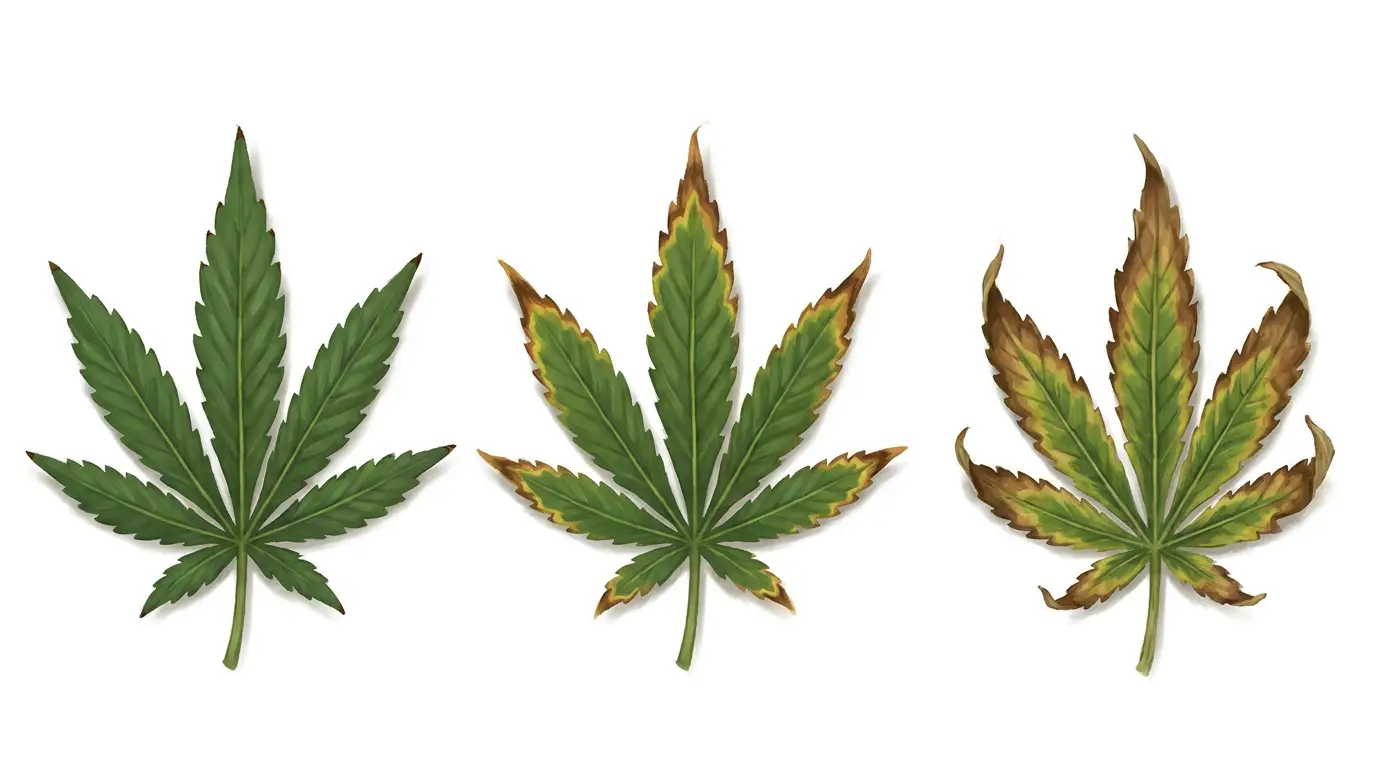 Tip burn first, then it creeps down the margins if you keep feeding.
She can only process so much. Feed her more nutrient than she can use and the excess doesn’t politely sit there waiting — it builds up in the root zone, raises the salt concentration, and the surplus gets pushed out to the furthest, most exposed point on the leaf: the very tip. That’s where it burns. So nutrient burn always starts at the tips and works inward, brown and crisp, often curling under as it goes. A whole leaf going yellow from the base is a different conversation — that’s usually hunger or natural ageing. Burn comes from the outside in.
The give-away is what’s been happening at the bottles. Full-label feeding (the labels are optimistic — they’re written for perfect conditions your tent doesn’t have), stacking three boosters on top of a base, or feeding a rich soil that was already loaded. If your pH is in range and your feed is dialled and the tips are still scorching, you’re not looking at a deficiency. You’re looking at a generous hand.
Is it nutrient burn or a deficiency?
This one trips up everyone, because a stressed plant throwing burnt tips looks like a plant in trouble, and the instinct is to feed it. Feeding it is exactly wrong. Here’s how to tell them apart:
- Burn starts at the tip and moves in. Brown, crispy, curling — the extremity goes first.
- Hunger usually starts at the base or between the veins and creeps along the whole leaf — yellowing, fading, a softer kind of fail.
- Burn turns up when you’ve been feeding hard. Deficiency turns up when you’ve been feeding light, or when pH is locking food out.
That last one matters. If your tips are burning but you’re feeding gently, check your pH before you touch anything — wrong pH can fake all sorts of symptoms by stopping the plant absorbing what’s there. The pH lockout guide covers that whole trap. And if it’s the opposite end of the plant — dark green leaves with tips hooking down hard rather than crisping — that’s nitrogen toxicity, too much of one nutrient rather than too much of everything. Different fix, related lesson: the bottle is a guideline, not a commandment.
How do I fix nutrient burn?
The fix is restraint, which is the hardest thing to do when you’re standing over a plant that looks like it’s struggling.
- Back the strength right off. Drop your feed by at least a quarter, sometimes to half. You can always add more later. You can’t un-feed a plant.
- Flush if it’s bad. Whole plant tip-burnt and the root zone clearly loaded? Run plain pH’d water through the pot — a couple of times the pot’s volume, out the bottom — to wash the surplus salts away, then resume feeding at reduced strength.
- Build up slower next time. Start at half the recommended dose, watch her for a week, and only nudge up by 25% if she’s clearly hungry. Less is more isn’t a slogan, it’s the whole method.
- Read the new growth, not the old. The burnt tips are done — they won’t repair. Judge the fix on the fresh leaves coming in clean and even.
The deeper lesson is the one The Chef never learned: a shelf full of products doesn’t make a better grower. A base nutrient at half strength and a bit of patience beats seven bottles every time.
Not sure this is your problem? Run her through the Diagnosis Buddy — five questions and you’ll know.
How to fix it
- Back the feed off Drop your nutrient strength by at least a quarter, sometimes to half. You can always add more later; you can't un-feed a plant.
- Flush if it's bad If the whole plant is tip-burnt and the root zone is loaded, run a couple of pot-volumes of plain pH'd water through, then resume at reduced strength.
- Build up slower next time Start at half the recommended dose, watch her for a week, and only nudge up by 25% if she's clearly hungry.
- Judge the new growth The burnt tips won't repair, so measure the fix by the fresh leaves coming in clean and even.
Common questions
Will burnt leaf tips heal?
No. Once a tip has gone brown and crispy that tissue is dead and it stays that way. You're not watching the old leaves for recovery — you're watching the new growth come in clean. That's your all-clear.
Should I flush for nutrient burn?
For a bad case, yes — plain pH'd water through the pot to clear the built-up salts, then resume feeding lighter. For a mild touch of tip burn, simply backing the feed strength off usually turns it around without a full flush.
How do I stop nutrient burn happening again?
Start at half the label dose and build up slowly, watching the plant for a week between changes. The labels are written optimistically. Your plant tells you the truth — feed to her, not to the bottle.
Can nutrient burn kill my plant?
Rarely, if you catch it early and back off. A few scorched tips are cosmetic. Left unchecked with heavy feeding grow after grow, the burn creeps further up the leaves and the salt buildup starts harming the roots — so don't ignore it, but don't panic either.
Fixed it?
Here’s how this stage goes when it’s going right — walk the grow →. Still not sure what you’re looking at? Ask the Diagnosis Buddy →