Do You Need a CO2 System? (Probably Not Yet)
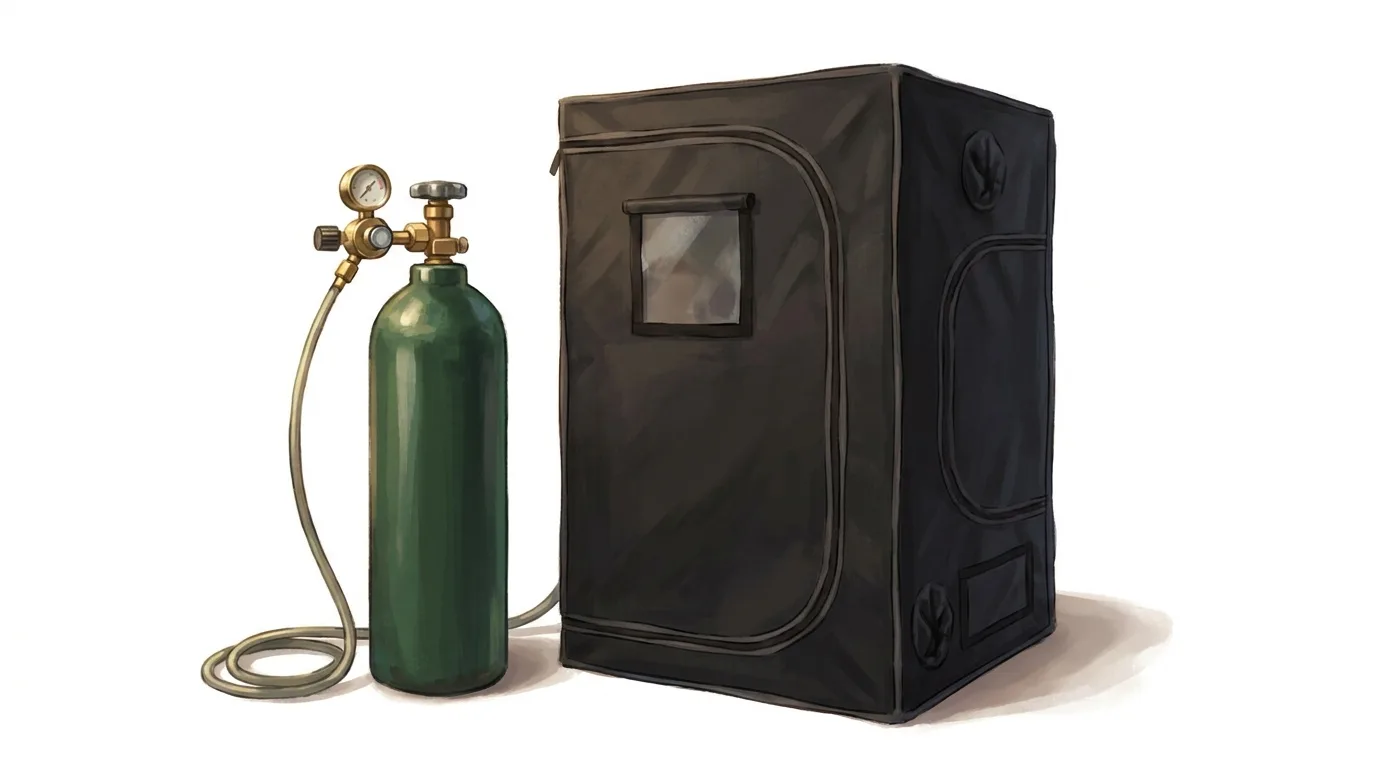
Short answer: no, a beginner doesn’t need a CO2 system — supplementing CO2 only pays off in a sealed room with strong light and a dialled-in environment, where leaf-level CO2 can fall from ~400ppm toward 250ppm and limit the plant.
In a normal tent with passive intake and an extraction fan, any CO2 you add gets pulled straight out, so it isn’t your limiting factor — light, temperature and water are. File it under year two. And mind the safety: CO2 is odourless and at plant-helping levels can put a person on the floor, so it belongs only in a sealed room you’re not standing in, on a controller, with a monitor and alarm. CO2 supplementation is the shiny upgrade that tempts beginners because it sounds like free growth. It can boost yield and density — but only after you’ve solved everything else, and in a typical passive-intake tent it’s money spent on the wrong thing. Here’s the honest answer on whether you need it.
The short version:
- Plants need CO2; in a sealed tent the level around the leaves can drop below outside air
- Supplementing CO2 can boost growth and density — and lets you run a bit warmer (26–28°C)
- But it only pays off in sealed rooms with strong light and a dialled-in environment
- In a tent with passive intake and extraction, CO2 just leaks out — it’s not your limiting factor
- Fix light, temperature and water first; file CO2 under “year two”
Want the full breakdown? Keep scrolling.
What does CO2 actually do?
Plants build sugars from light and CO2, so CO2 is a genuine input — and in a sealed, tightly extracted room the concentration around the leaves can fall from the ~400ppm of outside air down toward 250ppm, which limits the plant. Supplementing it (slowly releasing CO2 from a tank) can raise growth rates and bud density, and it’s the one case where you can safely run the tent a little warmer at 26–28°C, because the extra CO2 lets the plant make use of the heat. On paper, lovely. The catch is where it works.
Why don’t I need it yet?
Because it only does anything in a sealed environment with strong light and an otherwise perfect setup. A normal beginner tent has passive intake and an extraction fan constantly pulling air through — so any CO2 you add gets sucked straight out, and it vanishes the moment you open the door to check on things. The Gadget Collector buys a CO2 regulator and tank before owning a decent extraction fan, with the priorities exactly upside down. In a ventilated tent running a reasonable fan speed, CO2 is simply not your limiting factor — your limiting factor is light intensity, temperature, or water. Adding CO2 to a tent that isn’t sealed is like topping up the petrol on a car with a flat tyre.
One serious safety note
Before any of this: CO2 is odourless, and at the concentrations that help a plant it’s enough to quietly put a person on the floor before they realise anything’s wrong. Enrichment belongs in a sealed room you are not standing in — running on a controller or timer, venting before you go in, with a CO2 monitor and alarm fitted. Never bleed CO2 into a small space while you’re working in it, and never top it up by feel. If you can’t do it with a proper controller and an alarm, that’s one more reason it’s a year-two job and not a beginner one.
What should I do instead?
Solve the things that are limiting you. Make sure the light actually delivers the intensity the canopy needs, hold the temperature and humidity stable, and get the watering and feeding right. Those three are what stand between a beginner and a great harvest — CO2 is a refinement for growers who’ve already nailed them and run a sealed room with serious lighting. So: if your tent has passive intake and a working extraction fan, forget CO2 for now. It exists, it’s powerful in the right setup, and it’ll still be there in year two when your environment is dialled in and you’re chasing the last few percent.
Common questions
Does CO2 increase cannabis yield?
It can in a sealed room with strong light and a dialled-in environment, by letting the plant photosynthesise faster (and run a bit warmer). In a ventilated tent it leaks out and makes little difference.
Do beginners need a CO2 system?
No. In a tent with passive intake and extraction, CO2 isn't the limiting factor — light, temperature and water are. Fix those first; CO2 is a year-two upgrade.
Can I add CO2 to a normal grow tent?
Not effectively. A tent constantly venting air pulls the CO2 straight out. CO2 supplementation needs a sealed room, which is a different, more advanced setup.
Is CO2 enrichment dangerous?
It can be. At the concentrations that help plants, CO2 is enough to harm a person, and it's odourless — so enrich only a sealed room you're not standing in, on a controller, with a CO2 monitor and alarm fitted. Never bleed it into a space you're working in.