Not Enough Light: She's Reaching for the Switch in the Dark
By DIG Dave ·
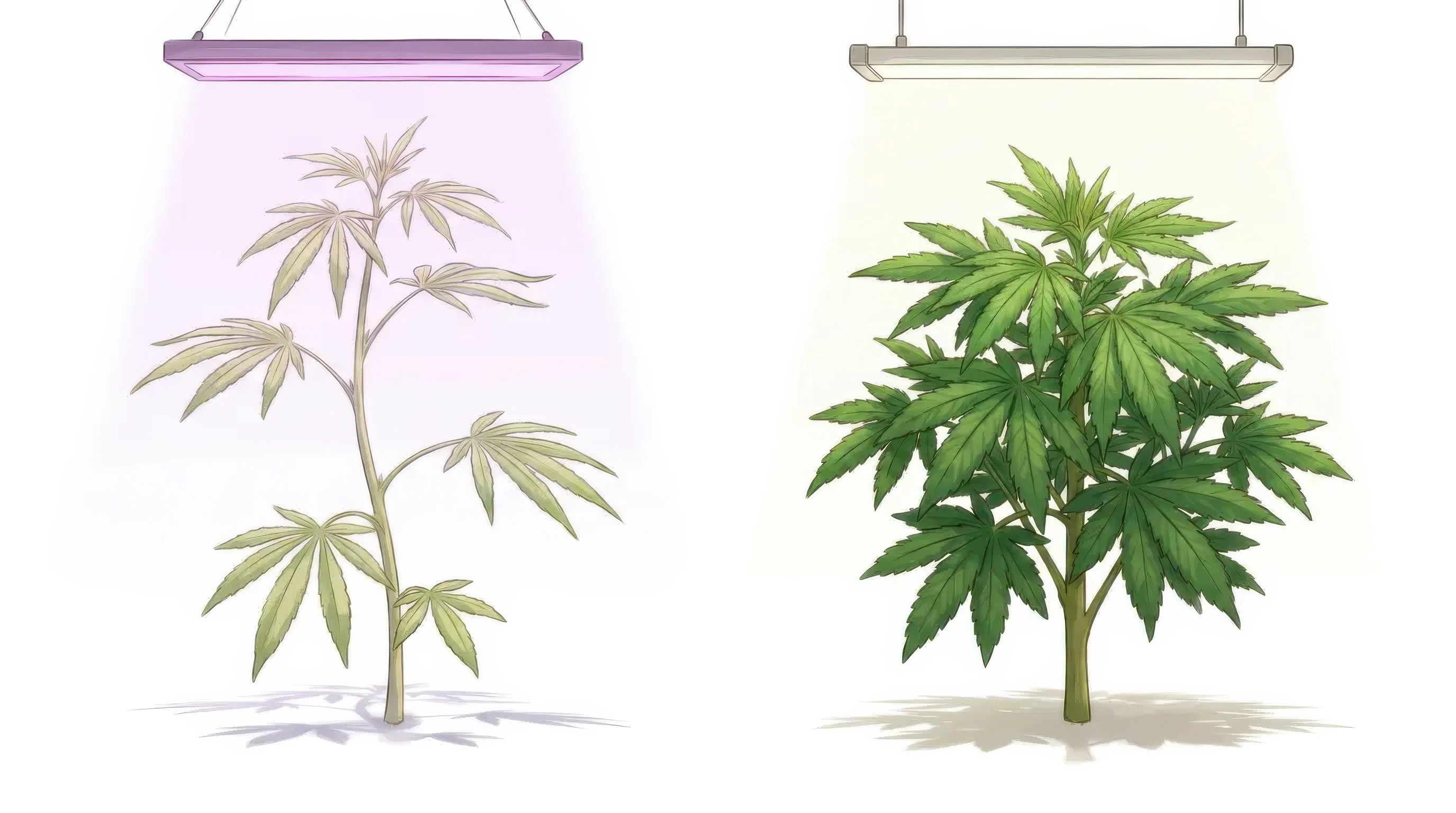 Not enough light: long gaps between leaves, pale, reaching. She’s looking for more.
My first light was a sixty-euro blurple panel that claimed 1000 watts and drew about 130. The tent looked like a nightclub. I assumed bright purple meant powerful. Two weeks later the nodes were stretching like they were trying to leave the tent — long spindly gaps, pale leaves, wispy stems. I blamed the genetics, the soil, the nutrients. The plant wasn’t sick. Long gaps between the leaves and a reach for the lamp means she’s not getting enough light — stretching to find more. She was trying to grow in the dark, the way you’d stretch for a light switch in a black room, and I didn’t know enough to see it.
The short version:
- Long bare gaps between the leaves, spindly stems, and a visible reach toward the lamp
- It’s not a deficiency — she’s short on light and stretching to find more of it
- Get the light closer within the maker’s range, or add more light, and fill the shadows
- A fan toughens up the stretchy stems — the stretch that’s done won’t reverse, but new growth tightens
Want the full breakdown? Keep scrolling.
Why is my cannabis plant tall and stretchy?
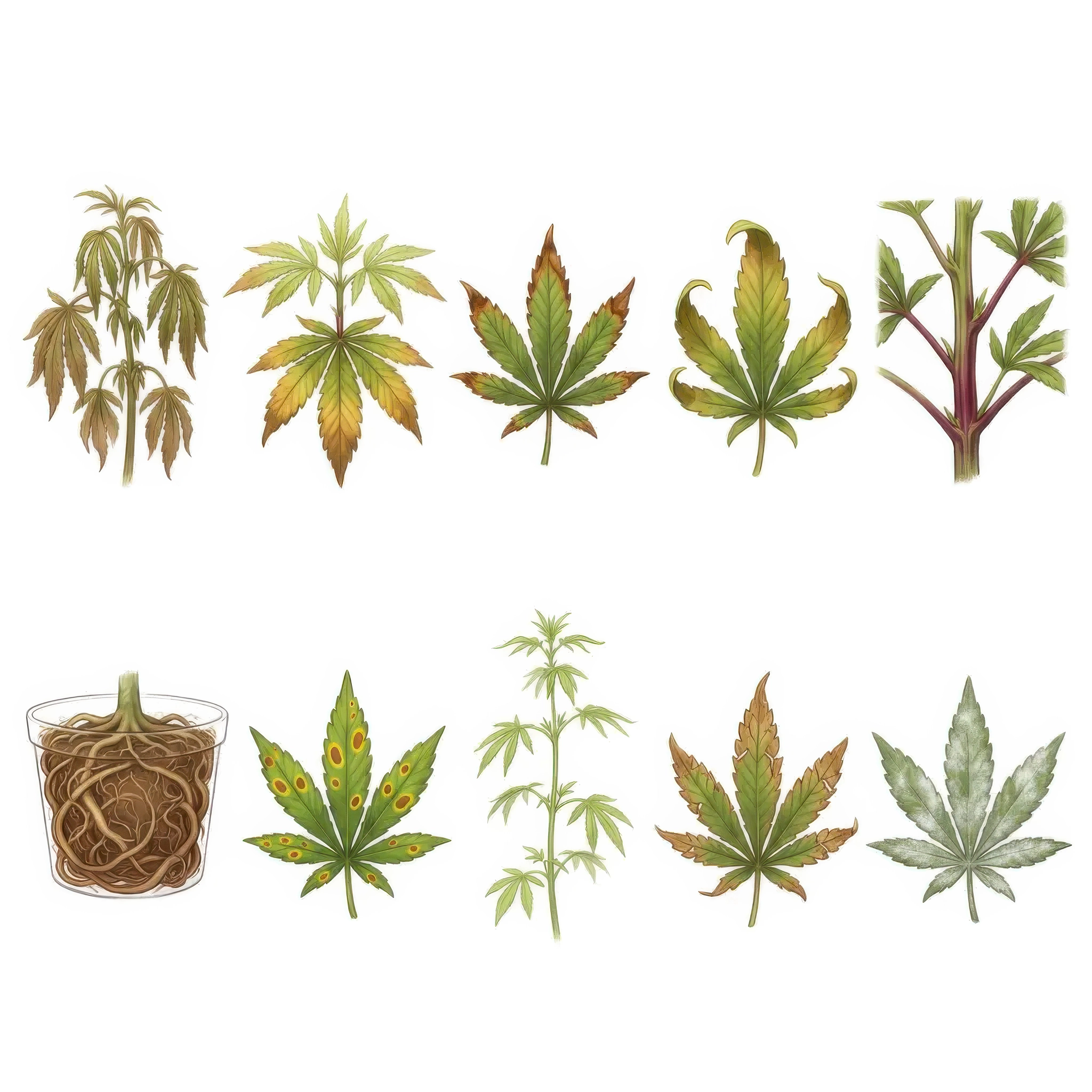 Not sure it’s light? The symptom grid sorts the stretch from the deficiencies.
Because she’s hunting for light she can’t find. When a plant isn’t getting enough intensity, she pours her energy into height instead of bulk — stretching the internodes, the gaps between branches, trying to climb closer to the source. You get a tall, leggy plant with long bare stems, pale thin leaves and not much substance. It looks like growth, but it’s the wrong kind. She’s spending everything on reaching and nothing on building.
Light is the input with the most direct line to your yield — within reason, more usable light means more growth, and nothing else in the tent scales like it. The trap is that bright to your eye and bright to the plant are two different things. That blurple of mine looked blinding and delivered almost nothing in the wavelengths she actually uses. Lumens are for reading lamps. The plant cares about intensity at canopy level, and a cheap panel that claims big wattage while drawing little from the wall is feeding your eyes more than her leaves. Don’t mistake this stretch for the light stress you get from a light too close — that’s the opposite problem, with bleaching and tacoing right under the lamp.
How much light does a cannabis plant need?
The number that matters is PPFD — how much usable light actually lands on the canopy. In veg she wants roughly 300-600, and in flower 600-900. Below about 200 you’re growing noodles, which is exactly what my blurple was doing — maybe 250 in the centre and 80 at the edges, hungry across the whole canopy. You don’t need a meter to start, but the free Photone app on your phone gives you a rough reading at the actual canopy, which beats guessing.
Two things sink most beginners. The first is a light that’s too weak for the job — a panel that draws little from the wall, or a small light in a big tent that can’t reach the corners. The only number that matters at first glance is wall draw, the watts it actually pulls from the socket, not the fiction on the box. A reputable 200W LED handles an 80x80cm tent; a 300-320W handles a 120x120cm. The second is hanging a decent light too far away. The inverse square law is brutal here: double the distance and the intensity drops to a quarter, not a half. Hung at the top of a tall tent to “spread the light,” a good light turns into a weak one.
How do I fix a stretchy, under-lit plant?
Get more light onto the canopy. A few ways, depending on what’s wrong:
- Bring the light closer — within the maker’s range. If a capable light is hung too high, lower it to the distance the manufacturer recommends. For most LEDs that’s a 30-45cm band in flower. Closer means more intensity, fast, thanks to that inverse square law working in your favour for once.
- Add or upgrade the light if it’s underpowered. If the wall draw is too low for your tent, no amount of repositioning fixes it — you need a proper light matched to the space. DIG stock LEDs sized by tent; match the light to the tent, not to the budget. A light that can’t cover the corners means stretchy, smaller plants in those corners, full stop.
- Fill the shadows. Even good light leaves dark pockets low in the canopy. A light defoliation or a bit of plant training opens those up so more leaves get lit instead of sitting in shade.
- Run a fan on her. A clip fan moving air across the canopy toughens up those stretchy, wispy stems so they thicken and stand stronger. DIG stock the clip-on ones. Leaves should rustle, not flap.
Change one thing, give it a few days, and read the new growth. The stretch that’s already happened won’t reverse — those long internodes are set — but new growth should come in tight and compact, with the gaps closing right up. That’s your all-clear.
Not sure this is your problem? Run her through the Diagnosis Buddy — five questions and you’ll know.
How to fix it
- Bring the light closer If a capable light is hung too high, lower it to the maker's range — about 30-45cm for most LEDs in flower — for more intensity.
- Add or upgrade the light if it's underpowered If the wall draw is too low for your tent, repositioning won't help; fit a proper light matched to the space.
- Fill the shadows Lightly defoliate or train the plant so more leaves get lit instead of sitting in shade low in the canopy.
- Run a fan on her A clip fan moving air across the canopy toughens up the stretchy stems so they thicken and stand stronger.
Common questions
Will a stretched plant go back to normal?
The stretch that's already there is permanent — those long bare internodes won't shorten. But once she's getting enough light, new growth comes in tight and compact, so you judge the fix on the fresh growth, not the leggy stems below. Many growers tuck or train the stretched lower branches up into the light rather than waste them.
How do I know if my grow light is strong enough?
Check the wall draw — the watts it actually pulls from the socket, not the number printed on the box. A reputable 200W LED suits an 80x80cm tent and a 300-320W suits a 120x120cm. If the corners of your tent stay dark and stretchy while the centre's grand, the light's either too weak or hung too high.
Can a plant get too little light and still flower?
She'll flower, but on weak light the buds come out airy and loose instead of dense, because flowering wants 600-900 PPFD and she's not getting it. The plant won't die under low light — she'll just never reach what her genetics and your feeding could have delivered. Fix the light before flower if you can.
Is hanging the light higher to cover more area a good idea?
No — that's the classic mistake. Double the distance and the intensity drops to a quarter, so raising the light spreads weak light evenly instead of giving you strong light where it counts. Hang it at the height the PPFD map specifies, and if it can't cover the tent at that height, the light's too small for the space.
Fixed it?
Here’s how this stage goes when it’s going right — walk the grow →. Still not sure what you’re looking at? Ask the Diagnosis Buddy →