Stage 5
 Stage 5
Increasing Potency of Intact Flowers
This stage is explained, not instructed — the concept and the hazards, with the method left as history. The page tells you why.
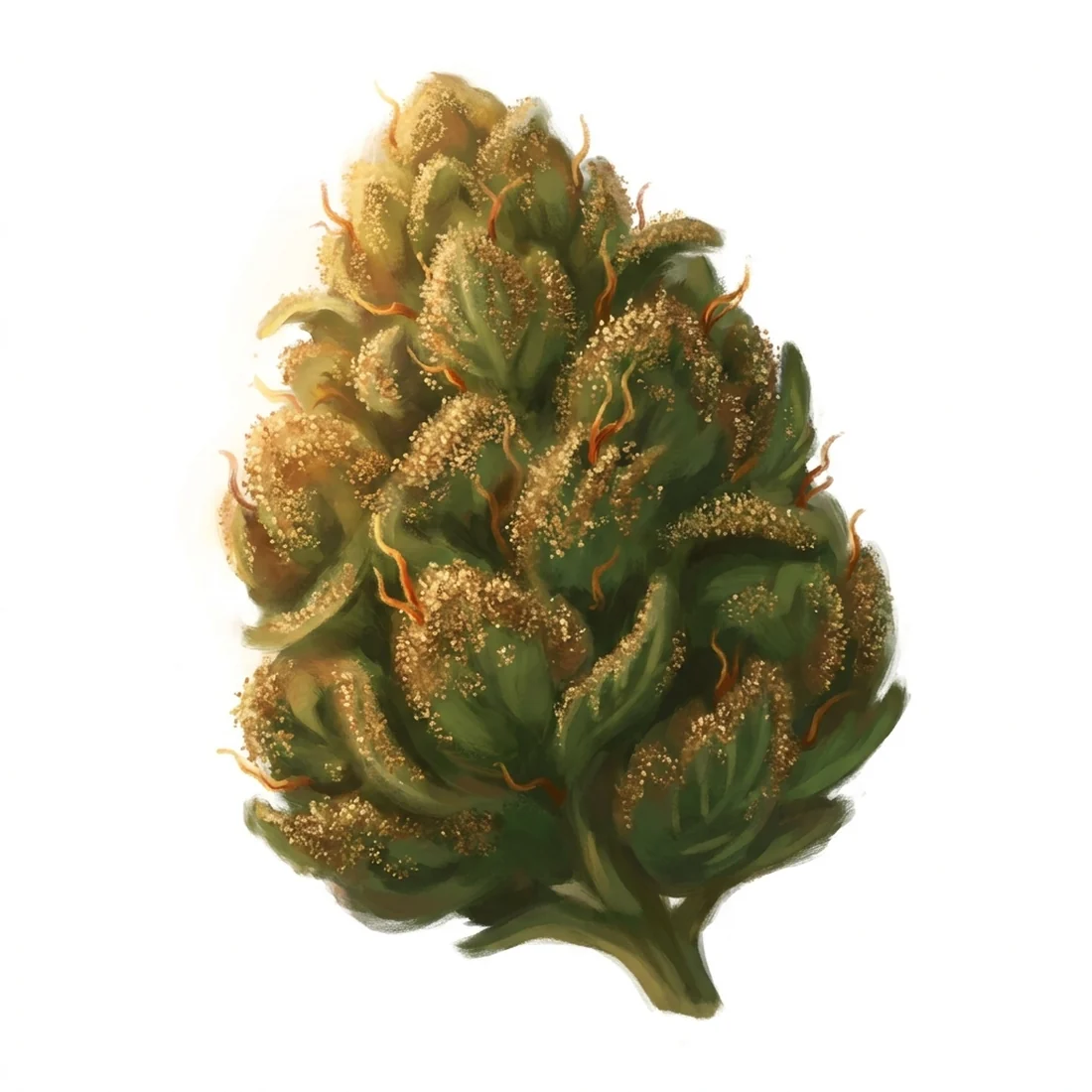
What the chapter is
Seb
This technique takes concentrated, processed oil and re-deposits it back onto whole flowers, so the finished flower carries far more than it grew with. It introduces no new chemistry — instead it stacks every earlier stage at once: solvent extraction, isomerization, the acetate step and more solvent work to coat the flower. The thing to understand is that it inherits every hazard on the shelf together, and leaves a coated flower carrying solvent residue the user can’t see, smell or test for.
This is the one chapter that doesn’t introduce a new chemistry so much as stack the previous ones. The idea is to take concentrated, processed oil and re-deposit it back onto whole flowers, so the finished flower carries far more than it grew with. To get there, the original procedure leans on everything that came before: solvent extraction, isomerization, the acetate step, and then more solvent work to coat the flower and drive the carrier off.
So conceptually it’s simple — put the concentrate back on the bud — but practically it inherits every hazard on the shelf at once.
Why I’ll teach the idea but not the method
Dave
This is the chapter that makes the cleanest argument for the line I’ve been holding. It’s the sum of all the dangerous parts: the flammable solvents from extraction, the corrosive acid from isomerization, the genuinely-don’t of the acetate. Writing the method here would mean writing all of those methods at once, so there’s no version of “just this one stage” that’s safe to hand over.
There’s an honest-teacher point buried in it too. A flower dosed back up to many times its grown strength isn’t a better flower — it’s a coated one, with a solvent history and no way for the user to know what’s actually on it. The thing that makes good bud good is grown in, over weeks, not painted on at the end. That’s not me dodging the chemistry. It’s the actual lesson.
The hazards, in short
Dave
Every hazard from Extraction, Isomerization and THC Acetate applies here, stacked: flammable solvent vapour pooling and finding a spark, corrosive acid that burns before you feel it, and — if the acetate route is involved — a product that’s been linked to lung injury. Plus the quiet one: a finished flower carrying solvent residue the end user can’t see, smell or test for at home. That’s the catalogue, and it’s why this stays history.
Where the curiosity should go
Seb
The legitimate version of “putting more of the good compound where you want it” is formulation science — the discipline of getting a known dose of a known compound into a product safely and consistently, with testing at every step. That’s a real career in the regulated industry and beyond. Routes are in the Isomerization module. And the genuinely craft route to a stronger flower is upstream of all of this: grow it well. That’s the rest of this course.
Check yourself
- Why does this chapter inherit more hazards than any single earlier one? (It stacks extraction, isomerization, and acetylation together — flammable solvent, corrosive acid, and a risky product all at once.)
- What’s the hidden risk to whoever uses a re-dosed flower? (Unknown solvent residue they can’t see, smell, or test for at home.)
- What’s the honest route to a stronger flower this course actually teaches? (Grow it well — potency is built in over weeks, not painted on at the end.)
