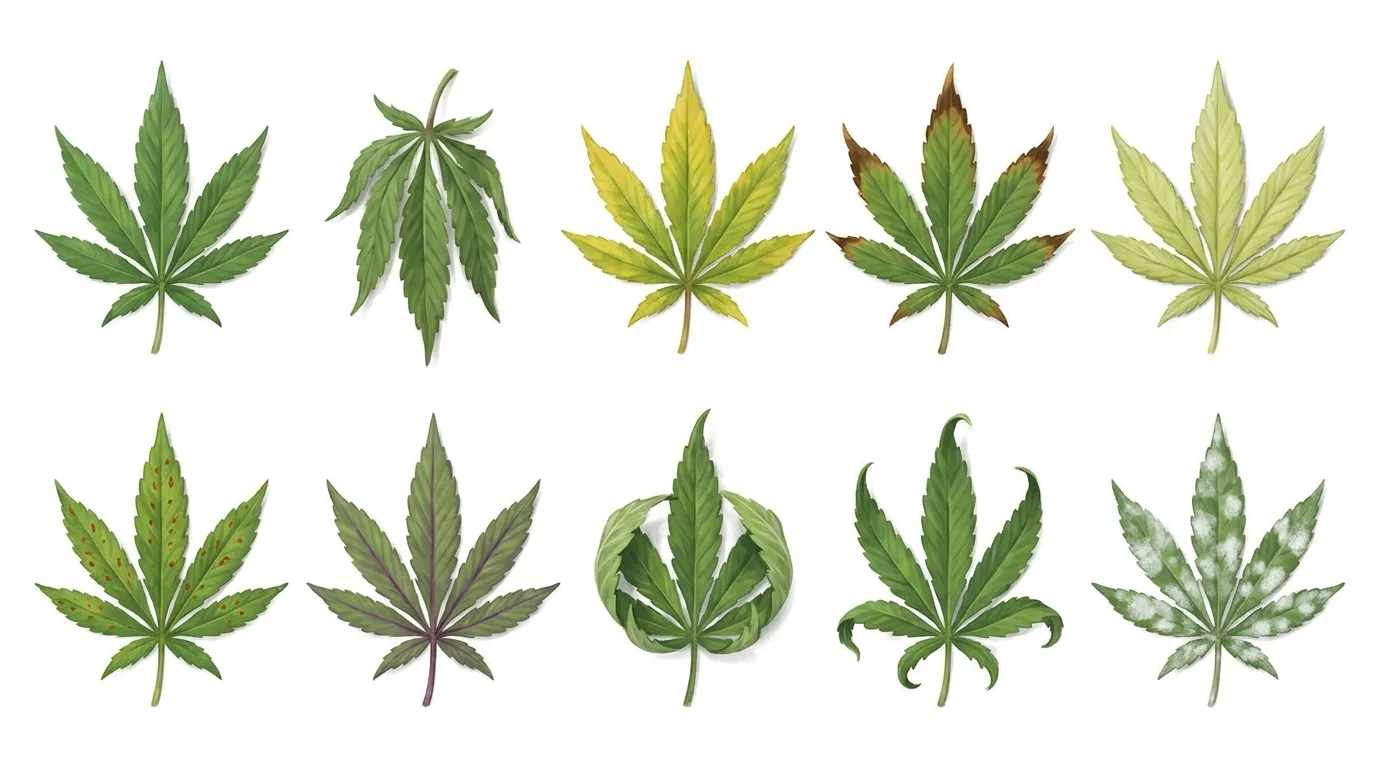
Nitrogen Deficiency in Cannabis (Yellow Lower Leaves)
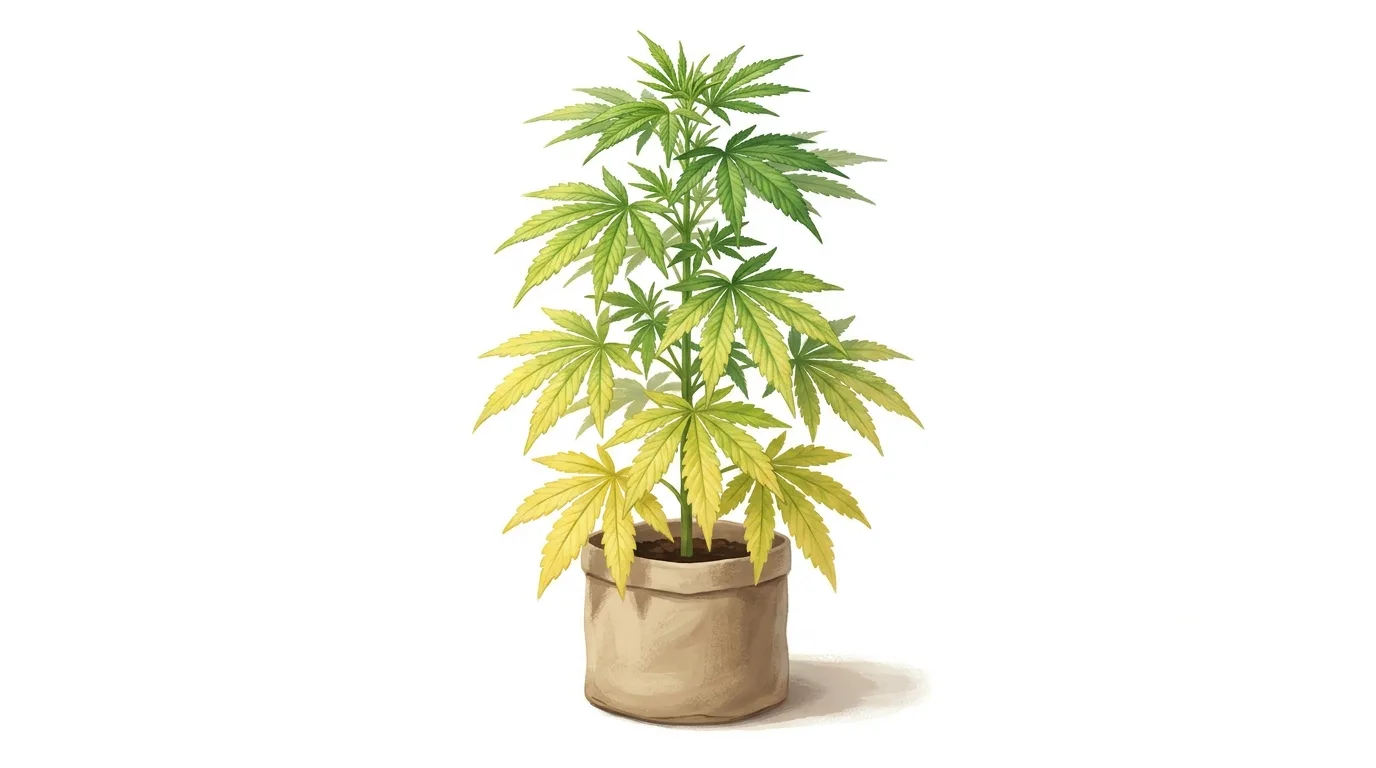
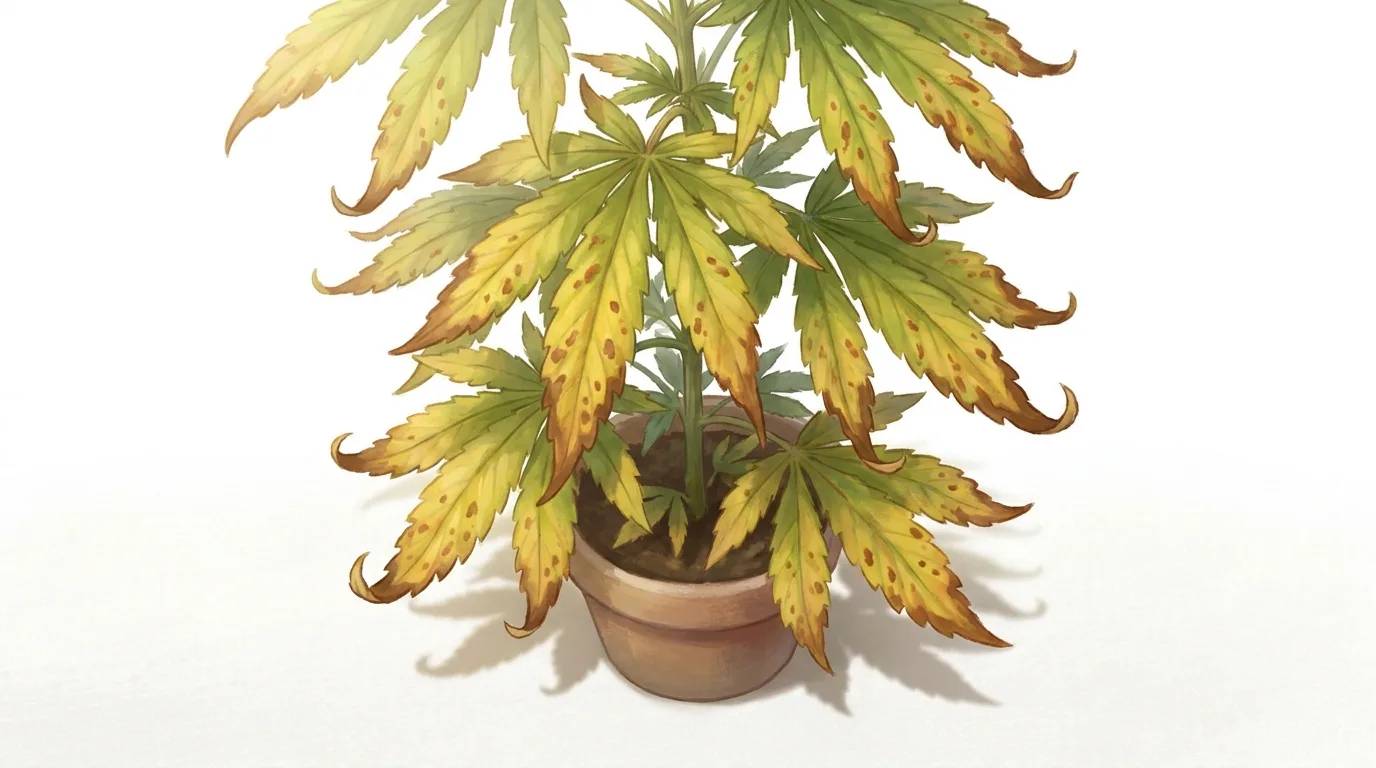
Nitrogen deficiency shows as even, pale yellowing on the oldest, lowest leaves, climbing upward — because nitrogen is mobile and the plant strips it from old growth to feed new. In late flower that same fade is normal and you shouldn’t fight it; in veg, check pH (6.0–7.0 soil, 5.5–6.5 coco/hydro) first, then nudge feed up about 25% rather than dumping nitrogen in. Dark, glossy, clawed leaves are the opposite problem — too much.
Nitrogen is the one beginners both under- and over-react to. It’s the most common deficiency to actually see, and also the most common normal thing to mistake for a problem. The plant tells you clearly if you know where to look — and where to look is the bottom.
The short version:
- Even, pale yellowing starting on the oldest, lowest leaves and climbing
- Nitrogen is mobile — the plant pulls it from old leaves to feed new growth
- In late flower, that same yellowing is normal — don’t fight it
- In veg, check pH, then nudge feed strength up — don’t dump nitrogen in
- Dark, glossy, clawed leaves are the opposite problem: too much nitrogen
Want the full breakdown? Keep scrolling.
What does nitrogen deficiency look like?
Uniform pale-to-yellow on the lowest, oldest leaves first, working steadily up the plant. The yellowing is even across the leaf — not the green-veins-yellow-between pattern of magnesium. Eventually the worst old leaves go fully yellow, soften and drop. Because nitrogen is a mobile nutrient, the plant is doing this on purpose: stripping it from leaves it can spare and sending it to the new growth up top. So the bottom looks hungry while the top still looks grand.
Is yellowing always a problem?
No — and this is the bit that matters. In late flower, lower-leaf yellowing is completely normal. The plant is cannibalising old growth to ripen the buds, and nitrogen demand drops right off in bloom anyway. Reaching for the nitrogen bottle at week seven is how you end up with leafy, slow-finishing, harsh bud. If you’re in veg or early flower and the fade is spreading upward faster than it should, that’s when it’s worth acting.
How do I fix nitrogen deficiency?
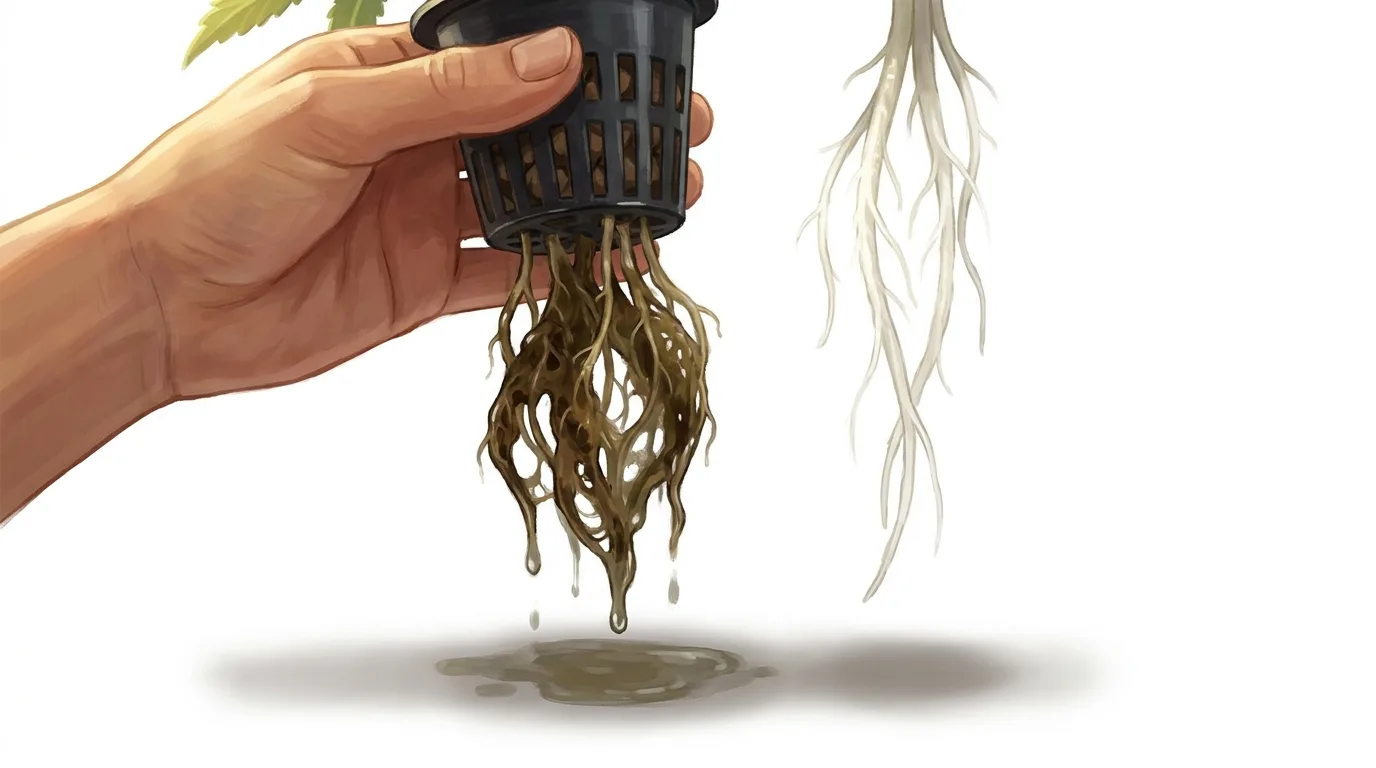
Check pH first — 6.0–7.0 in soil, 5.5–6.5 in coco/hydro — because a lockout looks identical and feeding more won’t help if the root zone’s out of range. If pH is grand and the plant’s in active veg, nudge your base nutrient up by about 25% and watch the new growth over the next few days. Don’t slam in a big dose; you can always add more, you can’t un-feed. A good veg base nutrient (DIG stock the CANNA Terra range) is all most plants need. The faded leaves won’t green back up — you’re watching the new growth to confirm the fix.
Common questions
Why are my lower leaves turning yellow and falling off?
Mobile nitrogen being relocated to new growth — a deficiency in veg, but completely normal in late flower as the plant feeds its buds.
How do I tell nitrogen deficiency from magnesium?
Nitrogen is even yellowing of the whole lower leaf. Magnesium is interveinal — yellow between the veins while the veins stay green, also lower down.
Can too much nitrogen be a problem?
Yes. Dark green, glossy, downward-clawing leaves are nitrogen toxicity — too much, especially late in flower. Ease off rather than feed more.
References
- Llewellyn et al. (2023). Foliar Symptomology, Nutrient Content, Yield, and Secondary Metabolite Variability of Cannabis Grown Hydroponically with Different Single-Element Nutrient Deficiencies. Plants, 12(3):422.
- Bevan, Jones & Zheng (2021). Optimisation of Nitrogen, Phosphorus, and Potassium for Soilless Production of Cannabis sativa in the Flowering Stage Using Response Surface Analysis. Frontiers in Plant Science, 12:764103.