Mobile vs Immobile Cannabis Deficiencies (Read the Symptoms)
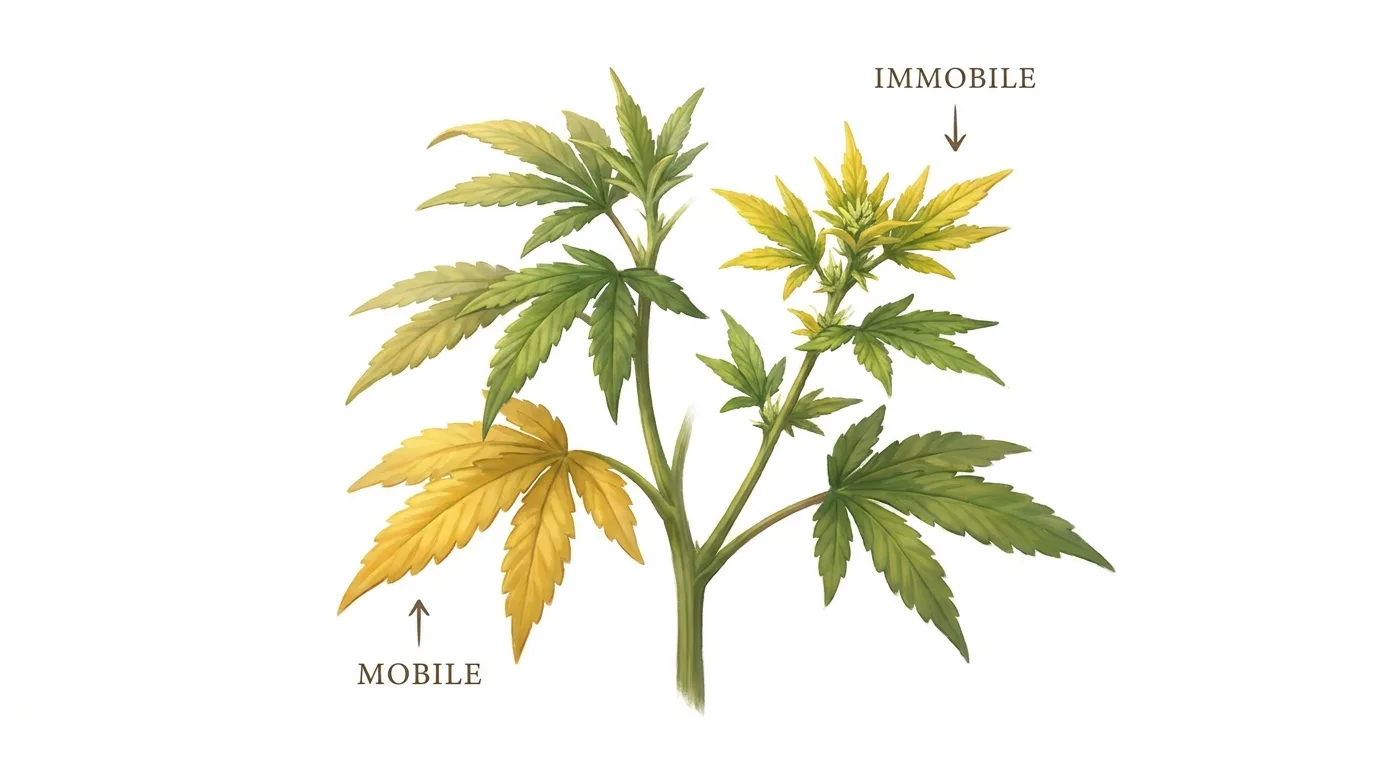
Where a deficiency shows tells you what it is: mobile nutrients (nitrogen, phosphorus, potassium, magnesium) appear on the old, lower leaves first because the plant relocates them upward, while immobile nutrients (calcium, iron, manganese, boron) hit new top growth first because it can’t move them. Whichever it is, check pH before you feed — 6.0–7.0 in soil, 5.5–6.5 in coco or hydro — because most “deficiencies” are lockouts.
Most “I don’t know what’s wrong” moments get a lot smaller the second you ask one question: where is it happening? Old growth at the bottom, or new growth at the top? That single split sorts most deficiencies into one of two boxes — and it’s the cheapest diagnostic tool you own.
The short version:
- Mobile nutrients (nitrogen, phosphorus, potassium, magnesium) show on old, lower leaves first
- Immobile nutrients (calcium, iron, manganese, boron) show on new, top growth first
- The plant can shift mobile nutrients around; it can’t move immobile ones
- Whichever it is, check pH before you feed — most “deficiencies” are lockouts
Want the full breakdown? Keep scrolling.
Why does location tell you the deficiency?
Because the plant triages. When it’s short on a mobile nutrient, it strips that nutrient out of its oldest leaves and ships it up to the new growth that matters most. So the old, lower leaves suffer first — bottom-up yellowing and fading. Nitrogen, phosphorus, potassium and magnesium all behave this way. When it’s short on an immobile nutrient, it can’t move it — so the youngest top growth, which needs it now, shows the damage first: twisted, pale, stunted new leaves. Calcium, iron, manganese and boron sit here. Top-down problems scare beginners more because new growth is supposed to be the healthiest part of the plant.
Quick reads
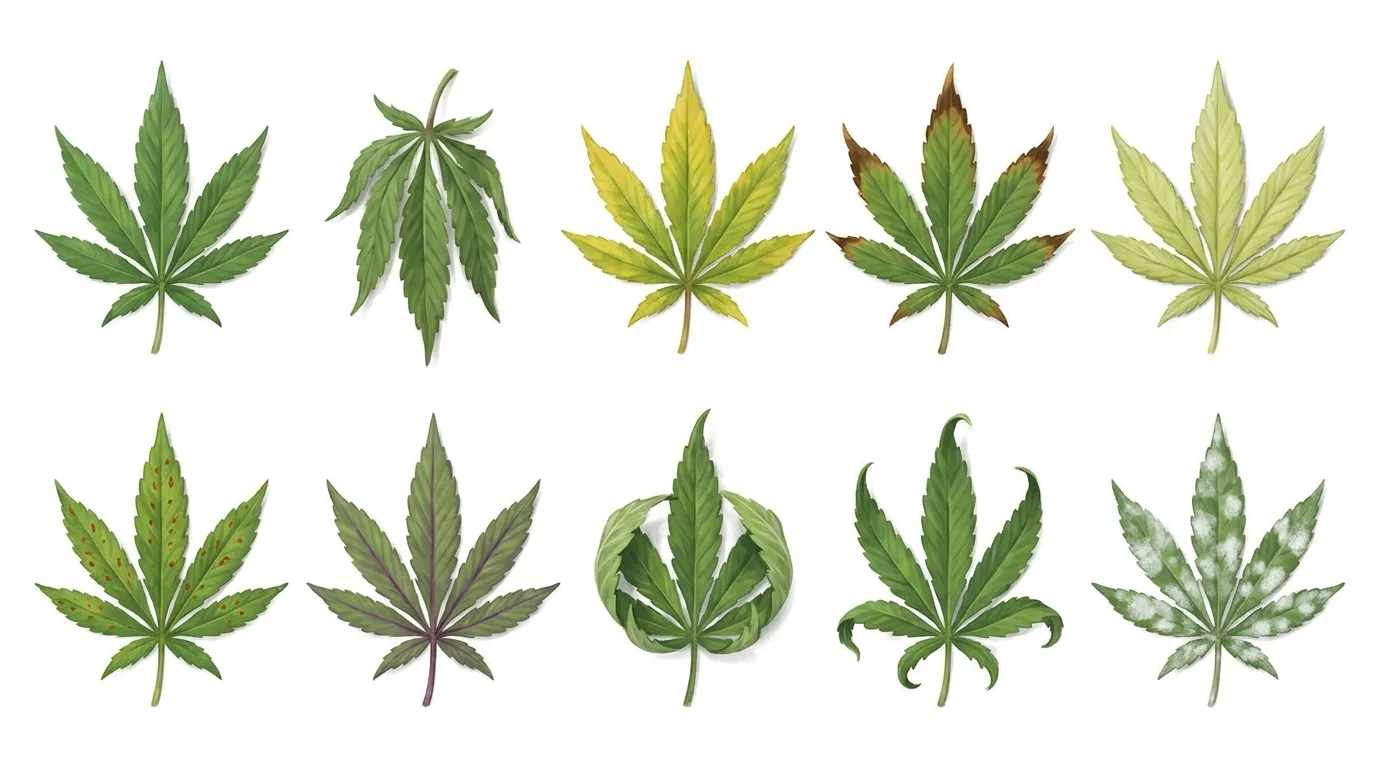
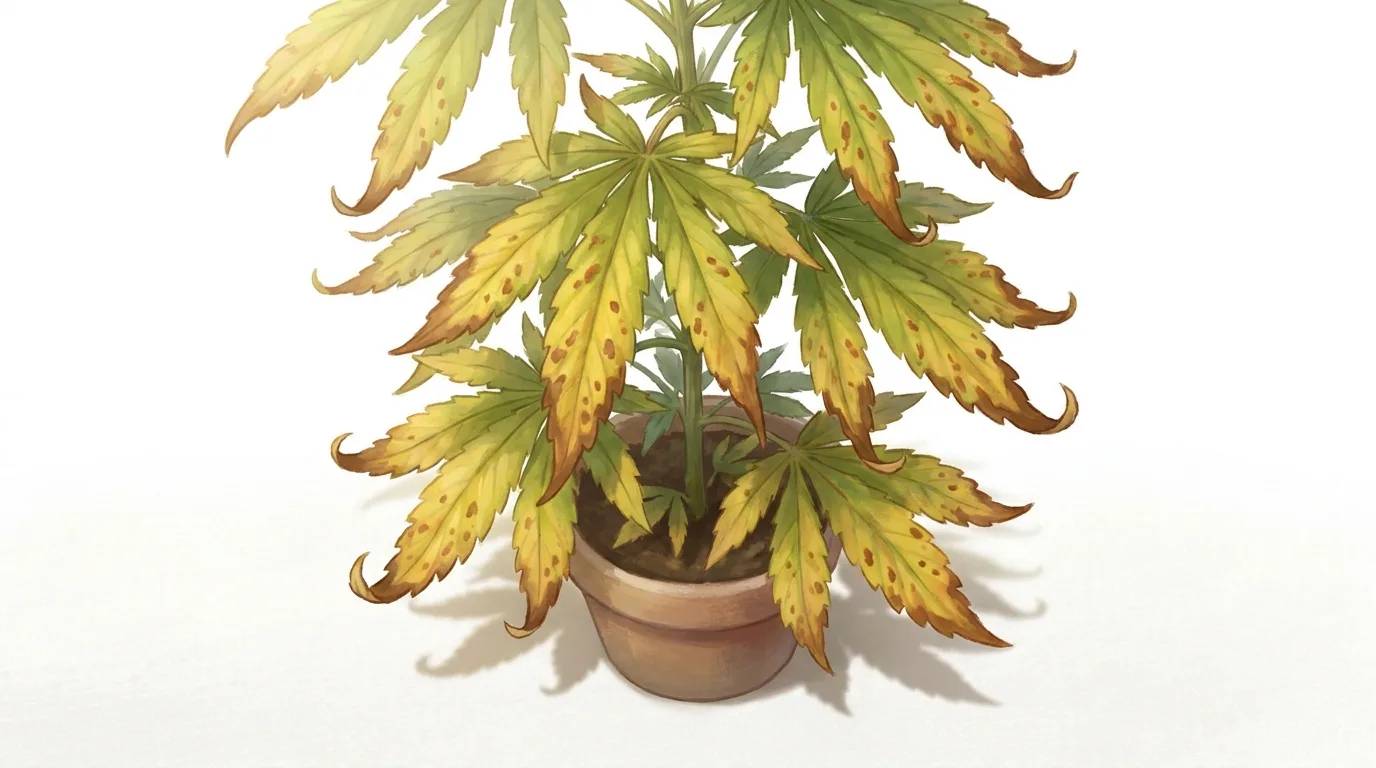
Bottom-up, even yellowing, oldest leaves first — nitrogen, the classic. Or just natural late-flower fade. Lower leaves, interveinal yellow (green veins, yellow between) — magnesium. Lower-mid leaves, brown-burnt margins — potassium. New top growth, bright yellow with green veins — iron (usually a pH lockout, not a real shortage). New growth, brown spots and distorted tips — calcium.
Notice how many of those resolve to “check pH.” That’s not a coincidence.
So do I just add the missing nutrient?
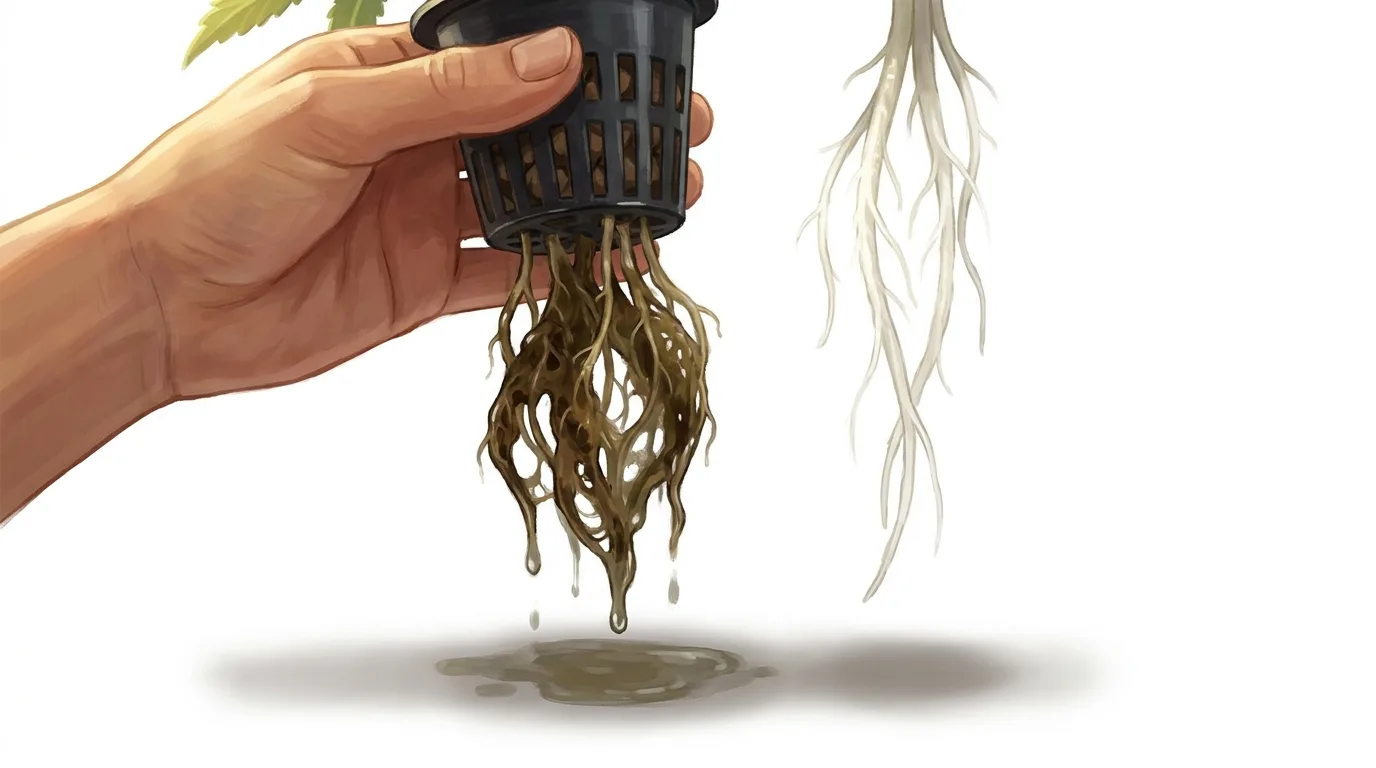
Not first. Most deficiency symptoms are lockout — the nutrient is present but the root-zone pH is wrong, so the roots can’t take it up. Feed more of the same and it just piles up as salt and makes things worse. Check pH with a pen (DIG stock the reliable Bluelab ones), get the root zone back into range — 6.0–7.0 in soil, 5.5–6.5 in coco or hydro — and wait. More often than not the “deficiency” corrects itself, because the food was always there. The location told you the family; pH tells you whether it’s real.
Common questions
What's the difference between mobile and immobile nutrients?
Mobile nutrients can be relocated within the plant, so shortages show on old leaves first. Immobile ones can't be moved, so shortages show on new top growth first.
My new growth is yellow — what's the likely cause?
An immobile nutrient like iron, and most often that's a pH lockout rather than a true shortage. Check and correct pH before adding anything.
Should I always add nutrients when I see a deficiency?
No. Check pH first. The majority of deficiency symptoms are lockout — nutrients present but unavailable — and feeding more makes it worse.