Less Common Cannabis Deficiencies: Sulphur, Zinc, Manganese

Sulphur, zinc, manganese and boron deficiencies are real but uncommon, and they mostly show on new top growth because they’re immobile. In a complete base nutrient, true shortages are rare — the cause is usually pH lockout, so check pH first (6.0–7.0 in soil, 5.5–6.5 in coco) before reaching for any single-element bottle.
Nitrogen, magnesium, potassium, calcium — those are the deficiencies you’ll actually meet. But now and then something rarer shows up, and because beginners don’t recognise it, they cycle through CalMag and base feed while the real issue sits untouched. Here’s the second tier, and the honest truth that most of them aren’t true shortages at all.
The short version:
- Sulphur, zinc, manganese and boron deficiencies are real but uncommon
- Most show on new growth — they’re immobile micronutrients
- In a complete base nutrient, true shortages are rare; lockout is far more likely
- Check pH first — micronutrients vanish fast outside the right range
- Don’t go dosing single elements blind; you’ll cause a new imbalance
Want the full breakdown? Keep scrolling.
What do the rarer deficiencies look like?
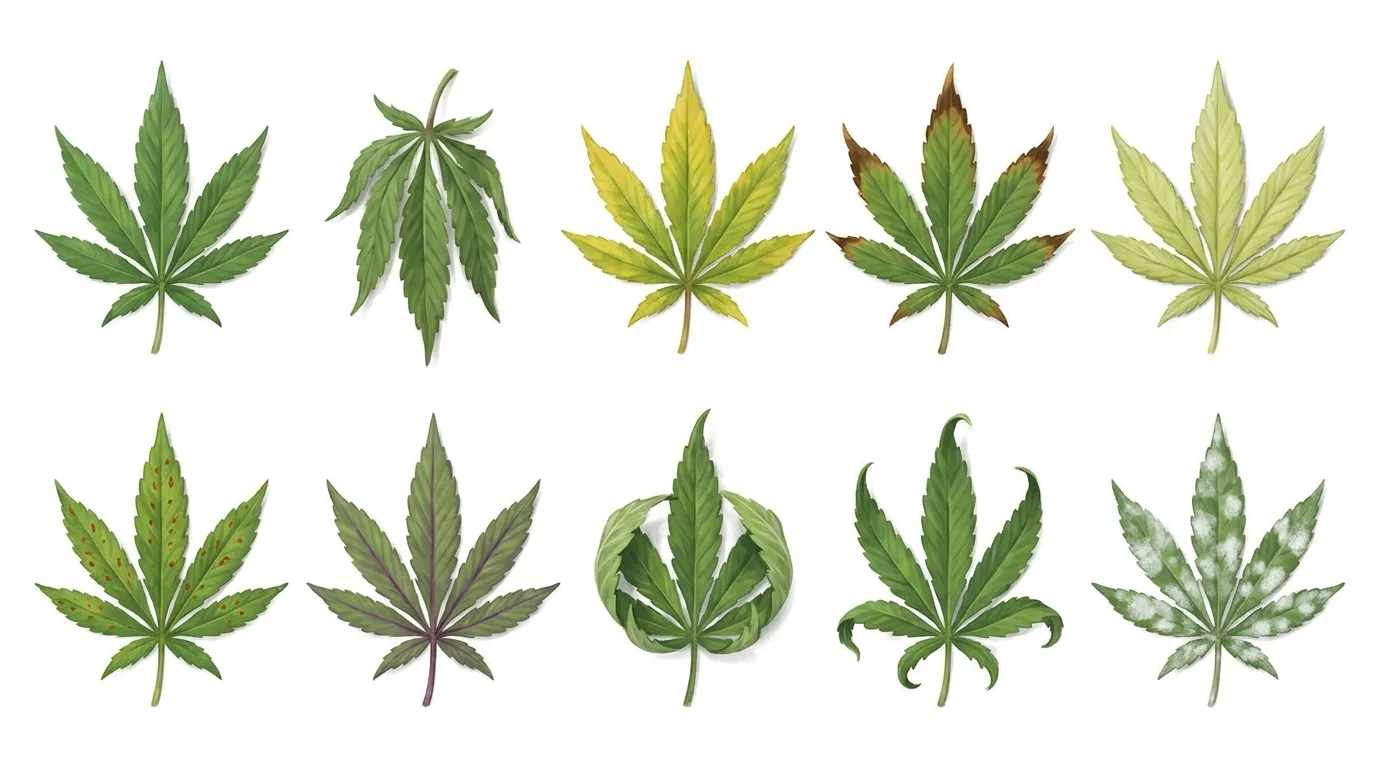
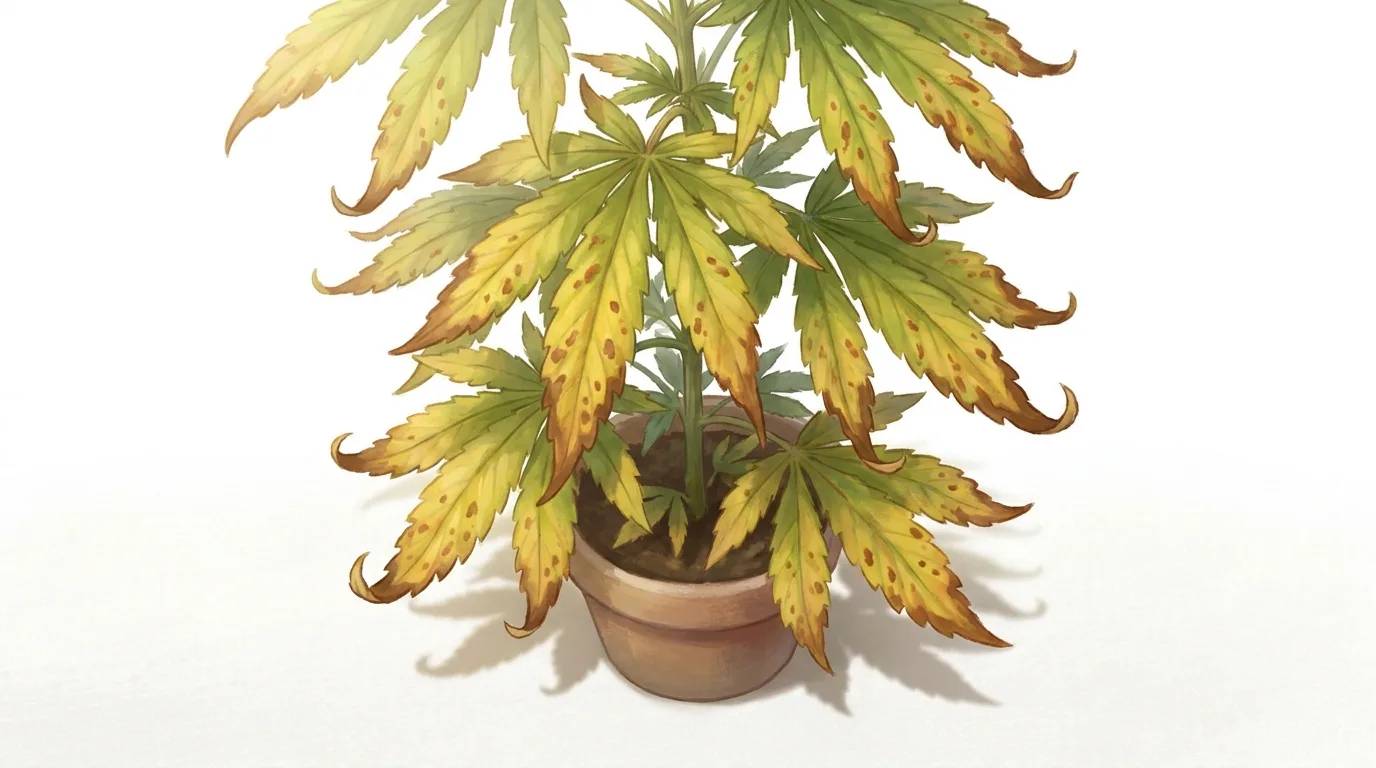
Sulphur — pale, yellowing new growth, a bit like nitrogen but starting at the top instead of the bottom (sulphur is far less mobile). Stems can go a touch purple. Zinc — short, bunched new growth with shortened internodes and yellowing between the veins of young leaves; the tips can look twisted or stunted. Manganese — interveinal yellowing on new growth with small brown speckles, the speckling being the tell that separates it from iron. Boron — thick, brittle, distorted new growth and dying tips; rare indoors. Notice the pattern: nearly all of these hit the top of the plant, because they’re immobile and the new growth needs them most.
Why is it usually pH, not a shortage?
If you’re running a complete base nutrient, the plant is being offered all of these — so a true shortage is unusual. What’s common is lockout: the root-zone pH drifts out of range and these micronutrients become chemically unavailable even though they’re sitting right there. Manganese and zinc lock out at high pH; the whole micronutrient group gets fussy outside 6.0–7.0 in soil or 5.5–6.5 in coco. So the first move for any of these is a pH pen, not a specialty bottle. Get the range right, flush if the runoff EC is high, and wait. The “deficiency” usually lifts on its own.
When is it actually a real deficiency?
When pH is genuinely in range, EC isn’t sky-high, and the symptom still spreads on new growth over a week. Then a CalMag or balanced micronutrient supplement (DIG stock them) at half dose is reasonable — emphasis on balanced. Dosing a single element like zinc or manganese on its own is how you trade one problem for another, because these micronutrients compete with each other for uptake. Fix the environment for them, don’t force-feed them.
Common questions
How do I tell sulphur deficiency from nitrogen?
Both yellow, but nitrogen starts on old lower leaves and sulphur starts on new top growth. Location is the giveaway.
Are micronutrient deficiencies common in cannabis?
Not if you're feeding a complete base nutrient. Most apparent micronutrient deficiencies are pH lockout rather than a true shortage.
Should I buy a separate zinc or manganese supplement?
Rarely. Check and fix pH first. If you do supplement, use a balanced micronutrient product at half dose, not a single element, to avoid creating a new imbalance.