Cannabis Flowering Stage Week by Week
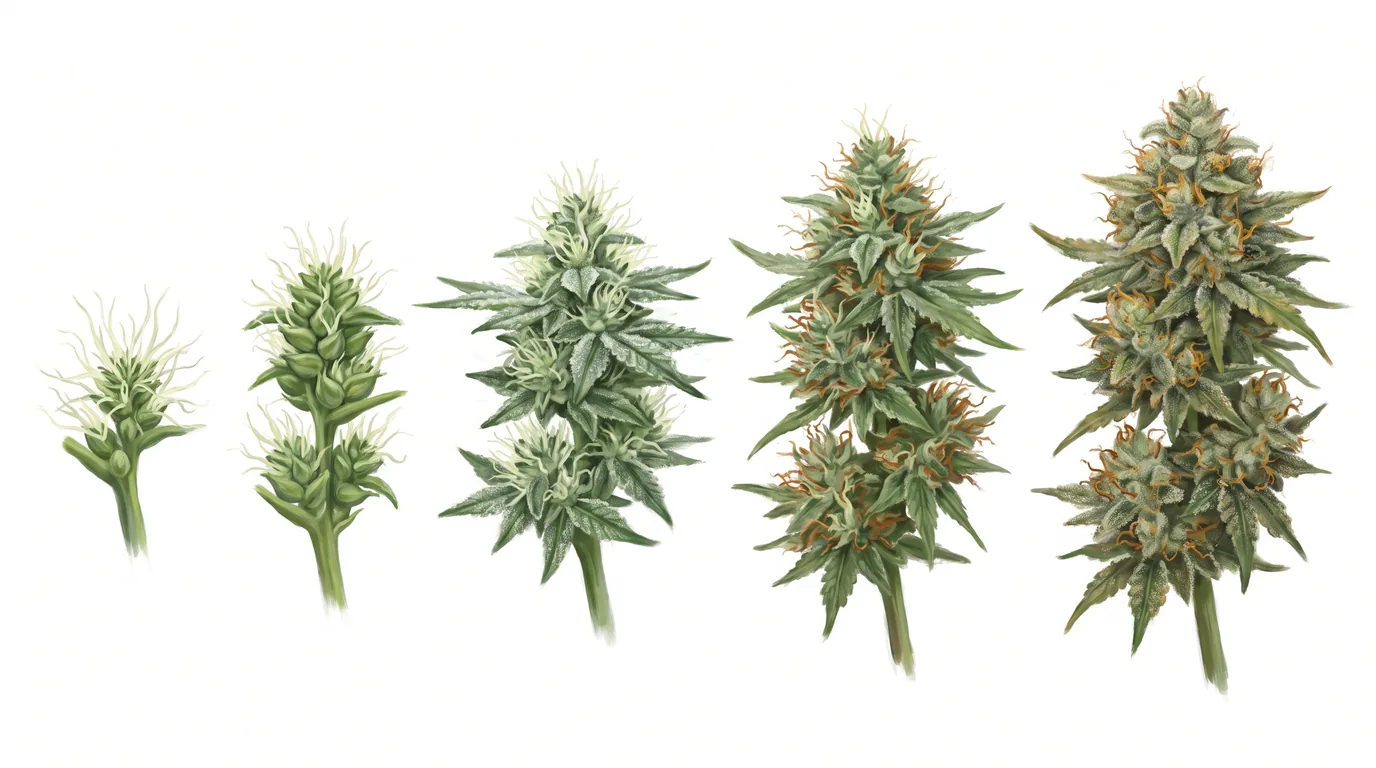
Short answer: cannabis flowers for about 8–10 weeks after you flip to 12/12, in three rough bands — weeks 1–3 are the stretch and first pistils, weeks 4–6 are the bud swell where most mass and smell arrive, and weeks 7–9 are ripening, where the lower leaves yellow and you wind the feed down. The feed shifts from nitrogen toward phosphorus and potassium, and humidity drops stage by stage (around 45–50% in early and mid flower, 35–40% at the end) to keep rot out of dense buds. You harvest by the trichomes — roughly 70–90% cloudy with 10–20% amber — not by the calendar, because seed-bank weeks usually run short.
Flowering is where the grow stops being about leaves and starts being about buds. It is also where most people either panic or get impatient. Here is the whole run, week by week, so you know what is normal before it happens.
The short version:
- Flowering starts when you flip the light to 12/12 (a photoperiod); autos start on their own
- Weeks 1–3 — the stretch and early flower: pistils appear, the plant shoots up
- Weeks 4–6 — the swell: buds bulk up, the tent starts to stink, trichomes frost
- Weeks 7–9 — ripening: leaves yellow, feed winds down, you harvest by trichomes
- Feed moves from nitrogen toward P and K; humidity steps down as buds get dense
- The weeks are a guide — the calendar lies, the trichomes do not
Want the full breakdown? Keep scrolling.
What triggers flowering, and how long does it take?
A photoperiod plant flowers when the nights get long enough — indoors, when you switch the timer to 12 hours on, 12 off. From that flip, most strains take 8–10 weeks, with sativa-leaning plants sometimes running to 11 or more and indica-leaning ones finishing a touch sooner. Autoflowers skip the decision and flower on age, around week three or four from seed.
The map below splits those weeks into three bands. They are not hard borders — one stage eases into the next — but they tell you what the plant is doing, what your job is, and the mistake waiting at each step.
| Weeks | What she’s doing | What you do | What goes wrong |
|---|---|---|---|
| 1–3 · Early flower | Stretches (often doubles in height), throws white pistils at the nodes, stops gaining leaf | Ease into bloom (P/K) at half strength; bring humidity to ~45–50%; set light distance for the stretch | Panic-feeding; heavy defoliation too early; the stretch burning tops on the light |
| 4–6 · The swell | Buds bulk up fast, sugar leaves frost with trichomes, terpene smell ramps hard | Feed P/K-led around EC 1.8–2.0; hold 20–26°C and ~45–50% RH; run the carbon filter | Overfeeding and additive-stacking; humidity creeping up as buds thicken; bud rot starting unseen |
| 7–9 · Ripening | Lower leaves yellow as she feeds buds from herself; pistils brown; trichomes cloud then amber | Wind feed down (lower EC, minimal N); drop RH to 35–40%; read trichomes under a loupe | Chopping early on the calendar; feeding more nitrogen to “fix” the yellowing; rot in dense colas |
Weeks 1 to 3: the stretch and early flower
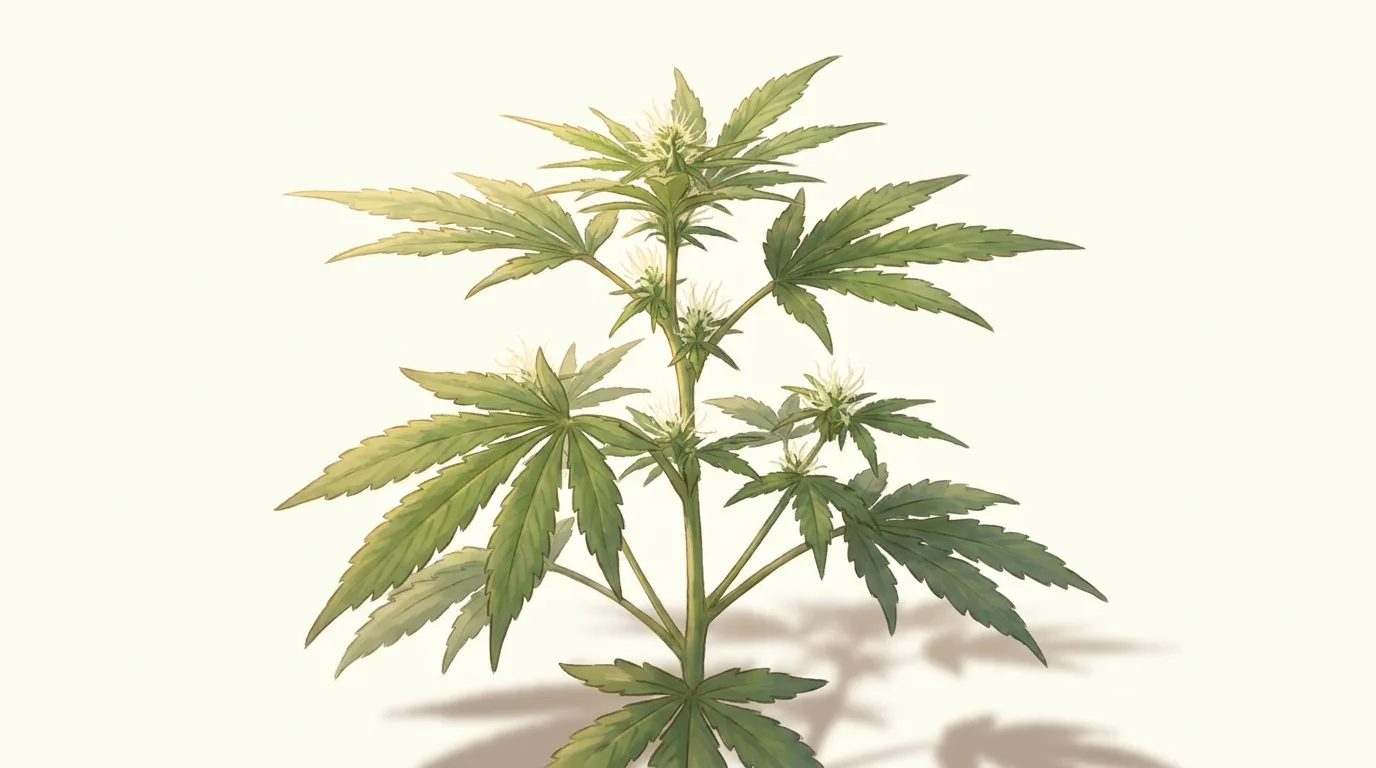
The first thing you see is the stretch — many plants put on half their height again, some double, in the first week or two after the flip. That is normal; leave headroom and do not try to stop it. Soon after, pistils appear: little white hairs at the nodes marking where buds will form. The feed should shift off heavy nitrogen toward phosphorus and potassium, but at half strength and building up — overfeeding here is far more common than underfeeding. Bring humidity toward 45–50%, because this is where the mould battle begins. And keep your hands off: a light, selective tidy around day 21 at most, never heavy defoliation before the buds are built. The full detail is in the early flower guide.
Weeks 4 to 6: the bud swell
This is the payoff stage. The buds stop being wispy sites and become real structures, gaining most of their mass and density now, while trichomes frost the sugar leaves. From about week four the smell ramps up sharply — a carbon filter stops being optional if you care about discretion. Feed phosphorus- and potassium-led at roughly EC 1.8–2.0 on one bloom base, not a shelf of additives, and hold 20–26°C with humidity still around 45–50%. The temptation is to do more; the plant mostly wants you to hold steady and let it work. Full detail in the mid-flower swell guide.
Weeks 7 to 9: ripening and harvest
Late flower looks alarming the first time: the lower fan leaves yellow and drop. That is the plant pulling stored nutrients out of its old leaves to finish the buds — it is meant to look like this, so do not answer it with more nitrogen. Wind the feed down (lower EC, minimal N), and drop humidity to 35–40% to protect the dense colas from rot. Plenty of growers finish on plain pH’d water for the last week or so; the “flush” is a taste-and-habit choice more than a proven quality step (we scored that belief, and the evidence is thin). The one reliable harvest signal is the trichomes under a loupe: aim for 70–90% cloudy with 10–20% amber, earlier for a more energetic result, later for a heavier one. Full detail in the late flower and ripening guide.
Why don’t my weeks match the seed bank’s?
Because seed-bank flowering times are estimates built on ideal conditions and a little marketing optimism, and your tent is rarely ideal. Most strains run a week or two longer than the packet says, and that is not a fault — it is the norm. The weeks in this guide are a map, not a timetable: use them to know what should be happening and what to prepare for, and let the trichomes, not the date, tell you when she is actually done. After the chop comes the part people most want to rush and most shouldn’t — the dry and cure — but that is the next stage, and another story.
Common questions
How many weeks does cannabis flower for?
Most photoperiod strains flower for 8–10 weeks after the flip to 12/12; some sativa-leaning plants run 11 weeks or more. Autoflowers flower on age rather than light. The weeks are a guide — the trichomes call the actual finish.
What are the stages of flowering week by week?
Roughly three bands: weeks 1–3 are the stretch and early flower (pistils appear, the plant shoots up); weeks 4–6 are the swell (buds bulk up, smell ramps, trichomes frost); weeks 7–9 are ripening (leaves yellow, feed winds down, you harvest by trichomes).
When do buds grow the most?
Through mid-flower, roughly weeks 4–6, when colas gain most of their mass and density. Early flower is mostly stretch and bud-site formation; late flower is ripening rather than bulking.
How do I know when flowering is finished?
By the trichomes under a loupe, not the calendar — aim for roughly 70–90% cloudy heads with 10–20% amber. Seed-bank flowering times are estimates and usually run a week or two short in a real tent.
Why is my plant flowering longer than the seed bank said?
Seed-bank times assume ideal conditions and a little marketing optimism. A beginner's tent is rarely ideal, so most strains run a week or two longer. Judge by the trichomes and hold your nerve rather than chopping on the printed date.