High Humidity: The Quiet One That Rots Your Best Cola
By DIG Dave ·
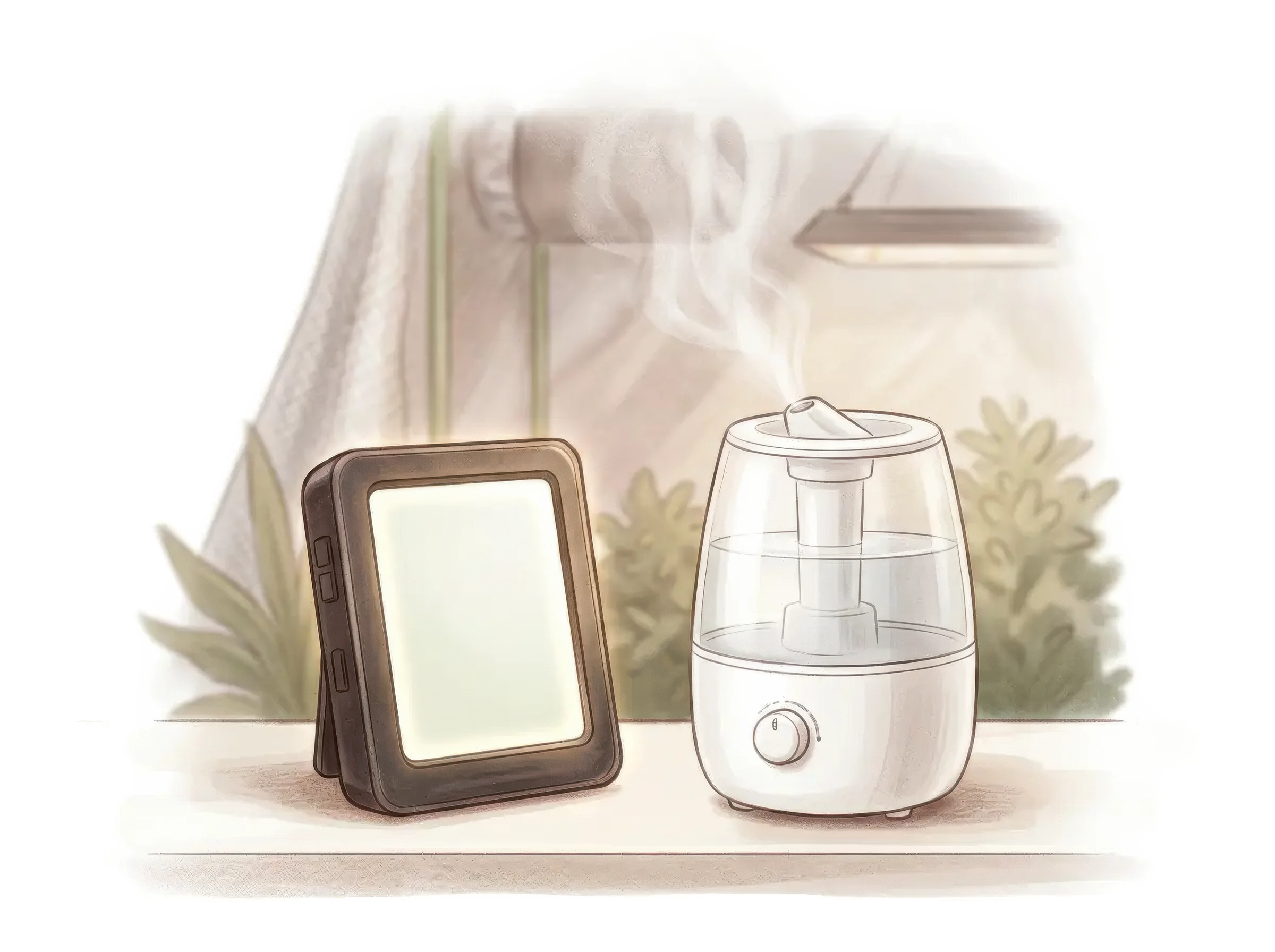 High humidity: the number you ignore until the grey fuzz arrives.
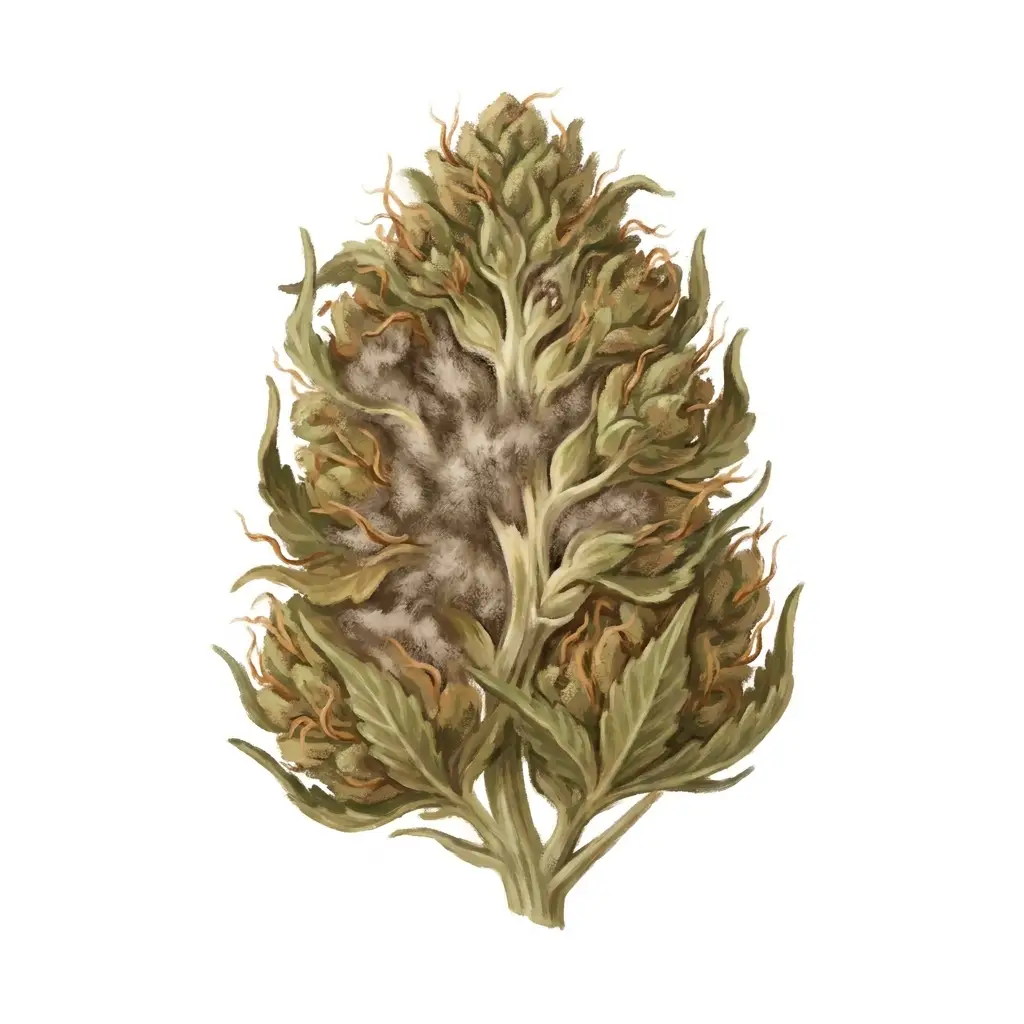
The Sleepwalker did everything else right. Light dialled, nutrients dialled, temperature dialled. Never checked humidity once. Walked into the tent at week seven to find grey fuzz inside the fattest cola — the one that was going to be the profile picture. Bud rot. Gone, because they didn’t watch one number. Damp air is a mould factory — it’s behind powdery mildew and bud rot, and it slows her drinking so she sulks. And here’s the cruel part: by the time you can see bud rot, it’s already eaten the inside of the bud where you couldn’t look. Prevention is a hundred times easier than the cure, because there is no cure.
The short version:
- Damp air, condensation on the canvas, and slow sulky growth — high humidity behind it all
- It feeds powdery mildew and bud rot, and stalls her transpiration so she can’t drink properly
- Pull RH down: dehumidifier, more extraction, a light defoliation to open up the airflow
- Aim 40-60% in veg, under about 50% in flower, and lower still as the buds fatten up
Want the full breakdown? Keep scrolling.
Why is high humidity bad for cannabis?
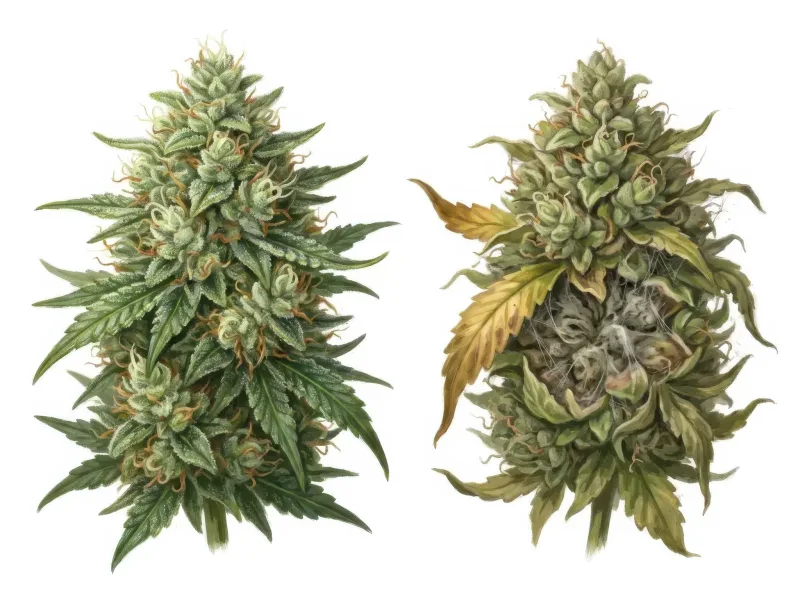
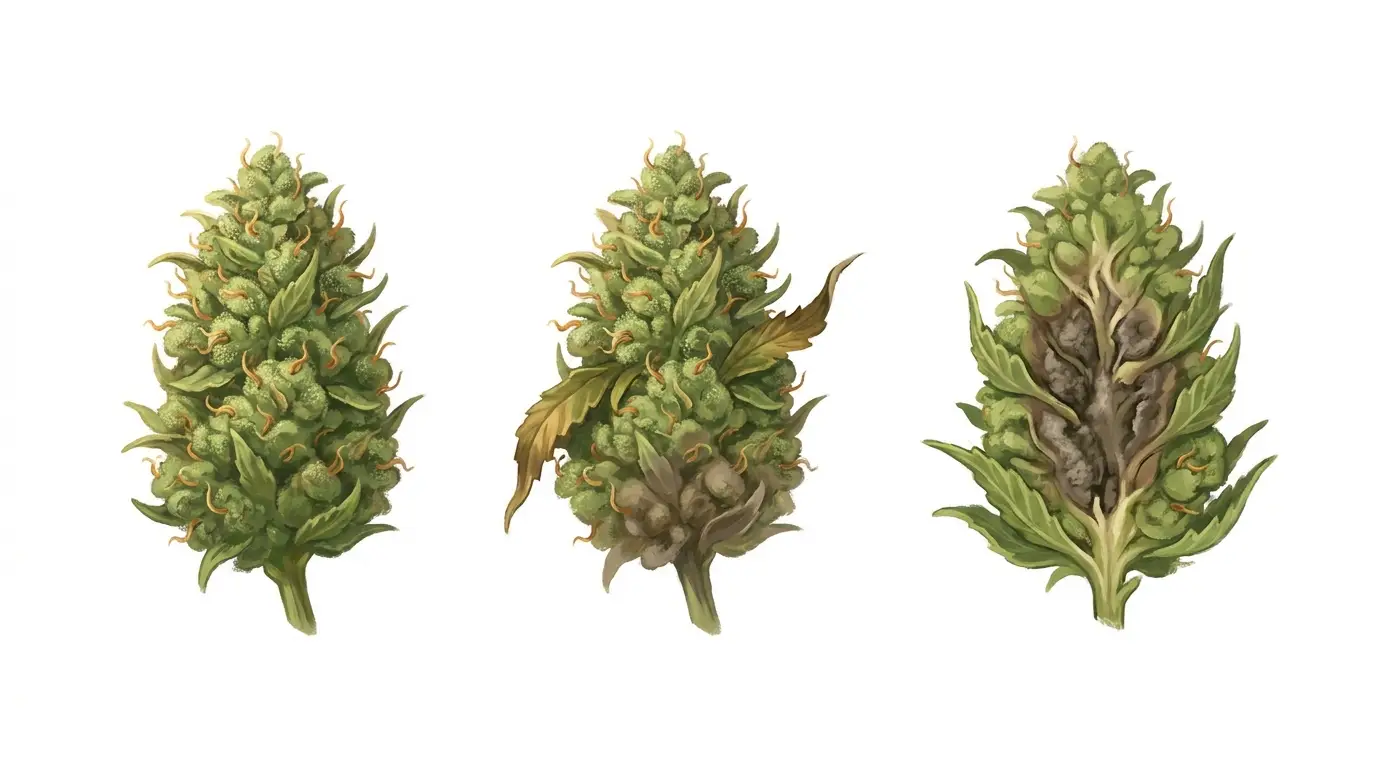 Where it ends in flower: bud rot. The hygrometer is the cheap insurance.
Two reasons, and the second one’s the killer. The first: a plant cools and drinks by transpiring — evaporating water out through tiny pores called stomata, which pulls fresh water and nutrients up from the roots. When the air is already wet, that sweat has nowhere to go. Transpiration stalls, the stomata shut, and she stops drinking properly. Growth drags and she sulks even though there’s nothing wrong with the feed.
The second reason is mould. Fungal spores love damp, still air. Powdery mildew turns up as a white dusty coating on the leaves. Worse is botrytis — bud rot — which turns a whole section of cola grey-brown from the inside out, invisible until you break it open and find mush where flower used to be. Above 60% humidity in flower with no airflow, it’s almost guaranteed. Irish growers start at a disadvantage here: your ambient humidity is already 65-75% straight off the weather outside, so you’re fighting uphill before you even plug anything in.
What humidity should a grow tent be?
It changes through her life, and lower as she gets closer to harvest. Seedlings and clones want it humid — 70-80% under a dome — because they’ve no root mass and dry out fast. In veg she’s building leaves and wants to transpire freely, so 40-60% is the band, 60% the sweet spot. In flower you tighten it right down: 40-55%, ideally 45-50%, and as low as you can hold it without the leaf edges crisping as the buds fatten. Anything over 60% in flower is asking for bud rot.
Measure it where she lives. Hang a hygrometer at canopy height, next to your thermometer, and read it daily — feel lies, and half the problems in a tent hide in numbers you’re not reading. If you want to get properly dialled, humidity and temperature work together through something called VPD, and the environmental monitoring guide covers reading the two as a pair. For now, watch the number and keep it in the band for her stage.
How do I lower humidity in a grow tent?
Get the damp air out and the dry air moving. A few levers, easiest first:
- Turn up the extraction. A properly running extraction fan pulls moist air out before it saturates the tent — it’s the single biggest lever. If humidity’s running high, an underpowered or underrunning extraction fan is usually the root cause.
- Run a dehumidifier. A small dehumidifier in flower can pull RH down 10-15% and it’s cheap insurance against losing a crop. Run it during lights-on, especially in flower, and switch it off at night so it’s not heating the tent and wasting energy. DIG stock the sizes that suit a tent.
- Open up the airflow. A light defoliation — taking a few of the big fan leaves crowding the lower canopy — lets air move through instead of sitting still in dead, damp pockets where rot starts. Pair it with a circulation fan so nothing’s stagnant.
- Nudge the temperature up a touch. Warmer air holds more moisture, so a slightly warmer tent can actually read a lower RH. Small lever, but it stacks with the others.
And skip the towel-on-the-radiator trick — it dries the room 10% then saturates itself and drips the water straight back. Do it properly with a dehumidifier if you need one. Change one thing, give it a day, then read the hygrometer again. Careful you don’t overshoot the other way — crank extraction too hard and you can crash RH through the floor and crisp the leaf edges, which is low humidity, the opposite problem.
Not sure this is your problem? Run her through the Diagnosis Buddy — five questions and you’ll know.
How to fix it
- Turn up the extraction Run the extraction fan harder to pull moist air out before it saturates the tent — the single biggest lever.
- Run a dehumidifier A small dehumidifier during lights-on can pull RH down 10-15%; switch it off at night so it's not heating the tent and wasting energy.
- Open up the airflow Lightly defoliate crowded lower fan leaves and run a circulation fan so air moves through instead of sitting in damp pockets.
- Nudge the temperature up a touch Warm the air slightly — warmer air holds more moisture, so the tent reads a lower RH.
Common questions
What humidity causes bud rot?
Above 60% in flower with poor airflow is the danger zone, and the risk climbs the wetter and stiller the air gets. The aim in flower is 40-55%, ideally 45-50%, dropping as low as you can hold it as the buds fatten without crisping the leaf edges.
Can high humidity be fixed without a dehumidifier?
Often, yes — more extraction, a light defoliation for airflow, a circulation fan, and a slightly warmer tent will pull it down between them. But in a damp climate or a packed flowering tent, a small dehumidifier is the reliable fix and it's far cheaper than losing the crop.
Why is my plant drooping in high humidity?
Because she can't transpire — the air's too wet for her sweat to evaporate, so the stomata shut and she stops drinking properly. The droop comes with a stall in growth rather than a wet pot, which separates it from overwatering. Pull the RH down and her drinking, and her mood, come back.
Does Irish weather make humidity harder to control?
It does. Ambient humidity here often sits at 65-75% before you've plugged anything in, so you're starting damp. Size your extraction with that in mind, and don't be surprised if you need a dehumidifier in flower where a grower in a dry climate might not.
Fixed it?
Here’s how this stage goes when it’s going right — walk the grow →. Still not sure what you’re looking at? Ask the Diagnosis Buddy →