Stage 8
 Stage 8
Translucent (Honey) Oil
This stage is explained, not instructed — the concept and the hazards, with the method left as history. The page tells you why.
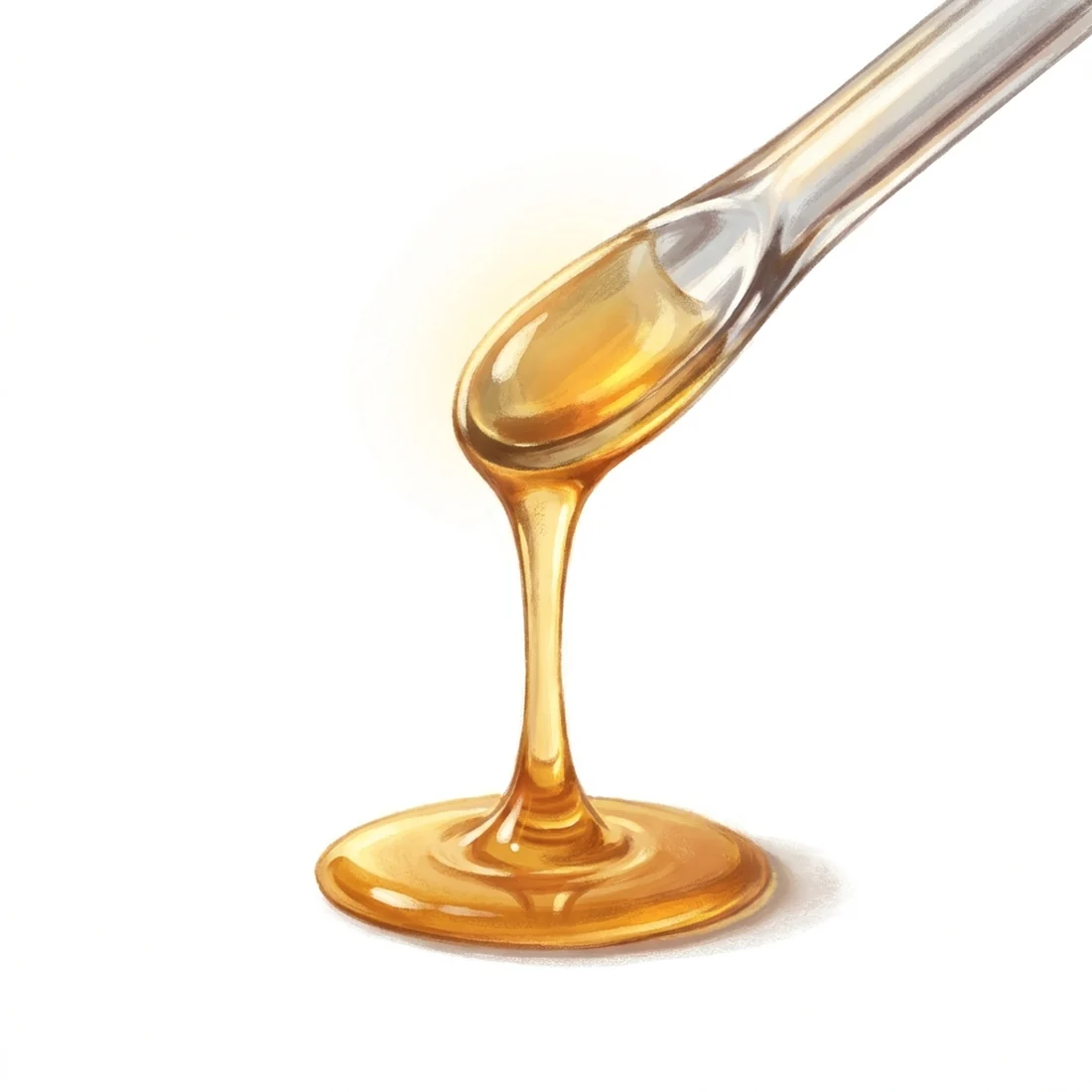
What “honey oil” means
Seb
Honey oil is a crude cannabis extract refined further — the waxes, fats, chlorophyll and plant debris removed until what’s left is translucent and amber rather than dark and thick. It creates nothing new; it’s purification taken further, using differences in solubility to separate what you want from what you don’t, one wash at a time. The thing to understand is that this isn’t the safe end of the shelf: it means more passes of the same flammable solvents, often warmed, so it’s more exposure, not less.
A first-pass extract is dark and thick because it carries everything the solvent pulled out — not just the cannabinoids and terpenes you wanted, but waxes, fats, chlorophyll and plant debris. Honey oil is simply that crude extract refined: the unwanted fractions removed until what’s left is translucent and amber, closer to honey than to tar.
The principle is the same one running under the whole shelf — differences in solubility, used to separate what you want from what you don’t, one wash at a time. Nothing new is created. It’s purification, taken further.
Why I’ll teach the idea but not the method
Dave
Refinement sounds like the gentle end of the process — you’ve already got the oil, you’re just tidying it up. But “tidying it up” here means more rounds of the same volatile solvents that make extraction dangerous, often warmed to help them move. More solvent, more often, sometimes with heat. That’s not the safe end of the shelf; in some ways it’s more exposure, not less.
So this gets the same treatment as its sibling chapters. The concept — clean the oil by exploiting solubility — is good chemistry and yours to understand. The conditions that make it happen stay history, for the same reason: I won’t write the words that put flammable vapour and a warm surface in someone’s kitchen.
The hazards, in short
Dave
Same as Extraction, and arguably more of it: flammable solvent vapour, heavier than air, pooling low and waiting for any spark — now repeated across several purification passes, sometimes near gentle heat, which only helps the vapour rise and spread. The danger doesn’t shrink because the oil’s getting prettier. That’s the catalogue, and it’s why this stays history with the rest.
The real apparatus
Dave
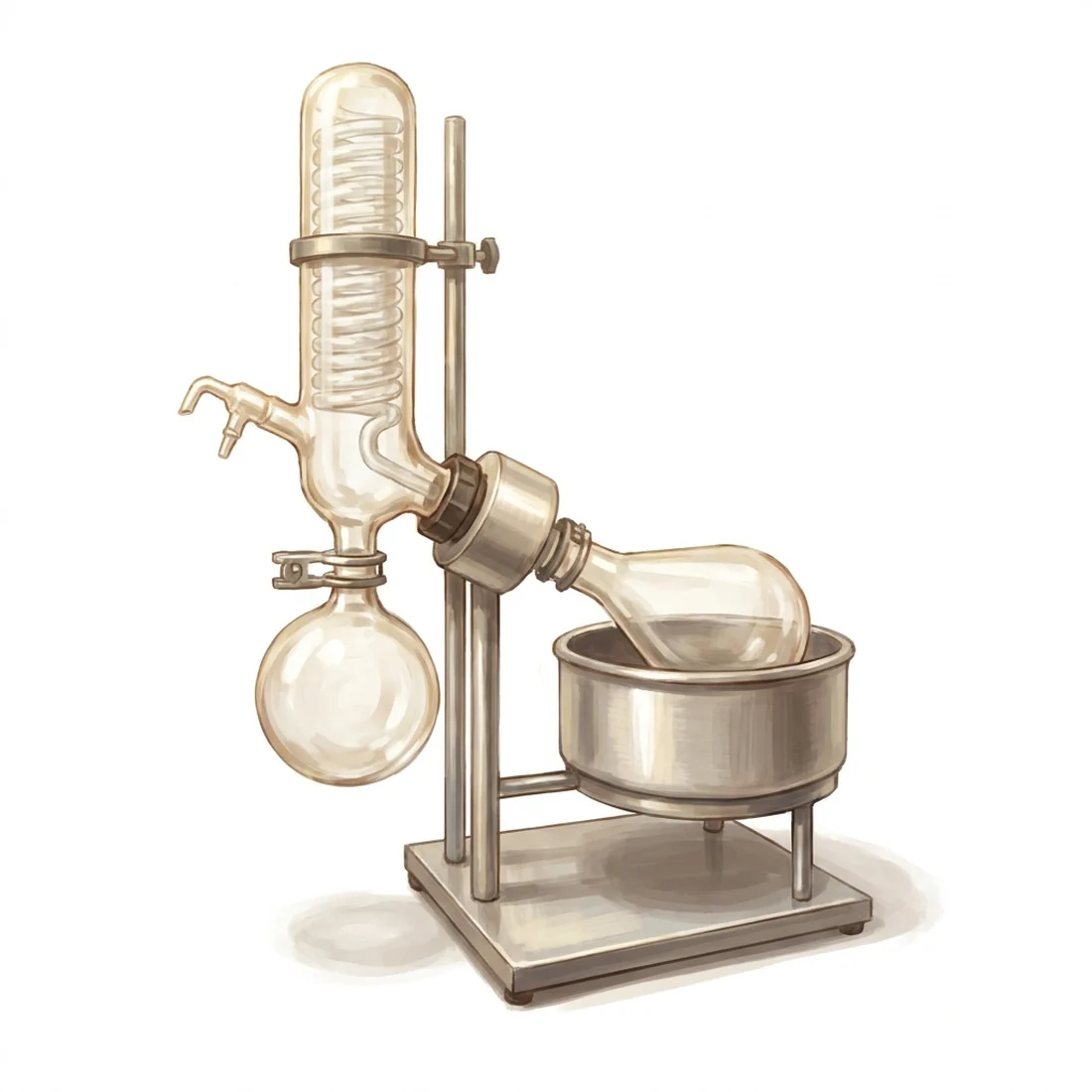 Reference only — a rotary evaporator recovers solvent under vacuum. This is the safe way to do it, and it is laboratory equipment, not a kitchen.
The safe version of this is a machine built to recover solvent under vacuum. That’s the tell: if the proper kit is a sealed lab instrument, the kitchen version was never the safe one.
Where this leads
Seb
Purification — separating a target compound to a known purity and proving it — is the daily work of analytical chemistry and the legal extraction industry, done in rooms built for it. “How clean is this, and how do I know?” is a genuinely good question, and there’s a whole profession that answers it for a living. Study routes are in the Isomerization module.
Check yourself
- What is honey oil, in one line? (A crude extract refined — waxes, fats, chlorophyll, and debris removed until the oil is translucent and amber.)
- What principle does refinement rely on? (Differences in solubility, used to separate wanted from unwanted fractions.)
- Why isn’t refinement the “safe end” of the module? (It repeats the flammable-solvent work several times, sometimes with heat — more exposure, not less.)
