Indica vs Sativa Plants: How They Actually Grow
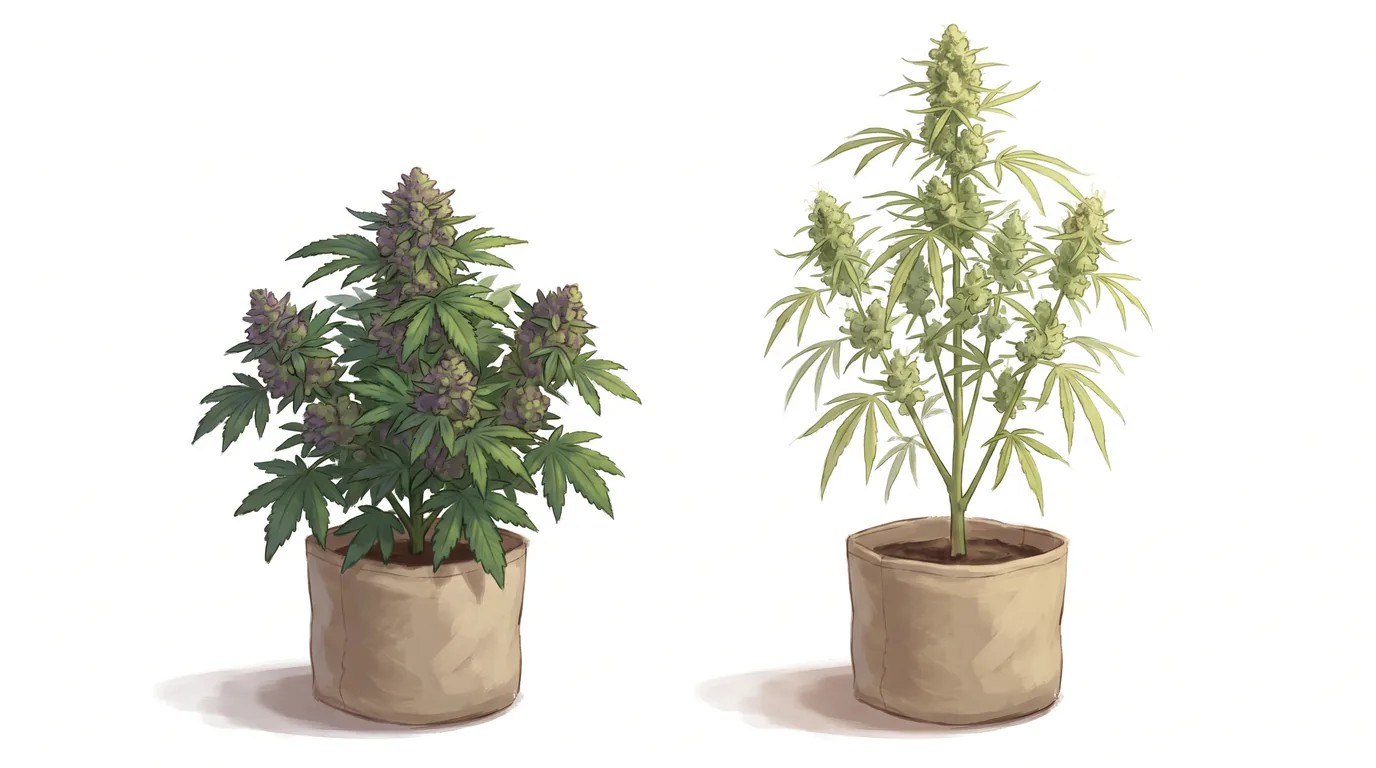
Short answer: for a grower, “indica vs sativa” is most useful as a description of how the plant grows, not how it makes you feel. Indica-leaning plants are short and bushy with broad leaflets, tight node spacing and a faster finish (roughly 7-8 weeks of flower); sativa-leaning plants are tall and lanky with narrow leaflets, long internodes and a longer flower (often 9-11 weeks), and they commonly stretch far more after the flip. The “indica relaxes you, sativa energises you” story is the shaky part — effect tracks the plant’s terpene and cannabinoid chemistry, not the label, and almost everything sold today is a hybrid anyway.
I sold someone a “pure sativa” once who had a 90cm tent. I watched that plant walk straight into the light like it owed it money, three weeks after the flip, still climbing. That is the real lesson in indica versus sativa, and it has nothing to do with couch-lock.
Here is the honest version, grower to grower.
The short version:
- The terms are most reliable as a guide to plant structure and grow time, not effect
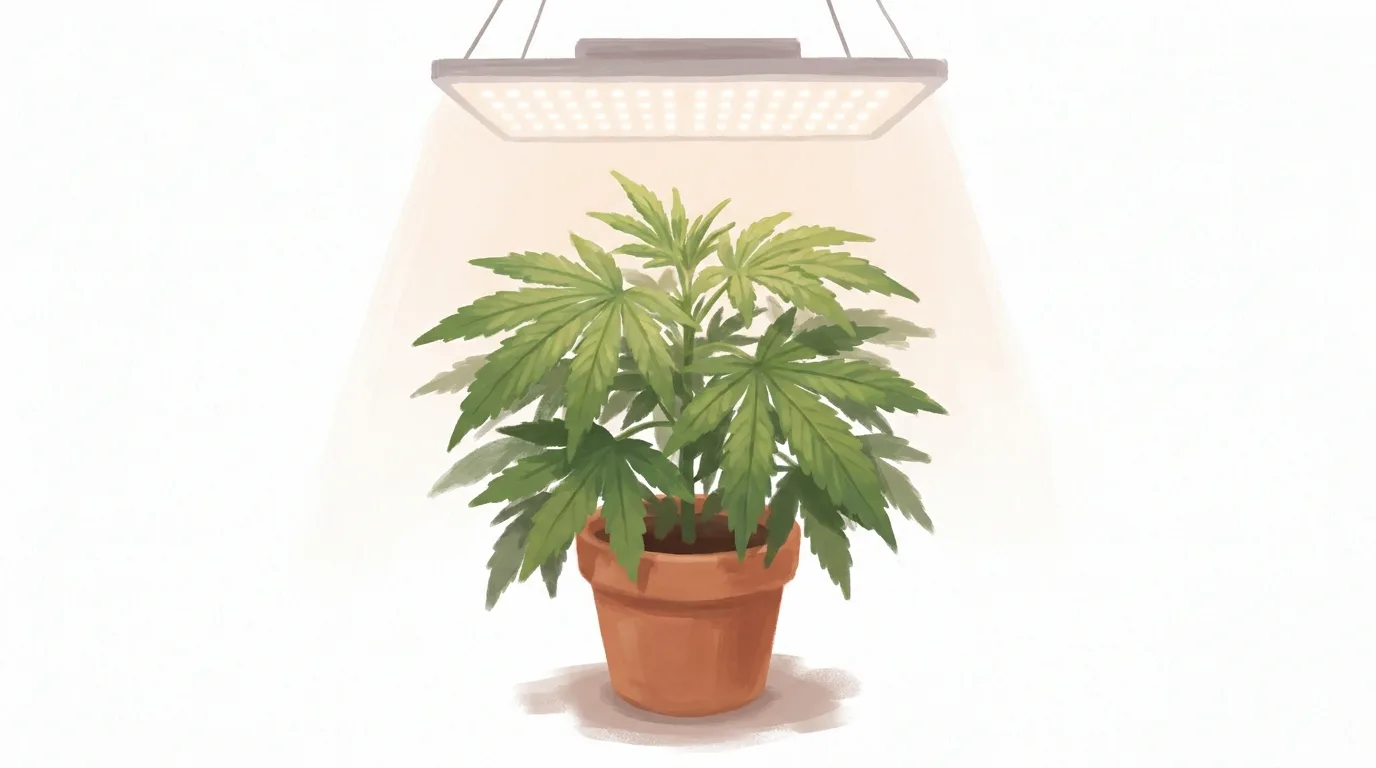
- Indica-leaning: short, bushy, broad leaflets, tight nodes, dense buds, faster finish
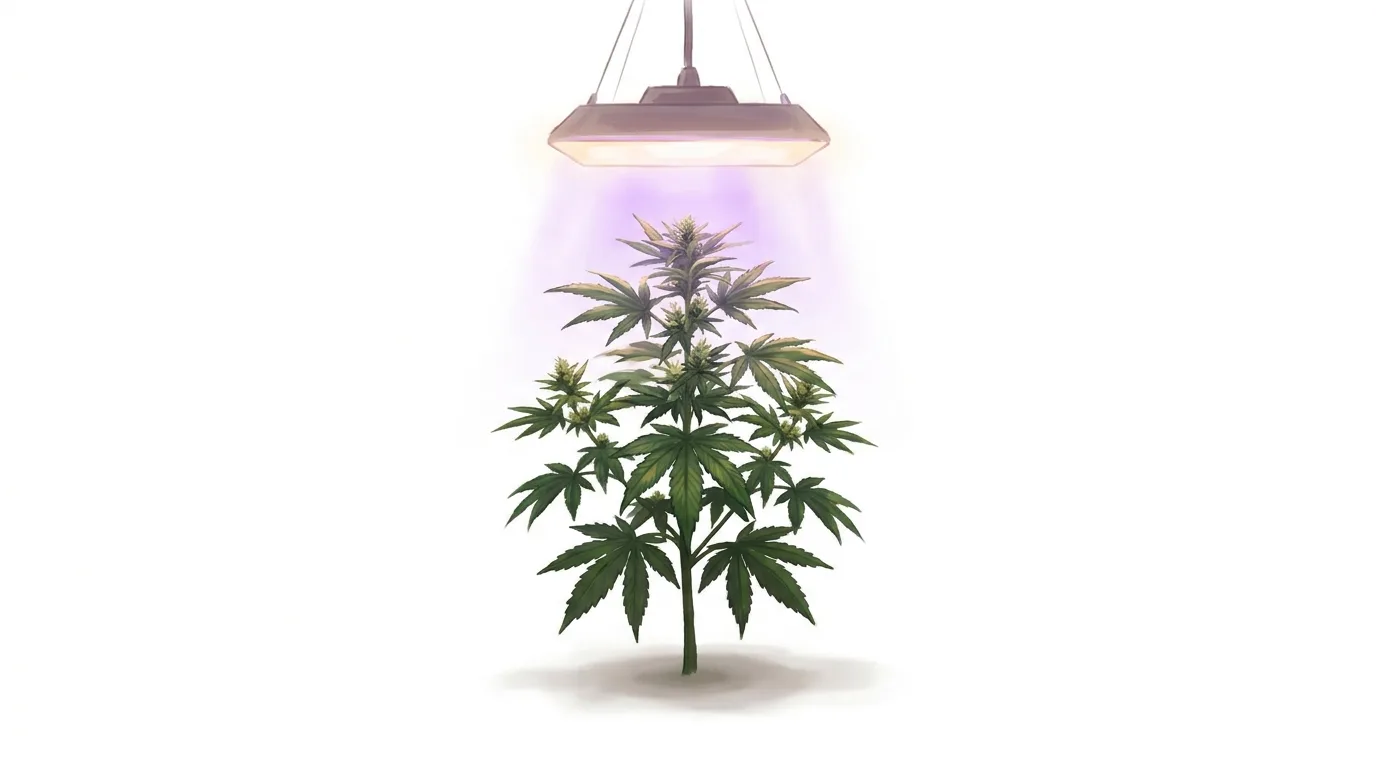
- Sativa-leaning: tall, lanky, narrow leaflets, long nodes, airier buds, longer finish, big stretch
- “Indica = body, sativa = head” is not well supported — effect comes from terpenes and cannabinoids, not the label
- Nearly everything on the market is a hybrid; the pure categories barely exist in a seed catalogue
- Ruderalis is the third type, and it is where autoflower genetics come from
Want the full breakdown? Keep scrolling.
What is the real difference between indica and sativa?
Start with where they came from, because the plant’s shape is a leftover of its home climate. Cannabis indica, in the old sense, is the mountain plant — Hindu Kush, Afghanistan, cooler and shorter seasons. A plant with a short season has to finish fast, so it stayed compact and quick. Cannabis sativa, the equatorial plant — Thailand, Colombia, Mexico — grew where the season is long and the light is strong, so it had the luxury of stretching tall and taking its time.
That is the useful kernel. The mess starts when those growth traits got turned into a shorthand for effect — the dispensary wall of “indica for night, sativa for day.” Botanists have argued for years about whether the two are even distinct species or just varieties of one, and the practical truth for you is simpler: almost nothing you can buy is a pure indica or a pure sativa. Decades of crossing mean the seed in your hand is a hybrid leaning one way or the other. So treat the words the way a grower should — as a rough forecast of how the plant will behave in your tent, and a weak forecast of anything else.
How do indica and sativa plants grow differently?
This is the part worth knowing, because it changes how you set up. The differences are real, they are visible, and they are growable.
| Trait | Indica-leaning | Sativa-leaning |
|---|---|---|
| Height / habit | Short, bushy, wide | Tall, lanky, open |
| Leaflets | Broad, fat fingers, dark green | Narrow, thin fingers, lighter green |
| Node spacing (internodes) | Tight, close | Long, stretched |
| Stretch after the flip | Modest (a measured hybrid did ~1.4×) | Large (breeder/grower figures of ~2-3×) |
| Flowering time | ~7-8 weeks | ~9-11+ weeks |
| Bud structure | Dense, chunky, fat | Looser, longer, airier |
| Climate it prefers | Cooler, shorter season | Warm, long, humid season |
A few of those matter more than the rest for a first grow. Height and stretch decide whether the plant fits: a sativa-leaning plant that stretches hard after you flip to 12/12 will press itself into the light in a short tent, and that is a burnt top waiting to happen. Flowering time decides your patience and your electricity bill — a long-flowering sativa can run a month longer than a quick indica, and the calendar still lies on top of that. Leaf shape is simply the easiest way to read a young plant at a glance: broad fat fingers lean indica, thin spindly fingers lean sativa, and most plants sit somewhere in between because most plants are hybrids.
Be honest about where those numbers come from, though. The one proper measured example we have is a single indoor hybrid (White Widow, indica-dominant), which went from 81cm at the flip to 114cm — about 1.4×, or +40% — and had amber trichomes by week eight (Hesami, Pepe & Jones 2023). The sativa “2-3×” and the flowering-week ranges are breeder catalogue and grower figures, not measured studies — useful as a guide, no more. The leaflet-shape split is the one trait the taxonomy actually hangs on (McPartland & Small 2020). And the same authors land the honest punchline: the two types have been crossed so heavily that the differences between a “Sativa” and an “Indica” on sale today are, in their word, largely obliterated. Judge your actual plant by the trichomes and what it does in your tent, not by a word on a packet.
Does indica vs sativa tell you how it will feel?
Here is where I have to be straight with you, because the whole internet tells you otherwise. The clean story — indica is a body stone, sativa is a head buzz — is not well supported, and we do not dress it up as fact.
Two things undercut it. First, effect comes from the plant’s chemistry — the cannabinoids and the terpene profile — and that chemistry does not line up neatly with the indica or sativa label. A lot of the “classic indica feel” people describe is really just myrcene, a terpene that happens to be common; it turns up in plenty of plants a catalogue would call sativa. Second, since nearly everything is a hybrid, the label on the jar is at best an average of an average. We scored the popular version of this claim in our grow-myths evidence report, and the related entourage effect — the idea that terpenes and cannabinoids shape the experience together — comes out as biologically plausible but not proven in humans. That is not us being coy; it is just where the evidence sits, and we make no medical claims either way.
So use the terms for what they reliably tell you — the shape and the timeline of the plant — and use the terpene profile, not the indica/sativa word, as your guide to character. If a breeder lists the dominant terpenes, that is worth more than the category. If they will only give you a THC number and a vibe, be a little wary.
What about ruderalis and autoflowers?
There is a third type that rarely makes the dispensary poster: Cannabis ruderalis. It is the wild, weedy northern plant — small, low-yielding, unremarkable to smoke. Nobody grows ruderalis for the bud. What makes it priceless to breeders is one trick: it flowers on age, not on light. Living up near the Arctic, where summer days never shorten enough to signal autumn, it had to flower on an internal clock instead.
Cross that trait into a proper indica or sativa and you get the modern autoflower — a plant that flips itself around week three or four regardless of the light schedule. So the indica/sativa/ruderalis split is not just trivia: it is the reason you get to choose between a photoperiod you control and an auto that runs on rails. If you have ever grown an auto, you have grown a little ruderalis.
Which should I grow — indica or sativa?
Pick on the grow, not the story. If you are indoors in a modest tent — which, in Ireland, most of us are — a plant that leans indica is the easier contract: it stays shorter, stretches less, finishes sooner, and packs dense buds that suit a controlled space. If you have the height, the patience and good airflow, a sativa-leaning plant rewards you with a bigger, longer grow and that lean, open structure — just respect the stretch and the extra weeks.
But the real answer is: most modern seed is a hybrid bred to behave well indoors, so you are rarely choosing a pure anything. Read the breeder’s notes for the two numbers that decide whether it fits your space — final height and flowering time — and read the terpene profile for how it will likely come across. A reputable seed bank (CSB list both photoperiods and autos with honest grow notes) gives you those. Choose the plant that fits your tent and your timeline, and let the label on the front be the last thing you look at, not the first.
Common questions
What is the difference between an indica and a sativa plant?
As a grower, the useful difference is structure: indica-leaning plants are shorter and bushier with broad leaflets, tight internodes and a faster finish; sativa-leaning plants are taller and lankier with narrow leaflets, long internodes and a longer flower. The 'indica relaxes, sativa energises' part is the unreliable bit.
Is indica or sativa stronger?
Neither by category. Strength comes from the individual plant's cannabinoid and terpene make-up, not its indica or sativa label. A modern hybrid's THC and terpene profile tells you far more than the word on the packet.
Does indica make you sleepy and sativa make you energetic?
That is the popular story, and it is shaky. Effect tracks chemistry — the terpene and cannabinoid mix — not the indica/sativa split, and almost everything sold today is a hybrid anyway. We flag the effect claim as unproven in our evidence report; treat the labels as a rough growth guide, not a promise of how it will feel.
Which is easier to grow indoors, indica or sativa?
Indica-leaning plants usually suit a tent better: they stay shorter, stretch less after the flip and finish a couple of weeks sooner. Sativa-leaning plants commonly stretch far more — growers often see them two to three times their flip height — and run weeks longer, so they need headroom, patience and more airflow.
What is ruderalis, and where do autoflowers come from?
Ruderalis is the third, scruffy wild type from far-northern climates. It is not grown for yield, but it carries the autoflowering trait — flowering on age instead of light — which breeders crossed into modern autoflowers. So when you grow an auto, you are growing a bit of ruderalis genetics.
References
- Hesami, Pepe & Jones (2023). Morphological Characterization of Cannabis sativa L. Throughout Its Complete Life Cycle. Plants, 12(20):3646.
- McPartland & Small (2020). A classification of endangered high-THC cannabis (Cannabis sativa subsp. indica) domesticates and their wild relatives. PhytoKeys, 144:81-112.
- Allen et al. (2019). Genomic characterization of the complete terpene synthase gene family from Cannabis sativa. PLOS ONE, 14(9):e0222363.