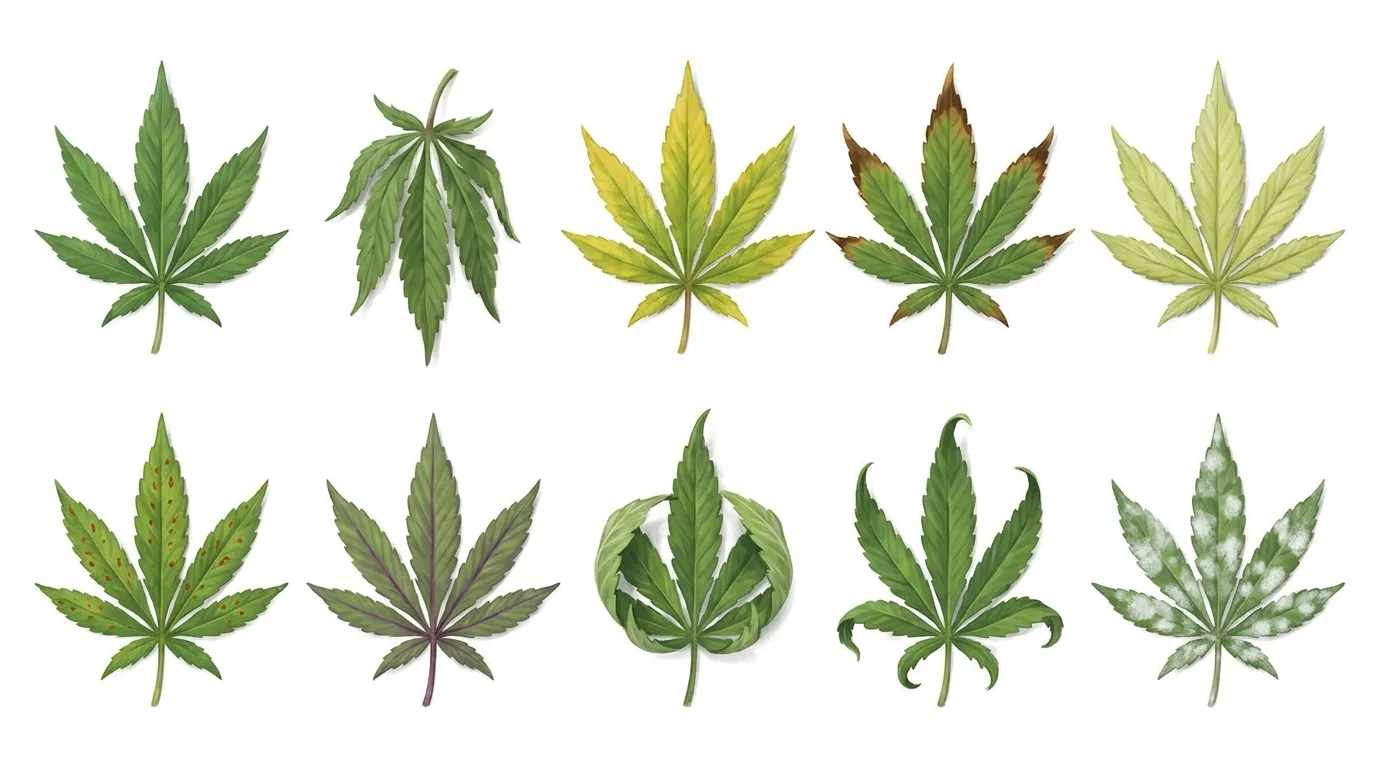
Environmental Stress vs Nutrient Problem: How to Tell the Difference
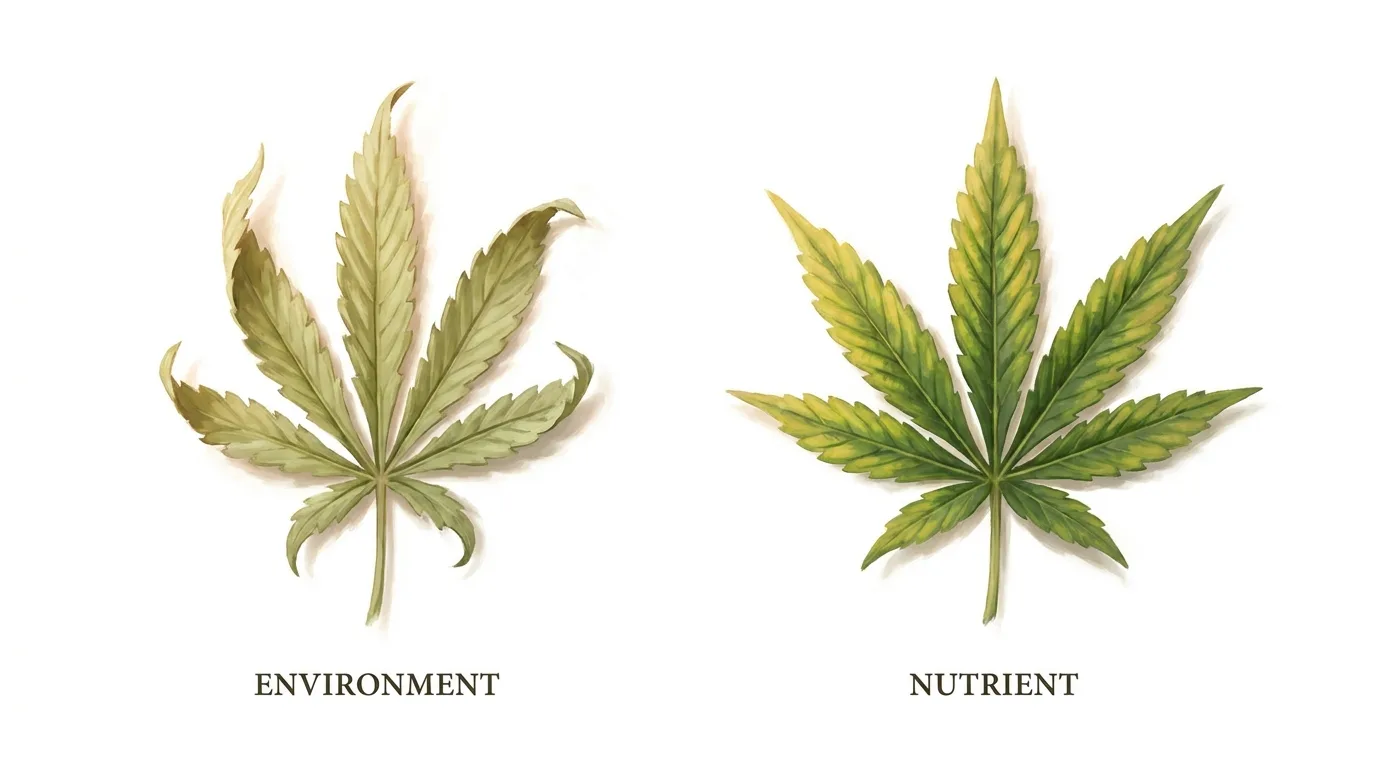
Short answer: taco/canoe leaves, drooping after transplant and bleached tops are almost always environmental stress, not a nutrient deficiency — so diagnose in order, environment first, water second, pH third, nutrients last, and most of the time you never reach nutrients.
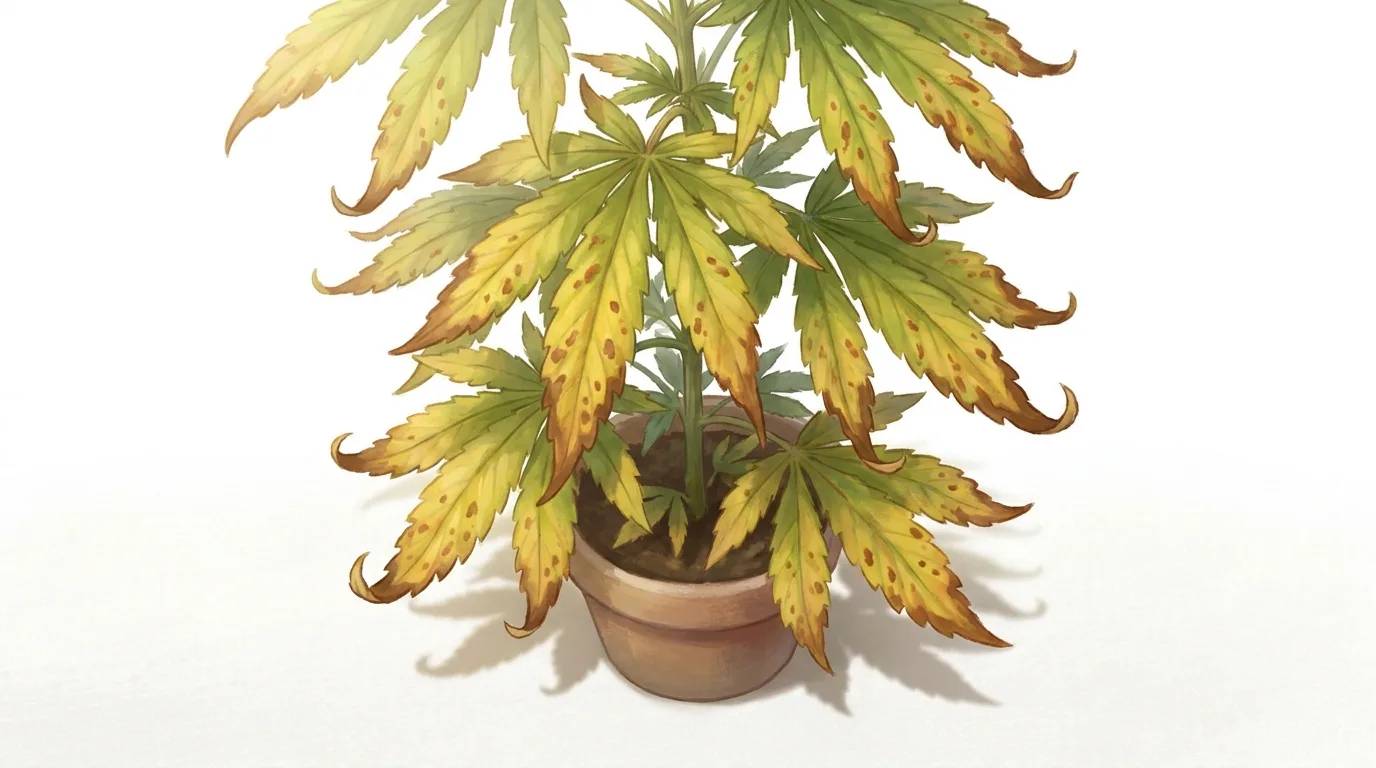
Tacoing means heat or light stress (raise the light, check the canopy isn’t above 28°C), droop after a repot is shock (wait 48–72 hours, don’t feed), and bleached tops are light burn (raise or dim). Change one thing, watch the new growth, not the burnt leaves. The Pharmacist had a product for every symptom. Canoe leaves? CalMag. Droopy after transplant? More feed. Bleached new growth? Micronutrient supplement. The shelf looked like a chemist’s stockroom and the plants still looked rough — because not one of those diagnoses was right. Every symptom was the environment, and not one of them needed a bottle.
Here’s how to tell stress from hunger.
The short version:
- Tacoing/canoeing leaves = heat or light stress, not calcium
- Drooping right after transplant = shock; wait, don’t feed
- Bleached tops nearest the light = light burn, not iron deficiency
- Crispy edges = low humidity or a fan blasting one spot
- Diagnose in order: environment, water, pH, nutrients
Want the full breakdown? Keep scrolling.
Why do my cannabis leaves look like they have a deficiency?
Because environmental stress mimics deficiencies, and the environment is where most problems start. Canoe/taco leaves — edges curling up — are almost always the light too close or too intense, or the tent too hot. Raise the light six inches, check in 48 hours. Drooping after a transplant is roots adjusting to a new home; give it 48–72 hours in the same conditions and leave it. Feeding a stressed plant is like feeding someone who’s just been in a crash — not what they need. Bleached new growth at the very top, closest to the light, is light burn — the PPFD at that distance is too high. Raise or dim the light. Those are three “deficiencies” that a nutrient bottle will never fix.
What’s the order I should diagnose in?
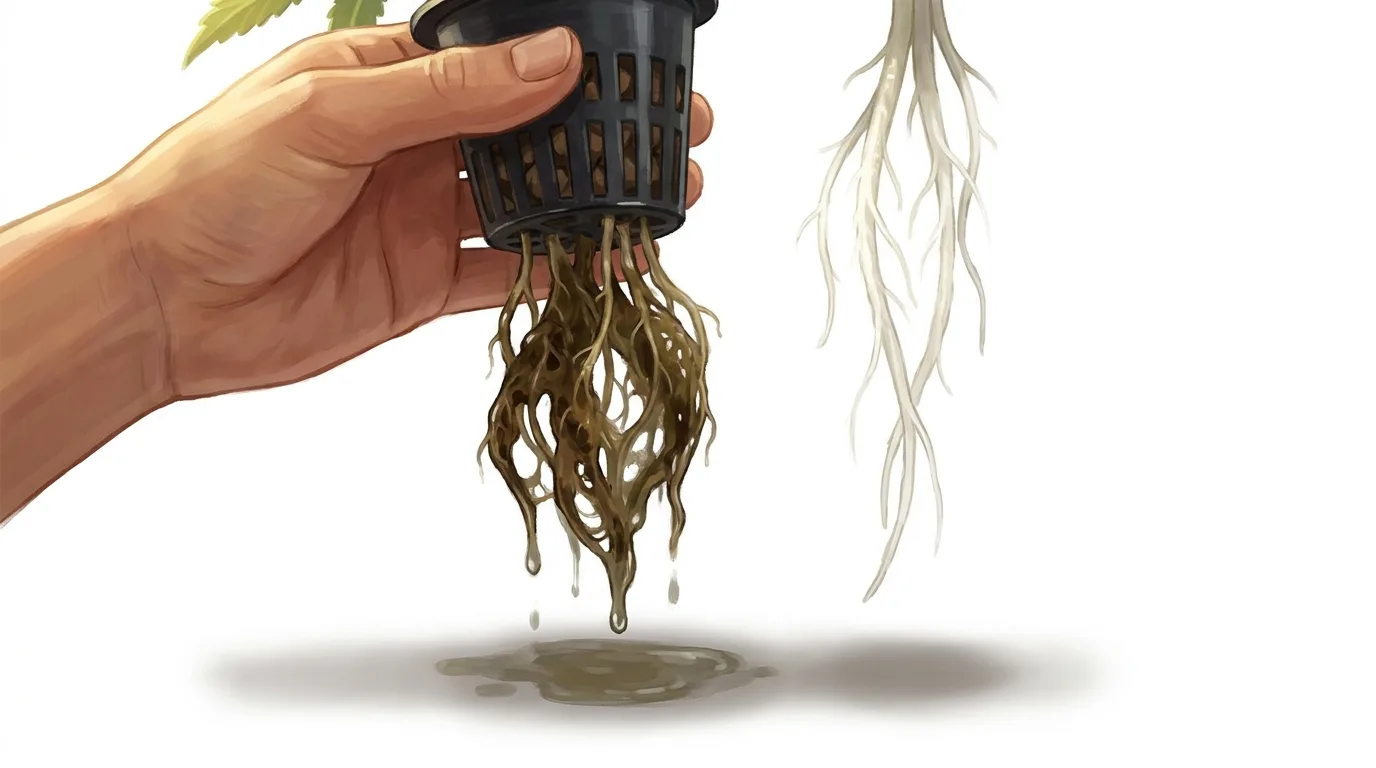
Tattoo it on your arm: environment first, water second, pH third, nutrients last. Is canopy temperature above 28°C? That’s your taco leaves and drooping. Humidity below 30%? That’s the crispy curling edges. Light within 20cm of the canopy? That’s the bleaching. Fan blowing straight at one section? That’s the clawed, dry-edged leaves on one side only — wind burn. A cheap thermo-hygrometer (DIG stock them) answers most of this at a glance. Only if environment, water and pH all check out do you start thinking about nutrients — and most of the time you never get there.
How long before I know it worked?
One change at a time, then wait 48–72 hours. The Surgeon changed five things at once, the plant recovered, and he learned nothing — didn’t know which change did it, so he’ll repeat all five next grow. Change one thing, watch the new growth (the damaged leaves won’t heal), and you’ll start reading the plant like a mechanic reads an engine.
Common questions
Are taco leaves a calcium deficiency?
Almost never. Upward-curling "taco" leaves are heat or light stress. Check canopy temperature and light distance before touching CalMag.
My plant drooped after repotting — should I feed it?
No. That's transplant shock. Keep conditions steady and wait two to three days; it recovers on its own. Feeding adds stress.
Why are the top leaves bleached?
Light burn — the light is too close or too intense for that distance. Raise or dim it. New growth should come in the right colour.