What the Cannabis Life Cycle Looks Like (Beginner Roadmap)
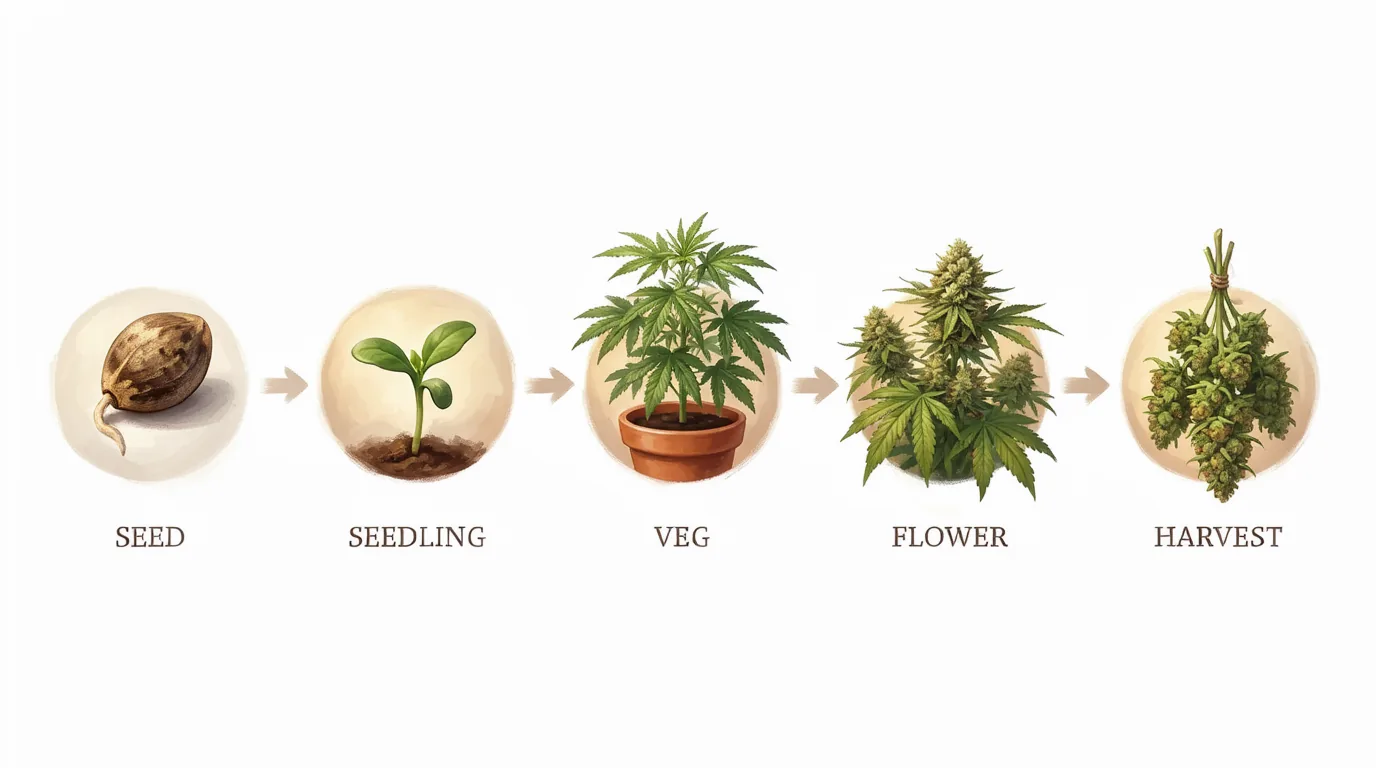
Short answer: a cannabis plant runs through five stages — germination, seedling, vegetative growth, flowering, then harvest with drying and curing — and each one wants something different from you, from restraint as a seedling to patience at harvest.
A photoperiod flowers when you switch the light to 12 hours on and 12 off; an autoflower flips on its own age clock around week 3–4. Veg is the forgiving stage where mistakes recover, so it’s where you learn the plant. Before you get lost in nutrients and light numbers, it helps to see the whole journey at a glance. A cannabis plant moves through five distinct stages, and each one wants different things from you. This is the map; the detailed guides fill in the streets.
The short version:
- Germination — the seed cracks and roots
- Seedling — first leaves; wants warmth, soft light, barely any water
- Vegetative — leafy growth; wants light, water and food, and training
- Flowering — buds form after the light flip; wants stable, drier conditions
- Harvest, dry and cure — where quality is finalised; wants patience
Want the full breakdown? Keep scrolling.
Germination and seedling — the fragile start
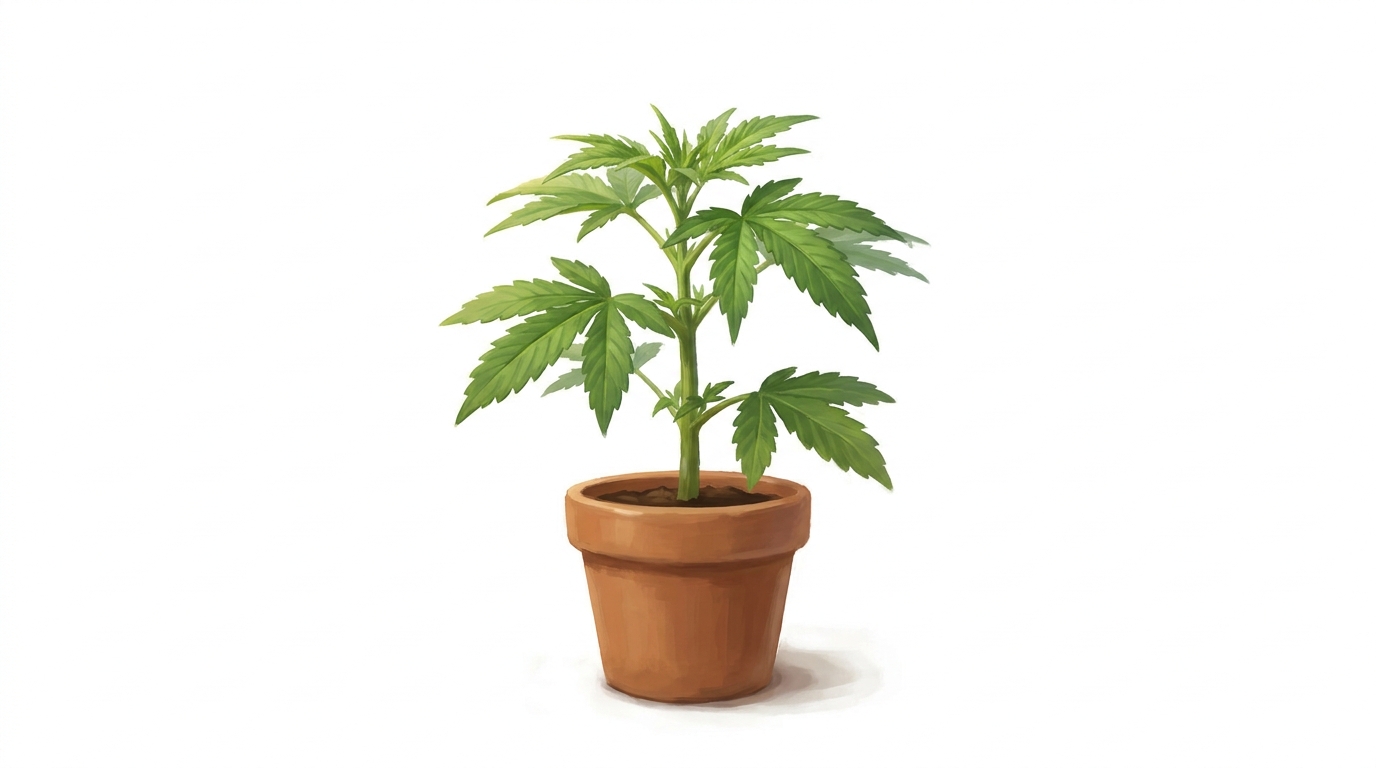
Germination is the seed waking up: given moisture, warmth and dark, a white taproot emerges in a day to a week. Plant it root-down and it becomes a seedling — the round cotyledons open first, then the first serrated true leaves. This stage is all about restraint: warmth (20–25°C), soft far-off light, high-ish humidity, and barely any water, because a seedling has no root system to handle excess. No nutrients yet — it feeds off the seed and the soil. The biggest danger the whole time is an over-attentive grower. It looks slow and fragile, and the right move is mostly to leave it be and let the roots build underneath.
Vegetative — building the plant
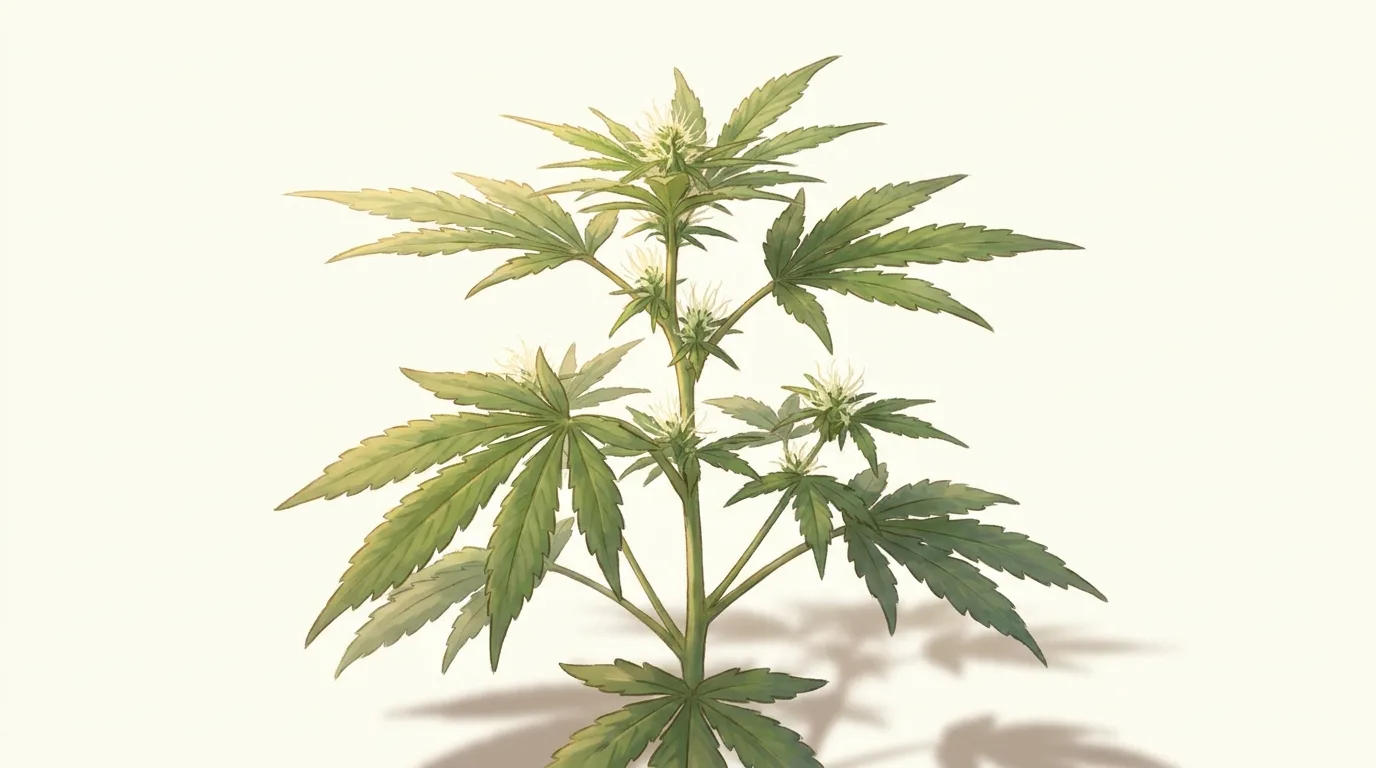
Once it has a few sets of true leaves, the plant enters vegetative growth — the leafy, structural phase where it gets bigger and bushier and finally drinks and eats properly. This is where you do the work that shapes the harvest: feeding (starting gentle), watering on the wet/dry cycle, and training (bending or topping) to build an even canopy. On a photoperiod plant, veg lasts as long as you keep the light on 18 hours a day — you decide when it’s big enough. On an autoflower, veg is short and fixed, because it flips to flower on its own internal clock around week three or four regardless of light. Veg is the forgiving stage where mistakes are recoverable, so it’s where you learn the plant.
Flowering, then harvest — the payoff
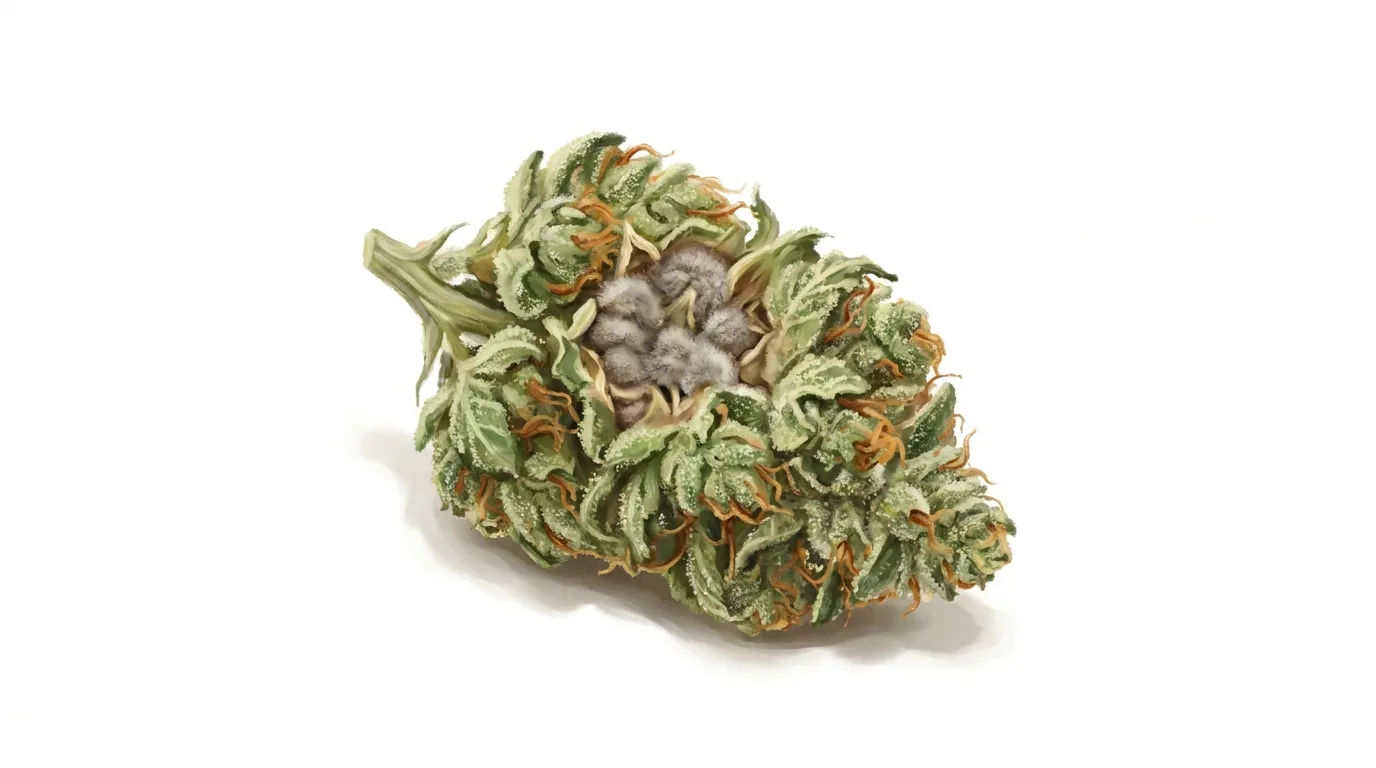
Flowering begins when a photoperiod plant gets a long night — you switch the light to 12 hours on, 12 off — or when an autoflower reaches its age trigger. The plant stretches, then pours its energy into buds: pistils appear, colas form and fatten, trichomes build. Its needs shift to a phosphorus-and-potassium-led feed, lower humidity, and a calm, stable environment, because flower is less forgiving than veg. After 8–10 weeks, when the trichomes say so (not the calendar), comes harvest, drying and curing — the final stage where you slow right down, because rushing the dry and skipping the cure throws away months of work. Across all five stages the rule is the same: give it light, water, air, food and time, then get out of the way.
Common questions
What are the stages of the cannabis life cycle?
Germination, seedling, vegetative growth, flowering, then harvest with drying and curing. Each stage has different needs, from restraint as a seedling to patience at harvest.
When does a cannabis plant start flowering?
A photoperiod plant flowers when you switch the light to 12 hours on and 12 off; an autoflower flowers automatically on its own age-based clock, usually around week three or four.
Which stage is the most forgiving?
Vegetative growth — the plant is vigorous and recovers well from mistakes. Flowering and harvest are less forgiving, so it pays to learn the plant during veg.