BHO and Solvent Concentrates: What Beginners Should Know
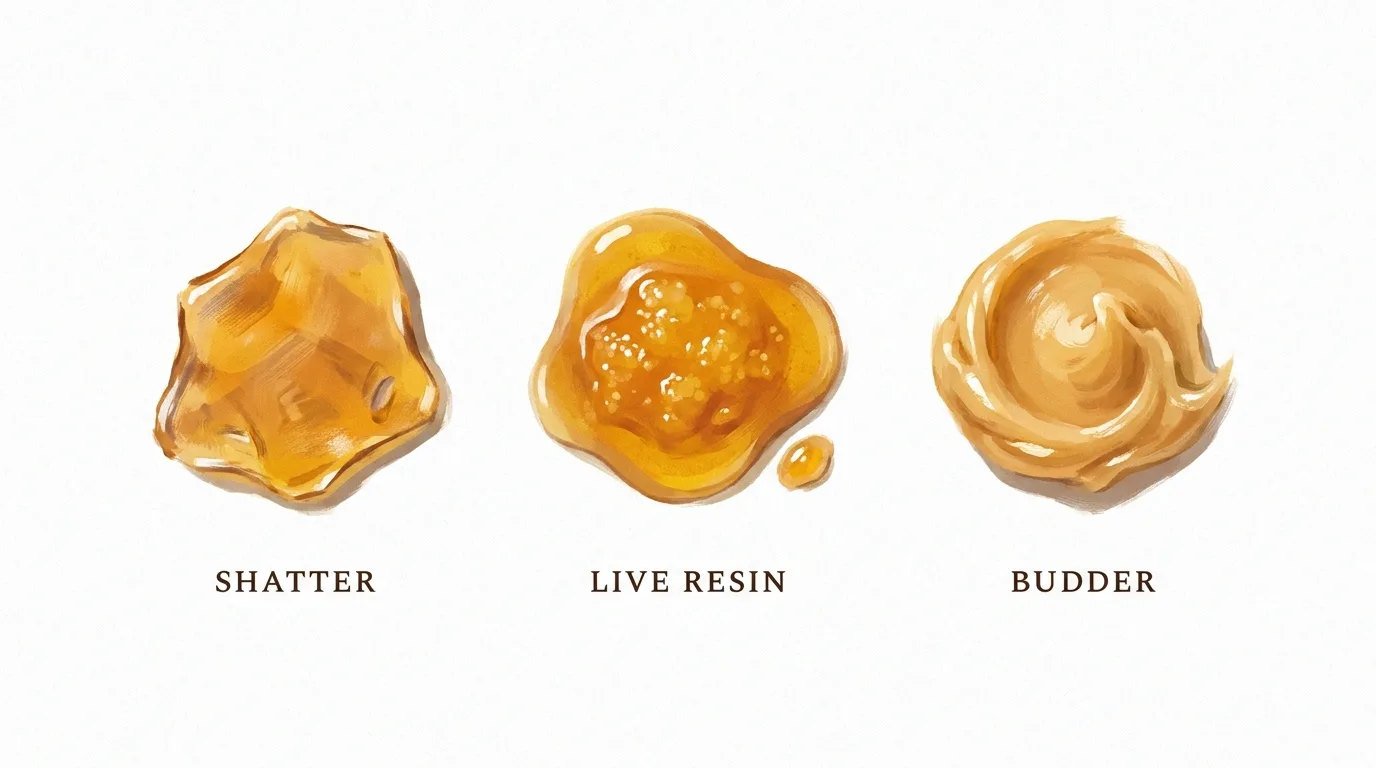
Short answer: BHO (butane hash oil) and the other solvent concentrates — shatter, wax, live resin, diamonds — are made by dissolving cannabis resin in a solvent then purging it, and they’re genuinely potent from a licensed lab, but making them at home is not safe.
Open-blasting butane fills a room with invisible, heavier-than-air gas that pools on the floor and ignites off any spark — it has caused house fires, explosions and deaths. The safe home route is solventless: kief, dry sift, bubble hash and rosin. If you’ve browsed concentrates online you’ve seen glassy shatter, honeycomb wax, terpene-drenched live resin and crystalline diamonds. These are solvent extractions, and they’re genuinely impressive — but making them at home is a different and dangerous business. This is a literacy guide so you know what you’re looking at, with a clear line on what not to attempt.
The short version:
- Solvent extraction dissolves resin with butane, propane, CO2 or ethanol, then purges the solvent
- It produces shatter, wax, budder, live resin, diamonds and sauce
- Professionally it’s clean and potent; at home, open-blasting butane is a serious hazard
- This is not a home method — closed-loop systems and training are required
- Know it for the menu; leave the making to licensed labs
Want the full breakdown? Keep scrolling.
What are these concentrates?
They all start the same way: a solvent passes through cannabis, dissolves the resin, and carries it off the plant matter; the solvent is then evaporated (purged), leaving concentrated resin in different forms depending on temperature, pressure and post-processing. BHO (butane hash oil) gives shatter, wax, budder and crumble. PHO uses propane for a slightly different profile. CO2 extraction uses supercritical carbon dioxide — clean and tuneable, the basis of many commercial vape cartridges. Live resin is any solvent extraction done on fresh-frozen (never dried) material, preserving the full terpene profile. Diamonds and sauce come from letting extracted resin crystallise — the crystals are nearly pure THC, the surrounding sauce is terpene-rich. From a licensed lab these test very high and clean. They’re consumed by dabbing — vaporising a small amount on a heated surface — and a single dab is far stronger than a few inhales of flower.
Why is making BHO at home dangerous?
Because the danger isn’t the extraction — it’s purging the solvent in an uncontrolled space. The YouTuber buys a glass tube and a can of lighter fluid, blasts butane through trim in the kitchen with a window cracked, and the butane (which is heavier than air, invisible, and pools on the floor) fills the room until a spark — a light switch, a phone, a fridge cutting in — ignites it. Open-blasting has caused house fires, explosions, severe burns and deaths. Professional setups use closed-loop systems that contain the solvent in a sealed circuit, plus ventilated booths, vacuum ovens and training; the kit runs into thousands and the operator knows what they’re doing. None of that exists in a kitchen with a can of lighter gas. This book — and this post — won’t teach open-blasting, because it’s not a safe home method, full stop.
So what should I actually do?
For homemade concentrates, stick to the solventless ladder — kief, dry sift, bubble hash and rosin — all of which are safe to make at home and produce excellent results without any flammable gas. Treat BHO and the other solvent products as things you recognise rather than make: if you’re ever somewhere they’re legally and commercially available, you’ll know what’s on the menu and roughly how strong it is. And if a mate offers to show you how to blast some in his garage, you can politely decline and mention you’re fond of having eyebrows. Curiosity is grand; the kitchen chemistry is not.
Common questions
What is BHO?
Butane hash oil — a concentrate made by dissolving cannabis resin in butane and purging the solvent, producing shatter, wax and similar. It's a professional, closed-loop process, not a safe home method.
Why is making BHO at home dangerous?
Purging butane in an open space fills the room with invisible, heavier-than-air gas that pools and can be ignited by any spark, causing fires and explosions. Open-blasting has killed people.
What concentrates can I safely make at home?
Solventless ones — kief, dry sift, bubble hash and rosin. They use no flammable solvents and give great results with simple equipment.