Underwatering: When She's Just Plain Thirsty
By DIG Dave ·
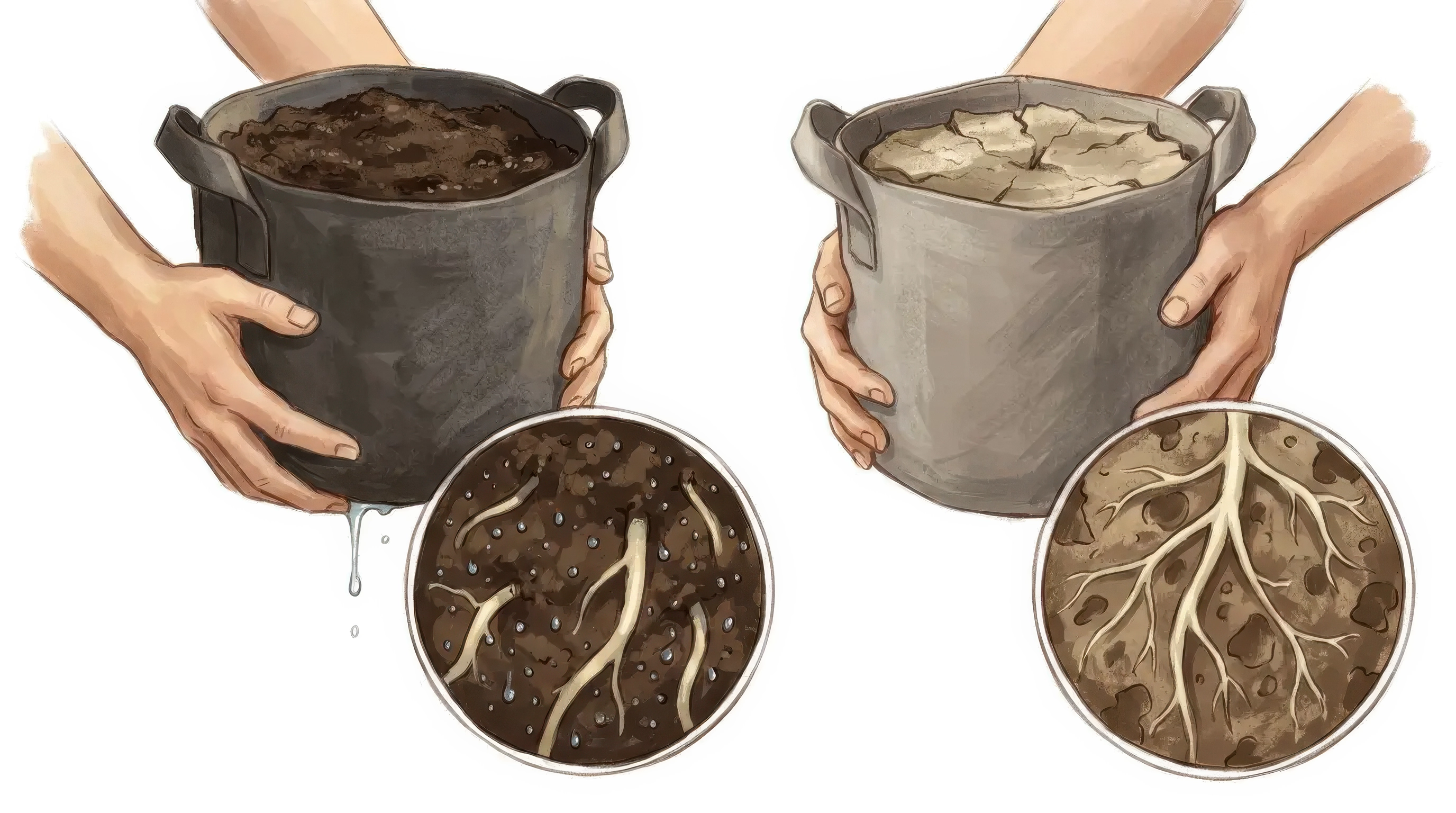 The lift test: light pot, thirsty plant. The whole diagnosis in one heft.
A drowning plant and a thirsty plant do the same impression of each other. Both droop, both sulk, both make you feel like you’ve already ruined it. The difference is what happens next. Give a thirsty plant a proper drink and an hour later she’s standing back up like nothing happened. That bounce-back is the whole tell. If a drink brings her back, she was just thirsty — no harm done. I underwatered my first autoflower for a week because I was so terrified of overwatering I swung clean past the middle. She forgave me. They usually do.
The short version:
- She wilts limp and papery, and a proper drink perks her right back up within an hour or two
- The cause is too little, or too long between drinks — fabric pots in a warm tent dry out fast
- Water until about 10-20% runs out the bottom, then check by lifting the pot from then on
- If the soil’s pulled away from the sides, bottom-water her to re-wet before you go back to normal
Want the full breakdown? Keep scrolling.
Why are my cannabis leaves limp and droopy?
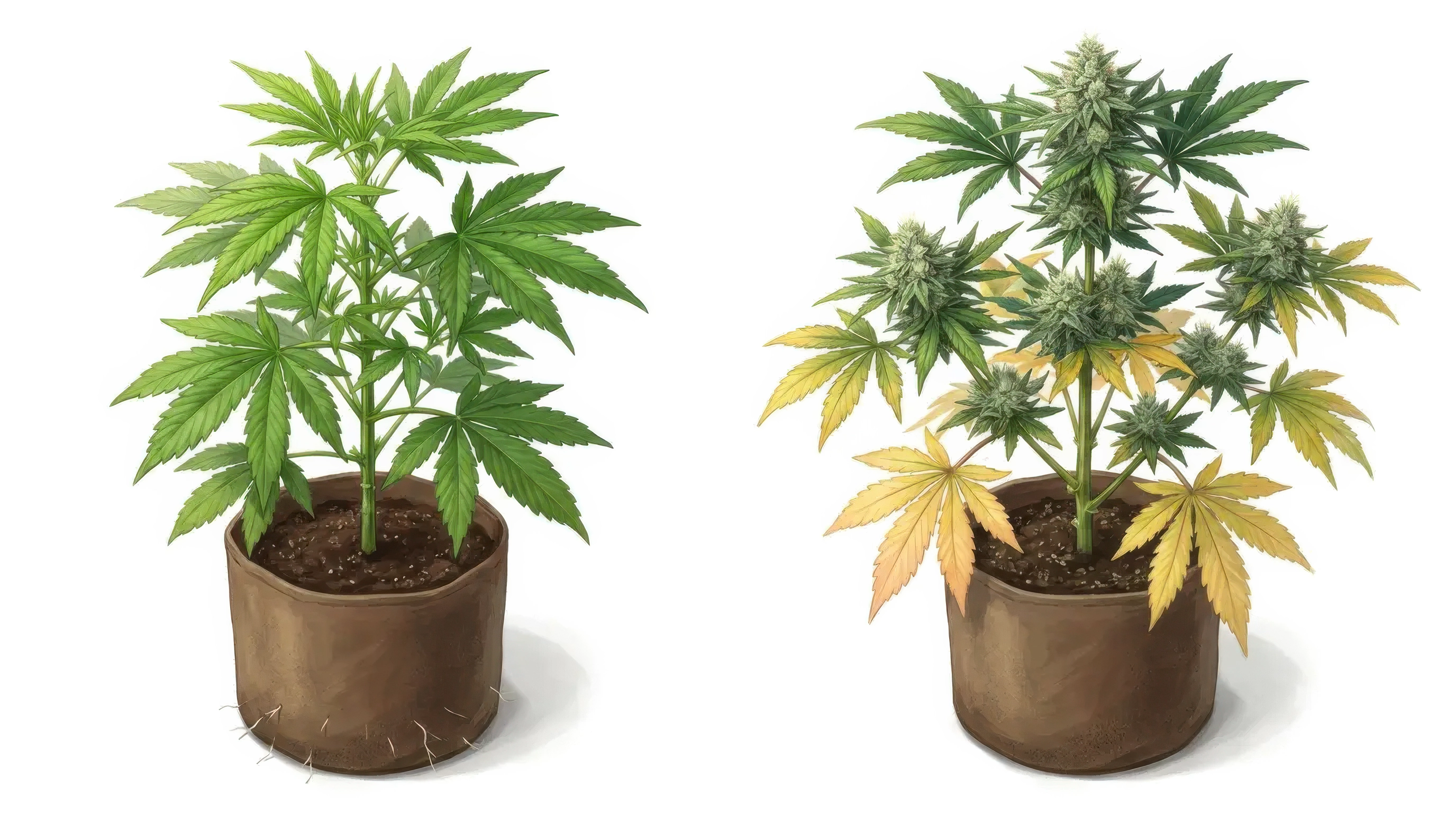 Thirsty droop is limp and papery, in a pot that’s gone light. Wet droop is the opposite.
Because the tank’s run dry. A plant holds itself up with water pressure — every leaf and stem is a little water balloon under tension, and that tension is what keeps her standing proud. Let the soil dry past the point where the roots can pull water, and the pressure drops. The balloons go soft. Leaves hang, stems sag, the whole plant slumps like a tired teenager.
The feel gives it away if you know what to look for. A thirsty droop is light and papery — the leaves go thin and limp, almost crispy at the edges if she’s been dry a while, and the pot is bone light when you lift it. That’s the opposite of overwatering, where the leaves feel thick and heavy and the pot’s still wet through. Same droop on the outside, completely different cause underneath. The pot weight settles the argument every time. Light and dry means thirsty. Heavy and wet means you backed off too late.
How often should I water a cannabis plant?
There’s no number, and the calendar is a liar. How fast she drinks depends on pot size, plant size, temperature, humidity and how hard your fans are running — and all of that changes week to week. A small seedling in a cool tent might go five days between drinks. A big plant in a fabric pot in a warm, well-extracted tent in flower can drink it dry in a single day.
That’s the trap with fabric pots. They breathe through the sides, which is brilliant for the roots but means they dry out fast — faster than plastic, and faster than you’d think in a warm tent. Check daily once she’s a decent size. The honest tool is your hands: lift the pot just after a thorough water so you learn what “full” feels like, then lift it again when she’s slightly droopy so you learn what “empty” feels like. After two goes you’ll know the difference blindfolded. If you’d rather have a number to lean on while you learn, a cheap moisture meter pushed into the root zone gives you a rough steer — DIG stock them. But the lift test is free and it never needs a battery.
How do I fix an underwatered cannabis plant?
Give her a drink. That’s most of it, and the recovery is genuinely satisfying — few things in growing pay you back as fast.
- Water thoroughly, not timidly. Pour slowly and evenly across the whole surface until you get about 10-20% running out the bottom. A splash on top isn’t a drink; it wets the surface and runs straight down the dry channels without soaking the root ball.
- If the soil’s shrunk off the sides, bottom-water first. When a pot dries out completely, the medium pulls away from the walls and any water you pour just races down the gap and out the bottom, missing the roots entirely. Stand the pot in a tray of pH’d water for half an hour and let it wick up from below until the surface goes dark and damp.
- Then switch to watering by weight. Once she’s re-wetted, lift the pot and only water again when it’s properly light. Don’t go straight back to a schedule — that’s what got you here, or close to it.
- Don’t drown her to make up for it. Underwatering once doesn’t mean overwatering forever. One good drink, then back to lifting and checking. Less guessing, more lifting.
The wilted leaves that were already limp should plump back up within the hour. If they don’t, or the droop is in a pot that’s still heavy and wet, you’re not underwatered at all — flip over to overwatering and read that one instead.
Not sure this is your problem? Run her through the Diagnosis Buddy — five questions and you’ll know.
How to fix it
- Water thoroughly, not timidly Pour slowly and evenly across the whole surface until about 10-20% runs out the bottom — a splash on top isn't a drink.
- If the soil's shrunk off the sides, bottom-water first Stand the pot in a tray of pH'd water for half an hour and let it wick up from below until the surface goes dark and damp.
- Then switch to watering by weight Once she's re-wetted, lift the pot and only water again when it's properly light, rather than going straight back to a schedule.
- Don't drown her to make up for it One good drink, then back to lifting and checking — underwatering once doesn't mean overwatering forever.
Common questions
How quickly does an underwatered plant recover?
Fast — usually within an hour or two of a proper drink, and often you'll catch her standing back up while you're still tidying the tent. If she's been bone dry for days the recovery takes a little longer, and any leaves that went fully crispy won't fully come back, but new growth will be grand.
How do I tell underwatering from overwatering?
Lift the pot. A light, dry pot with papery limp leaves is thirsty. A heavy, wet pot with thick droopy leaves is overwatered, and the droop there is often worst just after a drink. The leaf feel and the pot weight both point the same way, so check both before you reach for the watering can.
Why does water run straight through my dry pot?
Because the medium has shrunk away from the sides and the water's escaping down the gap without touching the roots. Bottom-water her instead — sit the pot in a tray of water and let it wick up until the surface darkens, then go back to top-watering.
Can underwatering hurt my yield?
A one-off thirst that you fix quickly does no lasting harm — she bounces back and carries on. Repeated drought stress is a different story: if she's regularly hitting the wall and wilting, growth stalls and you lose momentum, so the aim is to catch her thirsty, not parched.
Fixed it?
Here’s how this stage goes when it’s going right — walk the grow →. Still not sure what you’re looking at? Ask the Diagnosis Buddy →