Hop Latent Viroid (HLVd) and Cannabis Viruses
By DIG Dave ·
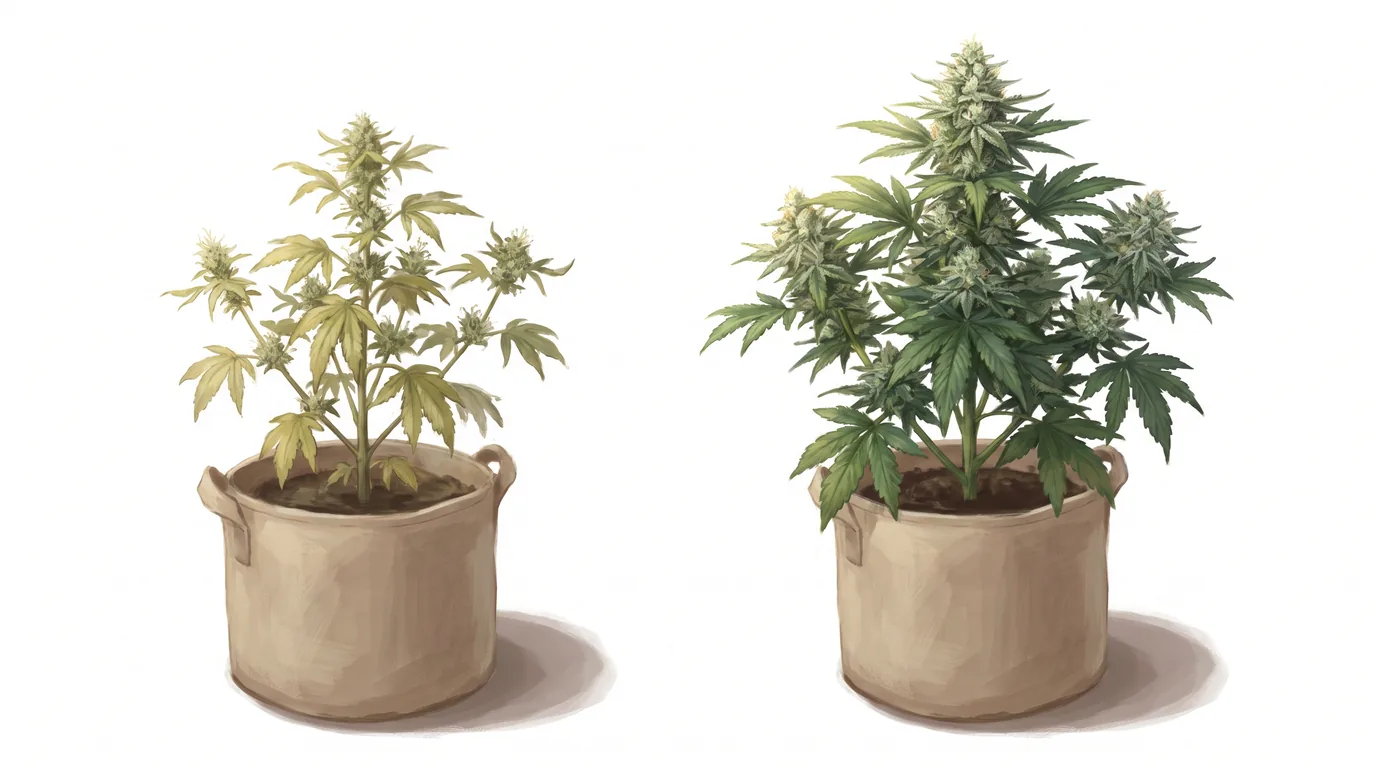
Dudding: the same genetics, one carrying hop latent viroid (left) and one clean (right).
A grower I know had one mother he’d kept for three years — his best cut, cloned over and over. Each round came out a little weaker. Smaller buds, less smell, a bit less frost, nothing you could point at. He blamed his lights, then his nutrients, then himself. It wasn’t any of those. It was a viroid he couldn’t see, riding his own scissors from cutting to cutting, quietly hollowing out the genetics he was proudest of. That’s hop latent viroid, and it’s the most important plant-health problem most growers have never heard of.
The short version:
- HLVd is a viroid — a scrap of infectious RNA — that causes “dudding”: weak plants, small airy buds, low potency
- It’s often latent (no visible signs), so it spreads unseen — mostly on dirty cutting tools and through clones
- There is no cure — you keep it out, cull what’s infected, and tissue-culture genetics worth saving
- The fix is boring and it works: tested stock, sterile tools, quarantine, and ruthless culling
- TMV gets the blame online, but it’s rarely confirmed in cannabis — HLVd is the real one
What is hop latent viroid, and what does “dudding” look like?
A viroid is even simpler than a virus — just a tiny loop of RNA with no protein coat — but it does real damage. HLVd is the agent behind what growers call dudding or duds: plants that should be thriving but instead come up stunted, with reduced vigour, smaller and sometimes brittle or malformed leaves, looser and smaller buds, and noticeably lower trichome density — which means less potency and less yield off the same effort. Industry testing has put the losses high, and in a clone-based grow the decline often creeps in generation by generation, which is what makes it so easy to misread as “my genetics got tired.”
The cruel part is in the name: latent. Plenty of infected plants show no clear signs at all, especially early, so a carrier looks perfectly healthy while it seeds the rest of your room. You cannot reliably diagnose it by eye — the symptoms, when they appear, look like generic stress or just a weak phenotype. The only sure answer is a lab RT-PCR test on leaf or root tissue.
How does it spread?
Mechanically, mostly — which is both the bad news and the good news, because mechanical spread is something you control. The number-one route is contaminated cutting tools: one dirty blade taking cuttings or defoliating moves sap, and the viroid in it, from plant to plant down the whole row. Add infected mother plants and clones (the reason a single bad cut can infect a library), sap on hands and surfaces, and root-to-root contact in shared hydro systems. It can also pass through seed and pollen at lower rates. Unlike many true plant viruses, it isn’t carried plant-to-plant by an insect vector — so your scissors matter more than your bug screen here.
How do you keep it out? (there’s no cure)
Say that part again, because it decides everything: there is no treatment that clears an infected plant. No spray, no feed, no flush. So the whole game is prevention and hygiene — the five steps below — plus one recovery route. For genetics genuinely worth saving, meristem-tip tissue culture can regenerate a clean plant from an infected one, because the growing tip often outruns the viroid; you then retest to confirm. It’s lab work, not tent work, but it’s how prized cuts get rescued rather than binned.
What about tobacco mosaic virus (TMV)?
Here’s where the honest version parts company with the forums. TMV gets blamed for almost any mottled, patchy, mosaic-looking leaf in cannabis — and most of the time that blame is wrong. Confirmed TMV infection in cannabis is rare and poorly documented; the classic “mosaic” look is far more often a nutrient problem, a different pathogen, or the generic stress HLVd can cause. That doesn’t mean be careless — the same sanitation that stops HLVd stops the odd genuine case — but don’t lie awake over TMV. If something looks wrong and matters, test rather than guess, because the real, measurable, widespread threat is the viroid you can’t see, not the virus everyone names.
How to fix it
- Start with tested, clean genetics Buy seed, or clones from a source that indexes (RT-PCR tests) its mother stock. A clean start is cheaper than any cure, because there isn't one.
- Sterilise cutting tools between plants Dip blades and scissors in 10% bleach (or use a fresh blade per plant) every time you move between plants when pruning or taking cuttings. This is the single biggest spread route and the easiest to shut.
- Quarantine anything new Keep new clones and plants separate from the room until you've watched them, and ideally tested them, rather than dropping them straight into the canopy.
- Rogue out suspects If a plant is stunted, oddly weak, or a clone line is fading over generations, remove and bin it — and never take cuttings from a mother you suspect. Don't nurse a dud along.
- Recover prized genetics by tissue culture For a cut worth saving, meristem-tip tissue culture can regenerate a clean plant from an infected one; retest afterwards to confirm it worked.
Common questions
What is hop latent viroid (HLVd) in cannabis?
A viroid — a tiny piece of infectious RNA, smaller and simpler than a virus — that causes 'dudding' in cannabis: stunted plants, smaller airy buds, and markedly lower trichomes, so less potency and yield. It is now considered the most damaging infectious agent in commercial cannabis, largely because it spreads invisibly through cloning.
How do I know if my plant has HLVd?
Usually you can't tell by eye — many infected plants look normal (it is 'latent'), and the symptoms, when they show, look like generic stress or a weak pheno. The only reliable answer is a lab RT-PCR test on leaf or root tissue. If a clone line slowly gets weaker and less potent generation after generation, test it.
Can HLVd be cured or treated?
No. There is no spray or treatment that clears an infected plant. The only real tools are keeping it out, removing infected plants, and — for genetics worth saving — recovering a clean plant through meristem-tip tissue culture, then testing to confirm it is clean.
How does hop latent viroid spread?
Mostly mechanically: contaminated cutting tools during pruning and cloning are the number-one route, along with sap on hands and surfaces. Infected mother plants and clones carry it, root-to-root contact in shared hydro systems passes it, and it can transmit through seed and pollen at lower rates. It is not spread by an insect the way many true viruses are.
Is tobacco mosaic virus (TMV) a real problem in cannabis?
Far less than the internet suggests. TMV gets blamed for any mottled or mosaic-looking leaf, but confirmed TMV infection in cannabis is rare and poorly documented — most 'TMV' cases turn out to be nutrient issues, other pathogens, or HLVd. Keep the same clean habits, but HLVd is the threat that actually earns the worry.
References
- Adkar-Purushothama, Sano & Perreault (2023). Hop Latent Viroid: A Hidden Threat to the Cannabis Industry. Viruses, 15(3):681.
- Warren, Mercado & Grace (2019). Occurrence of hop latent viroid causing disease in Cannabis sativa in California. Plant Disease, 103(10):2699.
- Bektaş, Hardwick, Waterman & Kristof (2019). Occurrence of hop latent viroid in Cannabis sativa with symptoms of cannabis stunting disease in California. Plant Disease, 103(10):2699.
- Punja, Wang, Lung & Buirs (2024). Symptomology, prevalence, and impact of Hop latent viroid on greenhouse-grown cannabis (Cannabis sativa L.) plants in Canada. Canadian Journal of Plant Pathology, 46(2):174–197.
- Punja et al. (2019). Pathogens and Molds Affecting Production and Quality of Cannabis sativa L. Frontiers in Plant Science, 10:1120.
Fixed it?
Here’s how this stage goes when it’s going right — walk the grow →. Still not sure what you’re looking at? Ask the Diagnosis Buddy →