Hydroponics for Beginners: Should You Bother?
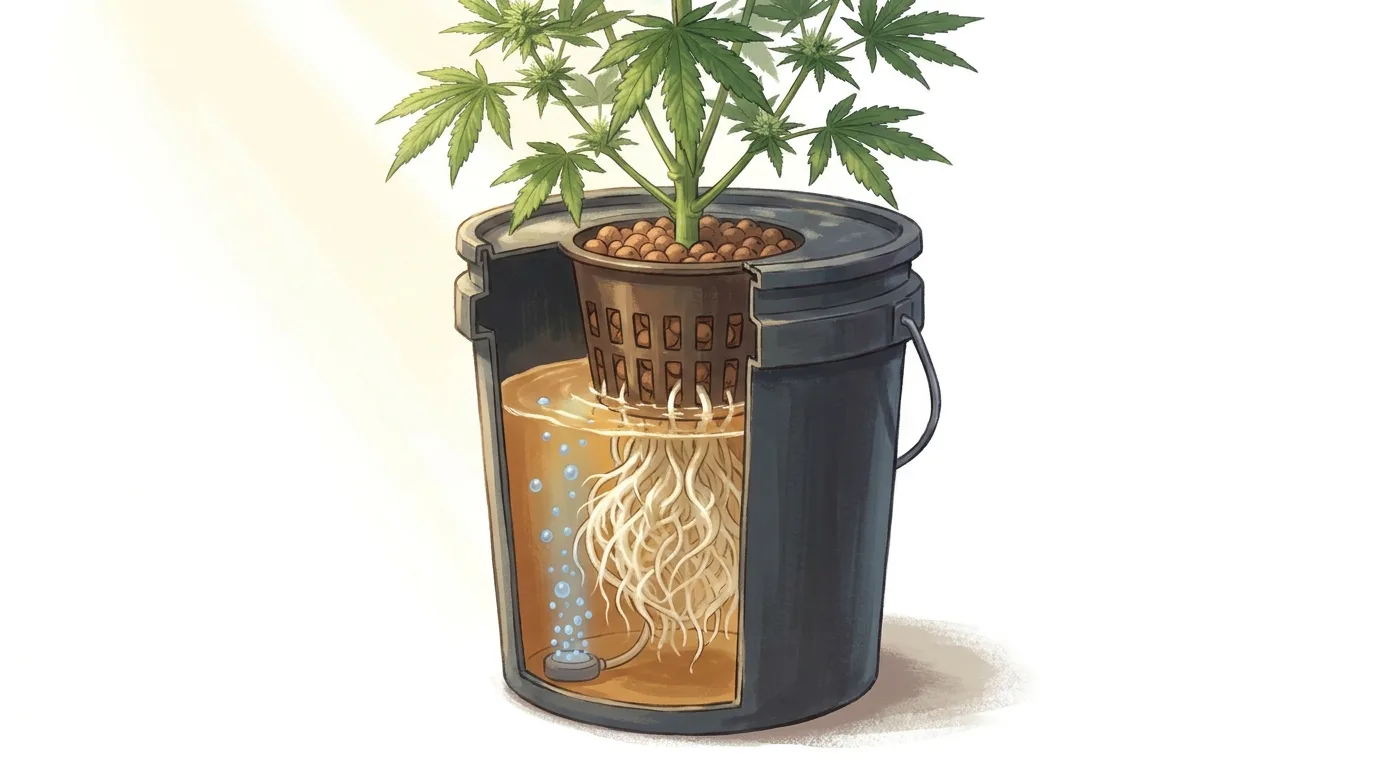
Hydroponics can work for a beginner, but only if you’ll commit to daily checks: it grows faster and yields more than soil, yet removes soil’s buffers, so a small pH or nutrient mistake hits in hours, not days. Start with one DWC bucket alongside a soil grow, not a full switch — if daily checks sound tedious, soil is the better first system.
Hydro has a sci-fi reputation and the results to back it — faster growth, bigger yields, roots like something from a nature documentary. But the reframe nobody mentions is that hydro is about less: less margin for error, less forgiveness, less time between a small mistake and a dead plant. Here’s the honest answer on whether you should bother.
The short version:
- Hydro = growing without soil, feeding nutrient solution straight to the roots
- It’s faster and higher-yielding because the plant spends less energy hunting for food
- But soil’s buffers are gone — pH and nutrient mistakes hit in hours, not days
- It rewards daily attention and punishes neglect harder than soil
- Start with one DWC bucket alongside a soil grow, not a full switch
Want the full breakdown? Keep scrolling.
What is hydro, and why is it faster?
Strip away the mystique and it’s simple: growing plants without soil, delivering a nutrient solution directly to the roots — just roots, water, nutrients and oxygen. It’s faster because the plant doesn’t have to push roots through a medium searching for food and water; everything is dissolved and available, so it spends less energy below ground and more on the part you’re growing for. The catch is the reframe the Scientist missed: he thought he was upgrading to a better system, but he was stripping away every buffer keeping his plants alive despite imperfect technique. Soil holds nutrients and releases them slowly, harbours beneficial microbes, stores air and water, and quietly corrects your mistakes. Hydro removes all of that — incredible when you get it right, catastrophic when you get it wrong.
Is hydro right for a beginner?
It depends entirely on one thing: will you turn up every day? A soil plant left unwatered three days looks tired; a DWC plant with a pump failure for three hours can be unrecoverable. Hydro rewards precision with speed and yield, and punishes neglect faster and harder than soil ever will. If you’ve already grown a successful plant in soil, you have the fundamentals — pH, nutrients, root health, “less is more” — and they transfer directly; the concepts are the same, the tolerances are just tighter. So it’s not that hydro is better, it’s that it’s different and demands a different kind of attention. The honest filter: if daily checks sound tedious, hydro isn’t your system, and that’s a practical fact, not a judgment.
How should I start?
One DWC bucket, alongside your soil grow — don’t switch everything at once. The Convert rips out all his soil plants, goes full hydro on four buckets, and loses the lot while learning a new system with no backup harvest and no safety net. Run both: learn one while the other feeds you. The starter kit is small — a bucket, net pot, clay pebbles, an air pump and stone running 24/7, a pH pen, an EC pen and an aquarium thermometer (DIG stock these). Check it every morning with your coffee: keep the reservoir boring and clean, the water cool, and the nutrient strength gentle until you see how the plant responds. Watch the roots come in white and dense. Or — and this is a legitimate answer — stick with soil. Soil grows good plants. Now you know what hydro actually asks, you can make an honest decision instead of a YouTube-inspired one.
Common questions
Is hydroponics good for beginners?
It can be, if you'll commit to daily checks. Hydro grows faster and yields more but removes soil's safety net, so a missed problem escalates in hours. Many beginners are better starting in soil.
What's the easiest hydro system to start with?
A single DWC (deep water culture) bucket — one bucket, one air pump, no timer. Run it beside a soil grow so you have a backup while you learn.
Does hydro really grow better than soil?
It can grow faster and bigger for growers who give it daily, precise attention. For someone who can't, soil grows better plants because it forgives mistakes hydro won't.