Purple Stems: The Most Diagnosed Non-Problem in Growing
By DIG Dave ·
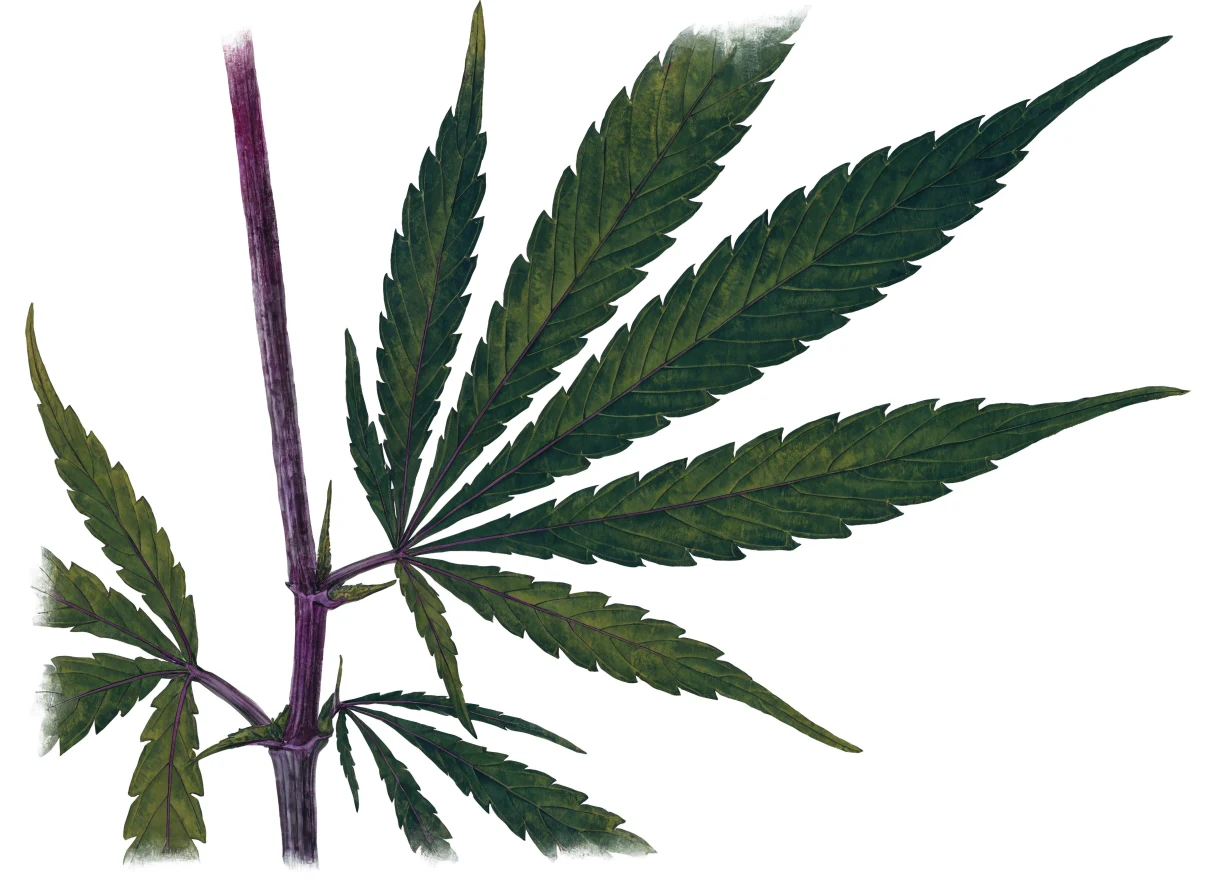 Purple stems: often genetics and nothing to fix. Context tells you which.
If there were a league table for symptoms that send beginners to the search bar at midnight, purple stems would be fighting for the top spot. The forums will tell you it’s phosphorus, magnesium, root trouble, stress, doom. Meanwhile the plant in question is standing there with strong green leaves, growing like a teenager, completely unbothered. She didn’t read the forums.
The short version:
- Purple or red stems on an otherwise healthy, growing plant are usually genetics or cool nights — not a deficiency
- If she’s growing grand: leave her alone. That’s the whole fix
- Only look closer if the purple arrives WITH other symptoms — dark dull leaves, bronze blotches, stalled growth
- The skill here is learning what NOT to treat
Want the full breakdown? Keep scrolling.
Are purple stems on cannabis normal?
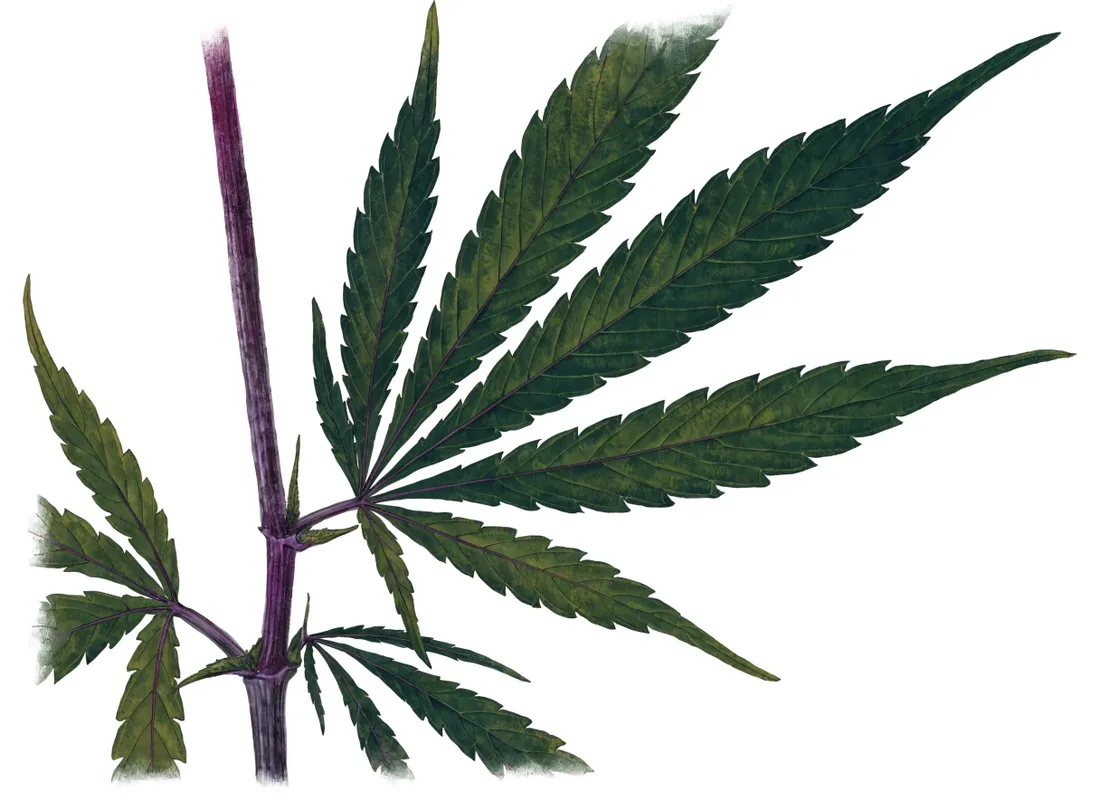
Very often, yes. Two innocent causes cover most cases:
- Genetics. Plenty of strains run purple in the stems and petioles — the little stalks that hold each leaf — as standard equipment. Same pigments that make purple buds purple. If she’s been purple-stemmed since she was young and never missed a beat, that’s just her.
- Cool nights. A temperature dip brings out the purple the way autumn brings it out in trees. Anthocyanins — the purple pigments — come up when nights run cool. Harmless at ordinary indoor temps, though if your tent is dropping properly cold at night, that’s worth fixing for its own reasons (aim for nights around 20°C).
In both cases the rest of the plant tells the story: green leaves, steady growth, no spots, no stalling. A healthy plant with purple stems is a healthy plant.
When are purple stems a real problem?
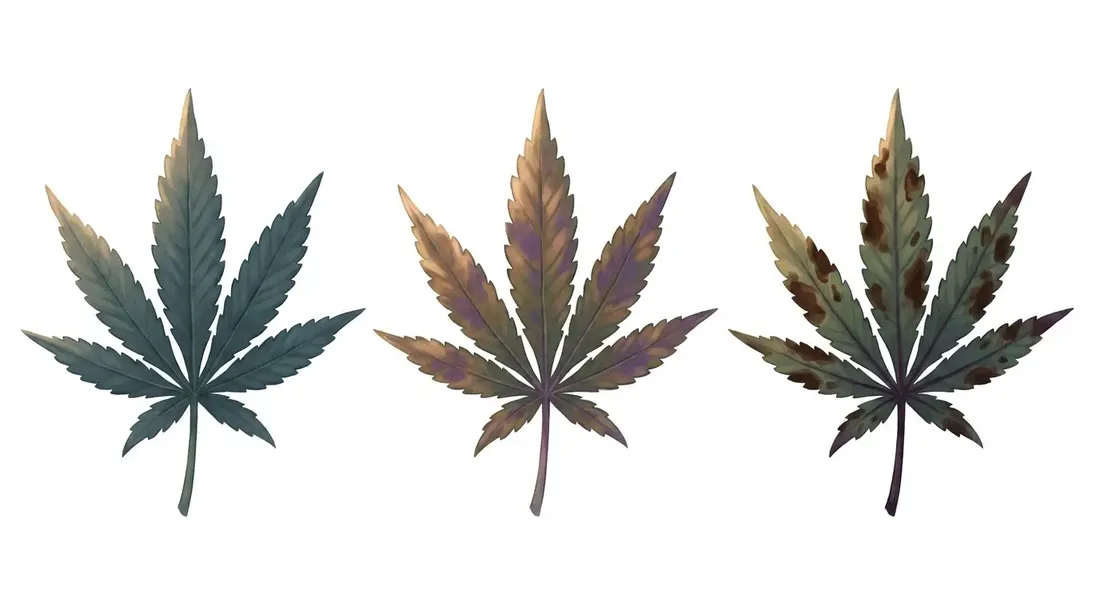
When they bring friends. Purple stems matter only as part of a group of symptoms:
- Dark, dull blue-green leaves + bronze/brown blotches on older leaves + growth gone slow — that group, with purpling on stems and leaf undersides, points at phosphorus. The phosphorus deficiency guide has the full picture and the fix.
- Cold room generally — if the purple turned up alongside droop and sluggishness in a tent you know runs cold at night, the cold is the problem, not the colour. Warm the nights; see the cold stress guide.
The test is dead simple: cover the stems with your hand and look at everything else. If the rest of the plant would pass inspection, the stems weren’t the problem.
What should I do about purple stems?

If she’s growing grand: nothing. Genuinely nothing. Don’t raise the feed, don’t add a supplement, don’t flush her, don’t start adjusting things to fix a colour. Every one of those is a real change with real consequences, deployed against a problem that doesn’t exist — and the most common way beginners create actual trouble is treating phantom trouble. The plant wants to live. Sometimes the hardest part of growing is letting her.
If growth has slowed too: warm the nights toward 20°C, and check phosphorus — which in practice means check your pH is in range (soil 6.2–6.5, coco/hydro 5.8–6.2) and you’re feeding for the stage she’s in. One change, then watch for a week.
Not sure this is your problem? Run her through the Diagnosis Buddy — five questions and you’ll know.
Common questions
Do purple stems mean magnesium deficiency?
Not by themselves. Magnesium announces itself on the leaves — yellow between green veins on the lower growth — not the stems. No leaf symptoms, no magnesium problem.
Will purple stems affect yield?
Genetic or cool-night purpling, not at all. She'll grow and flower exactly as she would have.
Should I feed more when I see purple stems?
No — feeding a plant that isn't hungry is how nutrient burn happens. Only act if there are real symptoms alongside: blotches, dull leaves, stalled growth.
Why are my seedling's stems purple?
Seedlings run purple constantly — they're small, their reserves are shifting, and many show it in the stem from day one. A seedling that's standing up and making new leaves is grand.
Fixed it?
Here’s how this stage goes when it’s going right — walk the grow →. Still not sure what you’re looking at? Ask the Diagnosis Buddy →